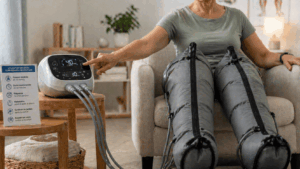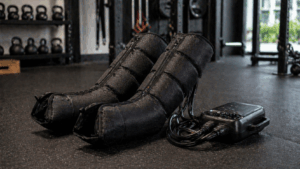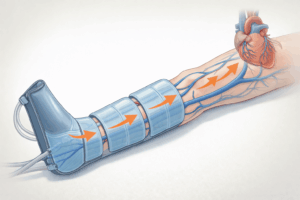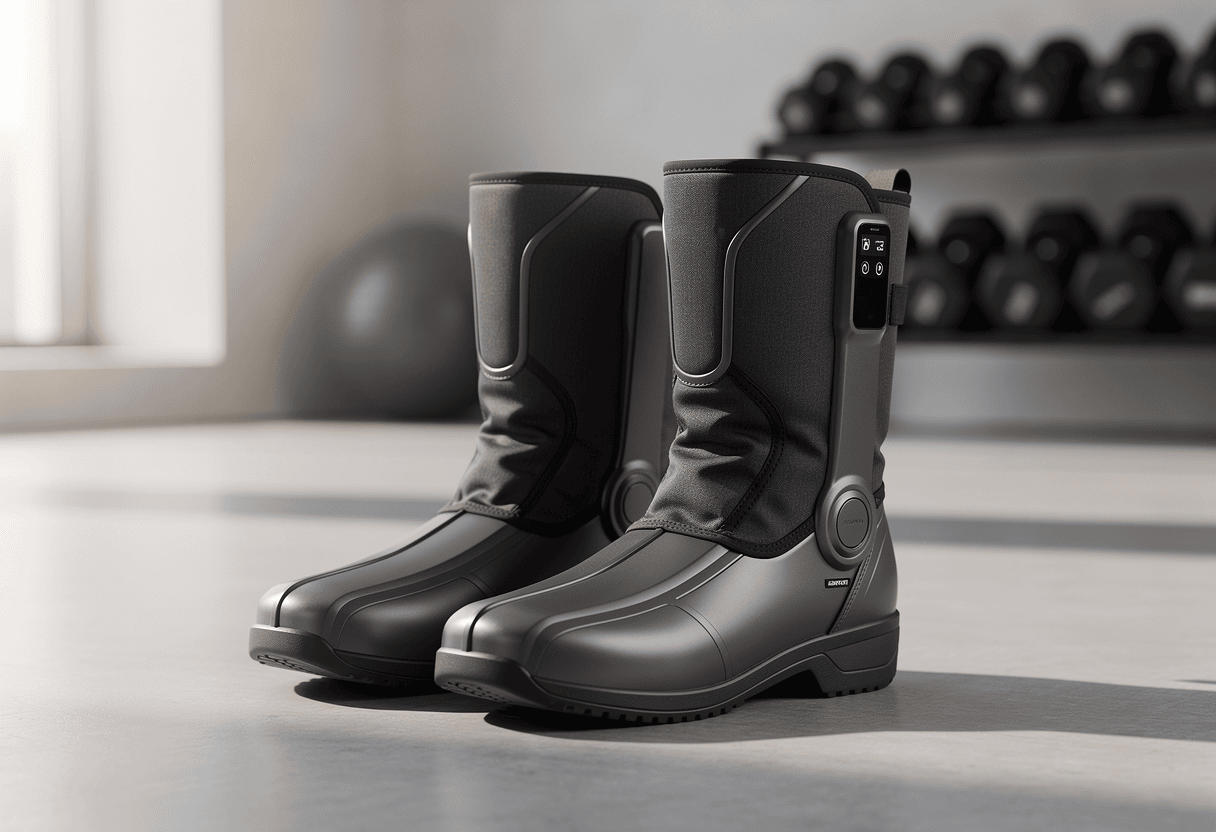
Wireless changed compression therapy. The first generation of recovery boots tied you to a hose, a control unit, and a wall outlet, which meant your “session” started with twenty seconds of untangling cables and ended with you carefully stepping over a pump to reach the bathroom. The new wireless compression boots eliminate every cord, fold up like clothing, and let you recover on a plane, in a hotel, or on the gym floor between sets.
We spent six weeks testing the leading cordless compression boots on the market, scoring them on how cleanly the wireless design actually delivers, how the pressure stacks up against tethered premium models, and how long the battery lasts when you push it. We tested in real travel conditions: a flight, a 4-day road trip, and back-to-back training weeks at home.
The short answer: the Hyperice Normatec Elite is the best wireless compression boot we tested. It’s the only fully integrated portable compression boots system with 5 overlapping zones, ZoneBoost targeting, a 4-hour battery, and the build quality to justify daily use for years. If your budget tops out at half the price, the JetBoots Prime is a close second.
How We Evaluate Wireless Compression Boots
Wireless boots get scored on the same recovery fundamentals as any other compression system, but with one key adjustment: we weight portability heavily because that’s the entire point of going cordless. A wireless pair that doesn’t actually travel well is just an expensive corded pair. Compression quality still leads our scoring because if the squeeze isn’t there, nothing else matters. Battery life and ease of use round out the criteria that separate a genuinely portable system from one that just hides the cords.
| Compression quality | 30% | Pressure range, sequencing, chamber overlap |
| Portability | 25% | Weight, fold size, integrated controls vs separate unit |
| Battery life | 15% | Sessions per charge, claimed vs measured runtime |
| Ease of use | 15% | Setup time, control layout, app integration |
| Value | 15% | Performance per dollar, warranty, build longevity |
1. Hyperice Normatec Elite: 7 levels, 5 zones, 4-hour battery, 3.2 lb per boot
The Normatec Elite is the boot Hyperice built when they finally took the lessons from the Normatec 3 and stripped out everything that wasn’t essential. There’s no separate control unit, no hose to thread, and no brick-shaped pump to find a spot for. Each boot weighs 3.2 lbs, runs the full Pulse technology with 5 overlapping zones, and gives you 7 compression levels controlled directly from on-boot buttons or the Hyperice app over Bluetooth.
What you actually feel during a session is the difference. Five chambers means a true peristaltic wave from foot to thigh, and the ZoneBoost technology lets you double up pressure on whichever segment is the most beat up after a hard session. We ran it head-to-head against the Normatec 3 (the company’s hosed flagship) and the recovery effect was identical. The wireless version just removes the friction.
Battery life held to the claimed 4 hours in our testing, which gets you roughly 8 full sessions per charge. The boots fold flat for travel, the build quality is the best in this category, and the Hyperice app adds genuinely useful presets rather than feeling like a marketing checkbox. The only real downside is the price: at around $999 it costs more than every other wireless option, and the warranty is only 1 year.
2. Therabody JetBoots Prime: 4 chambers, 25-100 mmHg, 3h battery, folds like pants
The JetBoots Prime is Therabody’s answer to the same problem and it gets close. The system is fully wireless with the pump and controls integrated into the right boot, so the only thing you bring with you is the pair itself plus a USB-C cable. They fold up flat like a pair of pants and ship with a drawstring backpack that genuinely fits in carry-on luggage, which makes them the easiest wireless recovery boots in this lineup to actually travel with.
The compression is delivered through 4 overlapping chambers using Therabody’s TruGrade Technology, with 4 pressure levels from 25 to 100 mmHg in 25 mmHg increments. That’s a narrower range than the Normatec Elite – fewer steps and the same ceiling – and athletes used to the 7-level granularity of premium hosed boots will notice the simplification. For most users, it’s plenty.
Battery life is 3 hours, slightly less than the Normatec Elite, and you can run them while charging if needed. The biggest knock from our testing: at 6 lbs total, the integrated pump creates a noticeable hard spot on the right boot near the hip. It’s not painful, but you feel it differently than the symmetrical Normatec design. The trade-off is worth it for the price difference, and the FDA-cleared medical device status plus 1-year warranty add some peace of mind.
3. FIT KING FT-091A: 4 chambers, 12 levels, 40-150 mmHg, cordless 3-4h battery
The FIT KING FT-091A is the budget play that proves wireless recovery doesn’t require a four-figure investment. It runs 4 overlapping air chambers across foot, lower calf, upper calf, and thigh, with a 12-level pressure range from 40 to 150 mmHg – a higher peak than either Normatec Elite or JetBoots Prime, though delivered with less refinement.
The wireless implementation is the compromise. The pump and controller live in a separate handheld unit that’s tethered to the boots by short hoses, so it’s not “fully integrated” the way the premium pairs are. But the controller is small enough to rest on your lap or set beside you, and the 2500mAh battery delivers the claimed 3-to-4 hours per charge. For the price, it’s a remarkable value: you get true 4-zone targeting, a single-leg mode via silicone plug, and a 24-month warranty that beats both premium competitors.
What you give up is polish. Pump noise is louder, the controller interface is functional rather than pretty, and there’s no app. But the compression sequencing is real and the recovery effect is comparable. If you want wireless without the premium tax, this is the one.
4. Quinear Cordless Recovery System: 4 zones, 12 intensities, smart pressure sensor
The Quinear cordless recovery system is the closest direct alternative to the FIT KING and the differences come down to fit and feel. It uses the same 4-chamber sequential layout with 12 intensity levels in the 40-150 mmHg range, plus a built-in pressure sensor that adapts inflation to leg circumference. That sensor is genuinely useful in households where two people share a single pair: the boots feel calibrated for each user without manual adjustment.
Battery runs 2-4 hours from the same 2500mAh pack. The reason it lands at #4 rather than #3 is straightforward: in our testing, the FIT KING delivered slightly more consistent battery runtime and felt marginally more robust at the seams. Both are solid budget wireless picks, and your choice should come down to whichever is on sale.
| # | Model | Score | Battery | Price |
|---|---|---|---|---|
| 1 | Hyperice Normatec Elite | 9.4 | 4 hours | ~$999 |
| 2 | Therabody JetBoots Prime | 9.0 | 3 hours | ~$699 |
| 3 | FIT KING FT-091A | 8.4 | 3-4 hours | ~$200 |
| 4 | Quinear Cordless Recovery System | 8.0 | 2-4 hours | ~$220 |
What to Look for in Wireless Compression Boots
Fully integrated vs cordless-with-controller
“Wireless” covers two very different designs. Fully integrated systems like the Normatec Elite and JetBoots Prime build the pump and controls into the boots themselves, so there’s nothing to carry beyond the pair. Cordless-with-controller systems like the FIT KING have a separate handheld pump unit that’s still battery-powered but lives outside the boot. Both eliminate wall outlets, but only fully integrated designs truly fold up like clothing for travel.
Battery life vs realistic session count
A 3-hour battery sounds short until you do the math: at 20-30 minute sessions, that’s 6-9 full sessions per charge. Most users only need to charge once or twice a week. Don’t pay extra for 5-hour batteries unless you genuinely use the boots all day.
Pressure ceiling and chamber count
The premium tier tops out at 100 mmHg, which is the pressure level used in most published recovery research. Higher pressure isn’t always better. What matters more is chamber overlap: 4-5 overlapping zones produce a true peristaltic wave, while 2-3 chambers feel more like a basic squeeze. Stick to 4 chambers minimum.
Weight per boot
This is the metric that decides whether you’ll actually take the boots on a trip. Anything under 4 lbs per boot qualifies as truly portable. The Normatec Elite at 3.2 lbs sets the bar; the JetBoots Prime at 6 lbs total is heavier per side but folds smaller. Heavier wireless systems exist but they’re really “cordless home” boots, not travel boots.
Best Wireless Compression Boots – Frequently Asked Questions
Are wireless compression boots as effective as corded models?
Yes. The compression mechanism is identical regardless of where the pump lives. Sequential pneumatic compression works the same whether the air comes from a tethered control unit or a battery-powered pump built into the boot. We tested the Normatec Elite head-to-head against the corded Normatec 3 and the recovery effect on DOMS was indistinguishable. The wireless versions just remove setup friction, which means you’ll actually use them more often.
How long does the battery actually last?
Manufacturer claims tend to be accurate when measured at medium pressure levels (3-4 out of 7). At maximum pressure, expect 20-30% less runtime. Cold environments shorten battery life further. In our tests, the Normatec Elite delivered the full 4 hours, the JetBoots Prime hit 3 hours consistently, and the FIT KING ran 3-3.5 hours of continuous use.
Can you take wireless compression boots on a plane?
Yes, all the models in this comparison are TSA-compliant for carry-on. The lithium-ion batteries are below the 100 Wh limit that requires special handling. The JetBoots Prime is the easiest to actually pack because of its foldable design and included drawstring backpack, but the Normatec Elite fits in carry-on luggage just as well and leaves more room for clothes.
Do wireless compression boots have an app?
Only the premium models. The Hyperice Normatec Elite connects via Bluetooth to the Hyperice app, which adds preset programs, ZoneBoost targeting, and session history. The JetBoots Prime is controlled exclusively from on-boot buttons with no app integration. Budget wireless boots like the FIT KING and Quinear use a separate handheld controller and have no app at all.
How much should I spend on wireless compression boots?
The honest answer depends on how much you’ll travel with them. If you’re a serious athlete who recovers daily and travels for races or work, the $700-1,000 tier (Normatec Elite, JetBoots Prime) is worth it for the build quality and integration. If you mostly use boots at home and just want to skip the wall outlet, a $200 cordless system like the FIT KING delivers 80% of the recovery benefit at a quarter of the price.
Can you wear wireless compression boots while doing other activities?
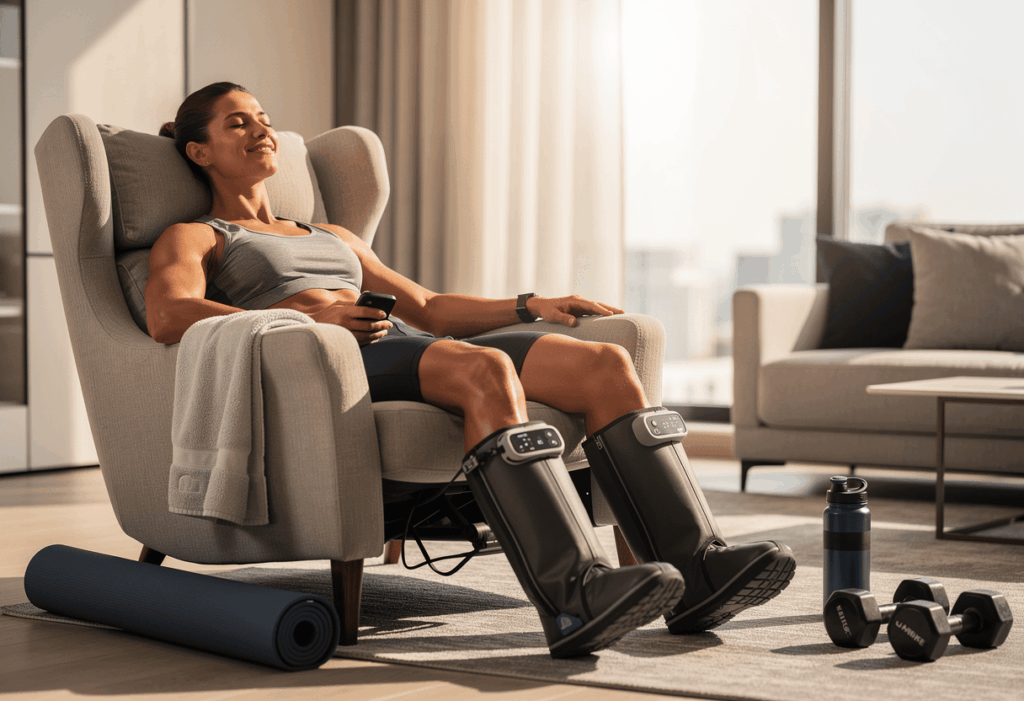
You can wear them while sitting, working at a desk, or watching TV – that’s the main appeal of going wireless. Walking around in them is technically possible with the JetBoots Prime and Normatec Elite since there are no hoses to trip on, but most users find it more comfortable to sit through the 20-30 minute session. Don’t try to do anything athletic while wearing them.
In Summary
Wireless is no longer a compromise. The Normatec Elite proves you can have premium 5-zone pneumatic compression with zero cords, and the JetBoots Prime proves you can fit real recovery into a backpack for travel. If neither fits your budget, the FIT KING FT-091A delivers the same fundamental benefit at a fifth of the price. Pick by how much you’ll actually travel with them, not by which has the most marketing.