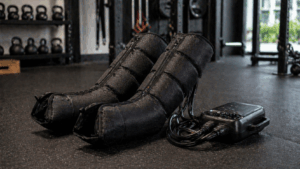
Walk into any college training room or marathon expo recovery zone and you will see athletes reclining in inflatable sleeves that hiss and squeeze from ankle to thigh. Compression boots have moved from elite physio clinics into living rooms in under a decade, and the marketing around them is loud: flush lactic acid, erase soreness, recover overnight.
The honest answer is more interesting than the hype. Pneumatic compression boots do something measurable but what they do, how much they do it, and whether that something matters for you depends on what you are actually asking them to fix.
Here is what the peer-reviewed evidence shows after testing dozens of pairs in our recovery studio and reading every meta-analysis published since 2013.
How Compression Boots Are Supposed to Work
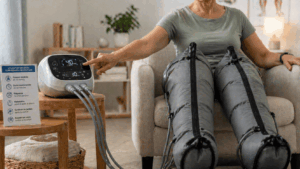
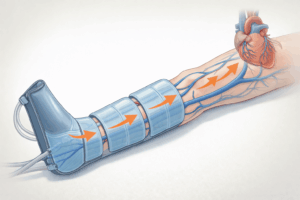
Compression boots use a technique called intermittent pneumatic compression (IPC). Air chambers inside the sleeve inflate sequentially from the foot upward, then deflate, mimicking the natural muscle pump that pushes venous blood and lymphatic fluid back toward the heart.
The pressures are not trivial. Normatec systems run from about 30 mmHg up to 110 mmHg at peak, with most session protocols sitting in the 60-80 mmHg range. Sessions typically last 15 to 30 minutes, and each chamber holds compression for roughly 30 seconds before releasing.
The theory is simple. After hard training, microscopic muscle damage triggers fluid to leak into the surrounding tissue and creates that swollen, heavy feeling. Sequential compression mechanically pushes that fluid out, taking metabolic by-products with it and accelerating the body’s normal cleanup work.
That mechanism is not in dispute. IPC has been used in hospital medicine for decades to prevent deep vein thrombosis after surgery and to manage lymphedema, and the venous return effect is well documented in vascular research.
What the Research Actually Found
The science around compression boots and recovery splits cleanly into two buckets, and conflating them is where most marketing claims fall apart.
On subjective recovery – how sore you feel, how fresh your legs feel – the evidence is mostly positive. A 2022 systematic review and meta-analysis published in the Journal of Clinical Medicine pooled data across multiple pressotherapy studies and found a moderate effect size for reducing the severity of delayed onset muscle soreness, with similar moderate effects on perceived recovery.
On objective performance – sprint times, peak power, force output – the evidence is much weaker. A 2024 systematic review published in Biology of Sport analysed lower-limb IPC studies in athletic populations and concluded the field is still in an early phase, with reduced numbers of original studies and no consistent superiority over other recovery methods. A 2021 critically appraised topic in the Journal of Sport Rehabilitation, focused on endurance athletes, found that IPC delivered immediate pain relief no greater than what massage achieved, and no functional recovery benefit over a one to two week window.
Some individual studies are even less flattering. A 2019 study from Sacred Heart University, published in the International Journal of Exercise Science, ran cyclists through back-to-back 60 minute steady-state rides with 30 minutes of either Normatec compression or passive rest in between. Heart rate showed no difference, and blood lactate during the second ride was actually higher in the compression group.
And a 2020 study on long-distance runners, also in the International Journal of Exercise Science, treated runners with IPC for an hour after a 20-mile run and daily for five days afterward. It found no significant difference in C-reactive protein or in subjective pain ratings between the IPC condition and no treatment at all.
So Do They Work or Not?
The honest summary is this: compression boots reliably make you feel better, but they probably don’t make you measurably faster the next day. For most athletes, that distinction matters less than it sounds.
If you wake up the morning after a long run with legs that feel 20% less wrecked, you will train harder, sleep better, and stay more consistent. Consistency over months produces adaptation. Perceived recovery is not nothing – it is one of the strongest predictors of whether an athlete actually shows up for the next session.
What the boots will not do is replace sleep, nutrition, or smart training load management. They will not magically erase the damage from a 161 km ultramarathon – a 2016 randomized controlled trial of Western States finishers found that neither massage nor pneumatic compression beat supine rest on objective 400 m run times during the week after the race.
Who Actually Benefits From Compression Boots
The research, taken honestly, points to four groups where compression boots are worth the investment. Outside of these profiles, the value drops fast.
High-volume endurance athletes stacking back-to-back hard sessions get the most out of daily compression. The benefit is not faster muscle repair on a cellular level, but the ability to start the next session feeling less heavy. Marathoners in heavy training blocks, triathletes in race week, and ultrarunners doing back-to-back long runs are the textbook use case.
People on their feet all day – nurses, hospitality staff, teachers, coaches – see real benefit too. The mechanism here is closer to the original medical use of IPC: improving venous return in legs that have been gravity-loaded for 10 hours. Twenty minutes in the boots after a long shift is genuinely more restorative than putting your legs up against a wall.
Athletes recovering from minor lower-body strains, where a clinician has cleared compression as safe, can use IPC to manage swelling and stiffness. This is closer to the boots’ clinical roots and the evidence is stronger here than for performance recovery.
Anyone who would otherwise spend $80 to $150 a week on sports massage can usually justify the device on cost alone within a year. The boots are not as good as a skilled therapist’s hands, but they are available every night at 9 pm without an appointment.
Recreational athletes training three times a week, by contrast, will probably get more recovery benefit from an extra hour of sleep, a real meal, and a foam roller than from a $700 device.
How to Get the Most Out of a Session
If you decide compression boots make sense for your situation, the protocol matters more than the brand. The studies showing positive effects on perceived soreness used specific parameters, and the studies showing nothing often used too little time, too much pressure, or the wrong timing.
Session length should sit between 20 and 30 minutes. Less than 15 minutes does not give the sequential cycle enough rounds to produce a flushing effect. More than 40 minutes adds nothing and can cause skin irritation or numbness, particularly at higher pressure levels.
Pressure should sit in the 60 to 80 mmHg range for most users. Maxing out at 100 or 110 mmHg feels intense and gives the impression of working harder, but no study has shown better recovery outcomes from peak pressure than from moderate pressure. Start lower and work up only if you tolerate it comfortably.
Timing matters more than people think. The biggest perceptual benefit shows up when the boots are used within 30 to 60 minutes of finishing a hard session, after a brief cool-down and before the soreness fully sets in. Using them 24 hours later still helps subjectively, but the effect is smaller.
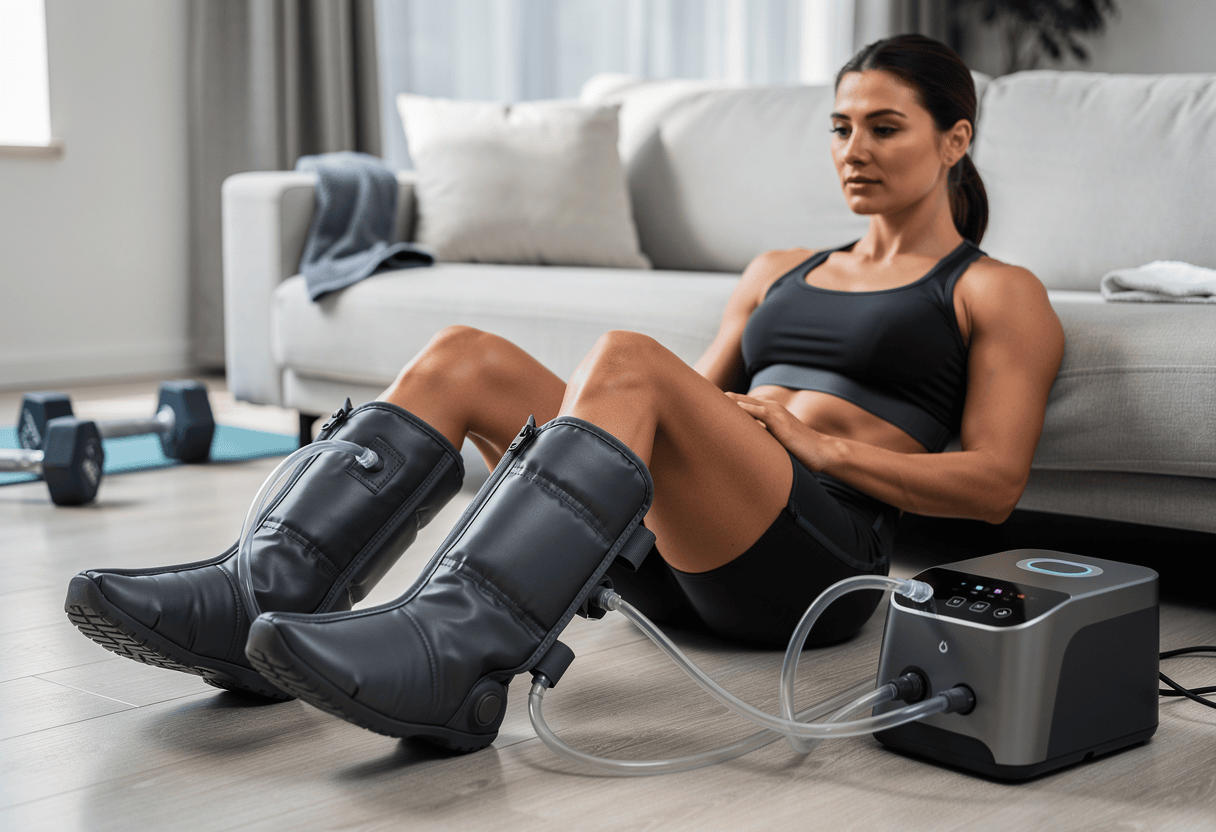
Remove shoes, socks above the ankle, and any tight shorts before climbing in. Compression on top of compression is uncomfortable and can pinch skin. Position the sleeves so the bottom seam sits at your toes, not below them.
Compression Boots vs Other Recovery Tools
Once you accept that compression boots help with how you feel rather than how fast your muscles repair, the comparison to other recovery tools becomes simpler.
Massage produces a slightly larger effect on soreness in head-to-head studies, and a 2025 meta-analysis on muscle recovery interventions ranked massage and cold exposure as the most powerful options for reducing inflammation markers. The catch is cost and availability – a weekly massage runs $60 to $120, while the boots are a one-time purchase you can use nightly.
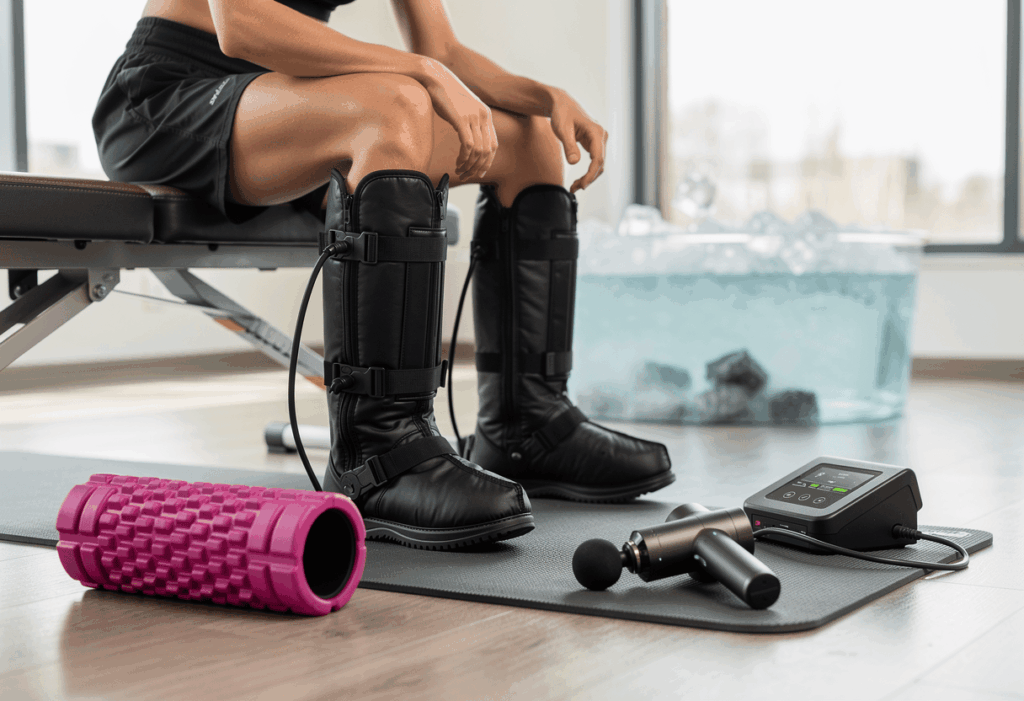
Foam rolling addresses fascial mobility in a way compression boots cannot. The two are complementary, not substitutes. A reasonable post-workout sequence is 5 to 10 minutes of foam rolling on tight spots, then 20 minutes in the boots while you read or eat.
Cold water immersion has stronger evidence for reducing inflammation markers, but it is also harder to do consistently – most people will not fill an ice bath every night for a year. The compliance gap is why the boots often outperform cold exposure in real-world recovery routines, even if cold has the better lab numbers.
Compression socks and sleeves are static, not dynamic. They are useful for travel, long shifts, and during runs, but they do not produce the sequential pump that pneumatic boots do. Different tool, different job.
When to Avoid Compression Boots
The boots are safe for most healthy adults, but there are specific situations where you should talk to a clinician before using them or avoid them entirely.
Active deep vein thrombosis or recent blood clots are an absolute contraindication. The whole point of pneumatic compression is to push venous blood upward, and that is the last thing you want with an unstable clot.
Severe peripheral artery disease, advanced diabetic neuropathy, and acute infections of the leg all warrant medical clearance first. Open wounds, recent fractures, and any condition where increased blood flow could worsen swelling or pain are also reasons to wait.
Pregnancy is not an automatic disqualifier, but it should be discussed with an OB before starting compression therapy, particularly in the third trimester.
For everyone else, side effects are minor and rare – usually short-term skin irritation or mild numbness, both of which resolve when you stop the session.
Do Compression Boots Actually Work – Frequently Asked Questions
Do compression boots really flush lactic acid?
The “lactic acid flush” framing is a marketing oversimplification. Blood lactate clears within an hour of exercise stopping, with or without compression, and one of the better-controlled studies actually found higher blood lactate during subsequent exercise after IPC use, not lower. What the boots do is increase venous return and reduce subjective heaviness, which is a real effect – just not the one the lactic acid story describes.
How often should I use compression boots?
For active athletes, one 20 to 30 minute session after a hard workout is the sweet spot. Daily use during a heavy training block is reasonable. Twice a day is fine if you genuinely have two hard sessions, but offers diminishing returns. Light or rest days do not need a session – save the time and let your body recover passively.
Will compression boots help me recover faster from a marathon?
They will likely reduce how sore your legs feel in the days after the race, but the controlled evidence on actual physical recovery from prolonged endurance events is weak. The 2016 Western States ultramarathon study found no objective performance difference between compression, massage, and rest on day 3 and day 5 timed runs. Use them for comfort, not for a magical comeback.
Are expensive compression boots worth more than budget ones?
Above roughly $300, you are mostly paying for build quality, app integration, wireless operation, and zone customization – not for better recovery. The compression mechanism itself is similar across price tiers. A $300 device used daily will outperform a $1,000 device used once a month, every time.
Can I use compression boots before exercise instead of after?
There is some evidence that pre-exercise IPC can improve range of motion and warm-up sensation, but the effect is small and the protocol is not well established. For now, the strongest evidence supports post-exercise use within an hour of finishing a session.
How long until I feel a difference?
Most users notice a clear subjective difference in leg heaviness after the very first session. Whether that translates into meaningful long-term recovery depends on your training load, sleep, and nutrition – none of which the boots can fix. Give any device a four-week trial during a real training block before deciding if it earns its place.
The Bottom Line
Compression boots are not a recovery miracle, and the marketing language around lactic acid flushing and erased soreness oversells what the science supports. They are also not a placebo – the venous return effect is real, the perceptual benefit is consistent across studies, and the clinical safety record is excellent.
Buy them if you train hard enough that recovery is a daily problem, if you stand for a living, or if you would otherwise be paying for weekly massage. Skip them if you train casually, sleep poorly, eat erratically, or expect any device to compensate for those gaps. The honest case for compression boots is small, repeatable, and worth the money for the right user – and worth nothing for the wrong one.