Most people who buy compression boots set them up wrong on the first try. They crank the pressure to maximum, sit for ten minutes scrolling their phone, then wonder why their legs feel about the same. The mechanism is doing its job, the protocol is the problem.
Used correctly, a 20 minute session leaves your legs noticeably lighter and your next workout feels less wrecked. Used poorly, the boots are an expensive seat warmer.
This is the protocol I run with the runners and lifters in my recovery studio, built from manufacturer guidelines, clinical compression therapy norms, and what actually shows up in the peer-reviewed literature.
Before You Step In: Setting Up the Session
The pre-session details matter more than people think. How you prepare your body and your environment determines whether the next 25 minutes do anything useful.
Strip down to bare legs or thin athletic socks. Compression on top of jeans, knee-high socks, or tight leggings creates pressure points and pinches the skin. The boots are designed to apply even pressure across smooth fabric or bare skin, not over seams and waistbands.
Hydrate before you start. The whole point of pneumatic compression is to move fluid, venous blood, lymphatic drainage, interstitial water. Doing that on a dehydrated body is uncomfortable and reduces the flushing effect. A glass of water 15 minutes before the session is enough.
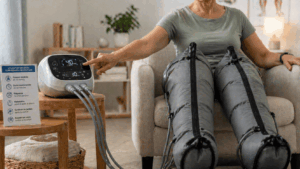
Find a flat, supported surface. A couch, a recliner, or a bed with your back propped up. Your legs should be roughly horizontal or slightly elevated, never dangling. Sitting upright in a kitchen chair with feet on the floor partially defeats the venous return effect.
Empty your bladder. Twenty-five minutes is a long time to be locked into a pair of inflated sleeves you cannot easily remove mid-cycle.
How to Put the Boots On
The compression boots instructions in the box always say “slide your leg in and zip up”, and that is technically correct, but the alignment details are where most users go wrong.
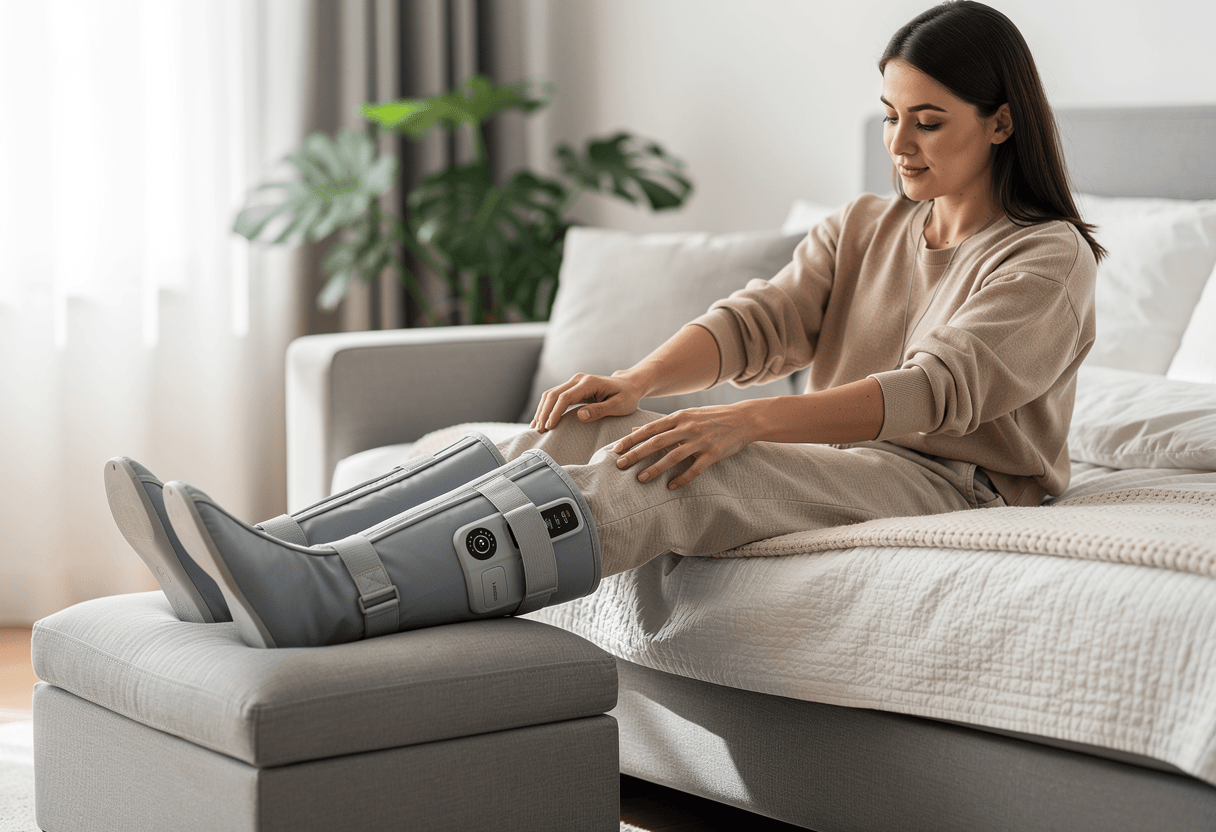
Sit on the edge of your seat first, then slide each foot all the way to the toe of the boot before you zip. Your toes should sit at the very end of the boot, not floating in space halfway down. If there is empty fabric below your foot, the bottom chamber inflates against nothing and you lose the first stage of the sequential pump.
Zip from the ankle up, smoothing the fabric flat against your leg as you go. Any fold or twist in the sleeve becomes a hard ridge once the chamber inflates around it. Run a hand down the front of the sleeve before you start the cycle, it should feel uniformly snug, not loose at the calf or pinching at the knee.
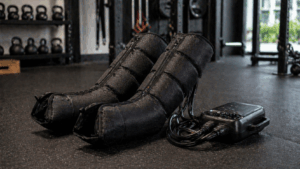
Connect the hoses or activate the wireless control unit. Most modern boots beep when each leg is properly sealed and ready.
Choosing the Right Pressure
This is the single biggest mistake first-time users make. They see a device that goes to 100 or 110 mmHg and assume more pressure equals better recovery. It does not.
Clinical compression therapy and the studies showing positive recovery effects use pressures in a moderate range. Most research protocols sit between 60 and 80 mmHg, which is firm enough to feel like a deep squeeze without crossing into uncomfortable or numbing territory.
If you are new to compression boots, start at the lowest setting your device offers and run a 15 minute session. Pay attention to how your legs feel during and after. If the pressure feels gentle and the post-session sensation is just “slightly fresher”, move up one level next time.
For active recovery after a hard workout, most users land on 60 to 80 mmHg as their working zone. Anything above 90 mmHg starts to feel intrusive for most people, and there is no published evidence that higher pressure produces better DOMS reduction or faster perceived recovery.
If you have a vascular condition and a doctor has cleared you for compression therapy, follow their specific pressure guidance, they may want you in a particular range that aligns with prescribed compression sock therapy.
How Long Compression Boots Sessions Should Last
The how long compression boots question is the second most common one I get, and the answer depends entirely on what you just did and what you are trying to fix.
Standard post-workout recovery: 20 to 30 minutes. This is the sweet spot for clearing the heaviness from a hard run, lifting session, or interval workout. The published studies showing positive effects on perceived soreness almost all sit in this window.
Long endurance event recovery: 30 to 60 minutes. After a marathon, century ride, or all-day hike, a longer session helps with the deeper swelling and lymphatic load. Some athletes split this into two 30 minute sessions a few hours apart, which works better than one 60 minute marathon for most people.
End-of-day decompression for desk workers or people on their feet: 15 to 20 minutes. The goal here is venous return, not muscle recovery. Short and frequent beats long and rare.
First-time use: cap it at 15 minutes regardless of context. Your nervous system needs a session or two to get used to the squeeze-release rhythm, and overdoing it on day one usually means skin irritation or a sore feeling that turns people off the device entirely.
Going past 45 minutes in a single session rarely adds anything. The flushing effect plateaus, and the longer you sit immobile in tight sleeves, the more likely you are to develop minor skin irritation or numbness in the toes.
Compression Boots Settings: Modes and Zones Explained
Modern devices come with a confusing menu of compression boots settings, modes, and zone controls. The marketing names vary by brand, “flush mode”, “ZoneBoost”, “lymphatic drainage”, “athlete recovery”, but they all break down into a few real categories.
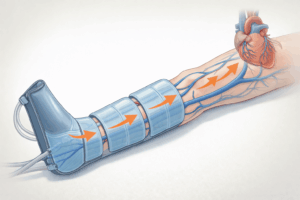
Sequential mode is the default and the one you should use most of the time. Air fills the foot chamber first, then the calf, then the knee, then the thigh, then releases and starts over. This is the wave-like pump that mimics the natural muscle pump, and it is what every published study uses as the baseline protocol.
Pulse or flush mode uses shorter, faster bursts of pressure across multiple chambers at once. It feels different and some users prefer it for the sensation, but there is no evidence it works better than standard sequential. Use it if you find it more comfortable, not because it sounds more advanced.
Zone control or ZoneBoost lets you turn off chambers you do not want compressed, useful if you have a bruise, tender spot, or recent minor strain on one part of the leg. Lower the pressure or skip the zone entirely over the affected area.
Pre-set programs with names like “athlete recovery” or “rehab” usually just combine a pressure level, a session duration, and a mode. They are convenient if you want one-button operation, but you can recreate any of them manually in 30 seconds.
For most people on most days, the right answer is: sequential mode, 70 mmHg, 25 minutes. Get that protocol working consistently before you start fiddling with everything else.
The Best Time to Use Compression Boots
Timing changes the perceived effect more than people expect. The same protocol feels different depending on when you slot it into the day.
Within an hour of finishing a hard workout is the strongest window. Your legs are warm, blood flow is already elevated, and the boots help carry that elevated circulation through into the cool-down phase. This is where most of the published positive results come from.
In the evening before bed works well for runners and lifters in a heavy training block. The compression session signals the parasympathetic system, and most users sleep better after a 25 minute session than they do without one. Just leave 30 to 45 minutes between the boots and lights out so you are not lying down with hot, freshly compressed legs.
Mid-morning on a rest day is fine if that is when you have time. The benefit is smaller than the post-workout window but not zero, particularly during a high-volume week.
Pre-workout use has a small evidence base for improving range of motion and warm-up sensation, but the protocol is not well established. If you want to try it, run a shorter session, 10 to 15 minutes at lower pressure, and finish at least 20 minutes before you start training.
How Often to Use Compression Boots
For most active people, three to five sessions a week covers the recovery benefit without diminishing returns. Daily use is fine during a heavy training block or race week, and there is no evidence it causes any harm in healthy adults.
Twice a day is the realistic ceiling. Beyond that, you are spending more time in the boots than your training warrants, and the marginal benefit drops to nothing. Most users who run two sessions in a day do one post-workout and one before bed.
On easy days or full rest days, you do not need a session. Save the time and let your body recover passively, the boots are a tool for managing real recovery debt, not a daily ritual you have to perform.
What to Do During the Session
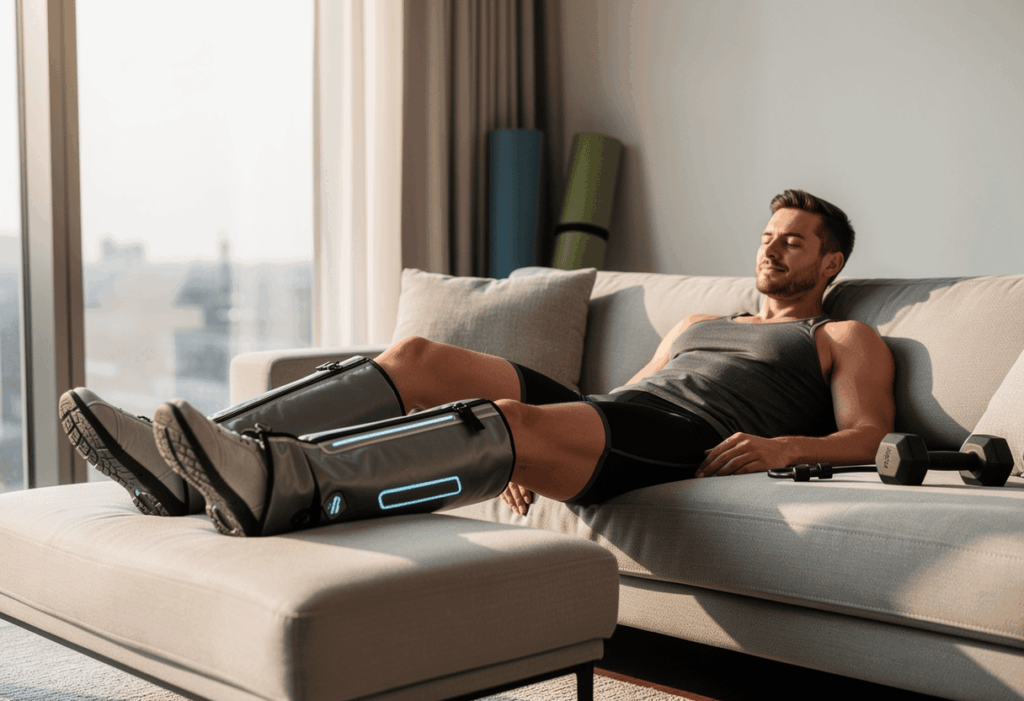
Once the boots are running, stay still and keep your legs roughly horizontal. Crossing your legs, fidgeting, or constantly shifting position interrupts the chamber sequence and reduces the flushing effect.
Read, watch something, answer emails, or just close your eyes. Most users find 25 minutes goes faster than expected once they settle in.
Pay attention to sensation, particularly in the first few sessions. If you feel pins and needles, sharp pain, or significant numbness, stop the cycle and remove the boots. Some tingling during the deepest compression phase is normal, but it should disappear within seconds when the chamber releases. Persistent numbness means the pressure is too high or the fit is wrong.
When the session ends, sit for a minute before standing up. Your legs have been in a passive, compressed state and the rapid blood flow shift on standing can briefly feel disorienting.
When Not to Use Compression Boots
The boots are safe for most healthy adults, but a few specific situations call for medical clearance or full avoidance.
Active deep vein thrombosis or recent unstable blood clots are an absolute contraindication. Pneumatic compression pushes venous blood upward, which is exactly what you do not want with an unstable clot.
Severe peripheral artery disease, advanced diabetic neuropathy, open wounds, recent fractures, or active infections in the leg all require talking to a doctor before any use.
Pregnancy is not an automatic disqualifier, but compression therapy in pregnancy should be discussed with an OB first, particularly in the third trimester.
For everyone else, the worst likely side effects are short-term skin irritation or mild numbness, both of which resolve immediately when you stop the session.
How to Use Compression Boots, Frequently Asked Questions
Should I wear compression boots over clothes or on bare skin?
Bare skin or thin athletic socks is best. Thick socks, leggings, jeans, and any seamed clothing create pressure points under inflation and reduce the smoothness of the chamber pump. Some users prefer thin moisture-wicking sleeves for hygiene if multiple people share the device.
Can I use compression boots every day?
Yes, daily use is safe for healthy adults, and during heavy training blocks or race week it is reasonable. The diminishing returns kick in past once or twice a day, and on full rest days you do not need a session at all. Listen to your legs, if they feel heavy and tired, run a session. If they feel fresh, save the 25 minutes.
What pressure should I start at as a beginner?
Start at the lowest setting your device offers and run a 15 minute first session. Most users settle into 60 to 80 mmHg as their working range within two or three sessions. Higher pressure is not better, the published studies showing positive recovery effects use moderate pressures, not maximum settings.
Can I fall asleep in compression boots?
This is not recommended. The boots have automatic timers that end the session, but staying in compressed sleeves for an extended period while asleep increases the risk of skin irritation, numbness, or pressure points. Use them while you are awake and aware of how your legs feel, then remove them before settling into bed.
Can I use compression boots before a workout?
You can, with caveats. A short pre-workout session of 10 to 15 minutes at lower pressure may improve range of motion and warm-up sensation, but the evidence is much weaker than for post-workout use. Finish at least 20 minutes before training starts so your nervous system has time to transition out of the parasympathetic state the boots tend to induce.
Why don’t I feel anything during my session?
Three usual reasons. Pressure is too low, bump it up one level. Fit is loose, the chambers are inflating against air instead of muscle, so re-zip and make sure your toes touch the bottom. Or the cycle is the wrong type, try sequential mode if you are on pulse or flush mode. If none of those fix it, you may simply not be sore enough to notice the difference, which is a good problem to have.
Do I need to drink water before and after?
A glass of water 15 minutes before the session and another one afterward is plenty. The boots move fluid through your circulatory and lymphatic systems, and being well hydrated makes the process more comfortable and slightly more effective. You do not need to drink a liter, just do not start a session dehydrated.
The Bottom Line
The protocol that works for most people is simple, and it does not change much from session to session. Sequential mode, 60 to 80 mmHg, 20 to 30 minutes, within an hour of a hard workout, three to five times a week. Bare legs, hydrated, supported on a flat surface, completely still during the cycle.
Run that consistently for four weeks during a real training block and you will know whether compression boots earn their place in your recovery routine. Skip the high-pressure heroics and the elaborate mode-switching, the boring protocol is the one that actually works.