The shortest honest answer to “are compression boots worth it” is, it depends on how much you train and what you would spend on recovery otherwise. The longer answer is more useful, because the device costs anywhere from $200 to $1,500 and the wrong purchase sits in a closet within three months.
Most articles answering this question fall into two camps. The wellness blogs say yes for everyone. The skeptical sports science sites say no for almost everyone. Both are wrong because they ignore the only variable that actually matters, which is how often you will use them.
Here is the cost-benefit math, the science honestly summarized, and the buyer profiles where the boots clearly earn their keep versus the ones where they sit gathering dust.
What You Are Actually Paying For
The compression boots market splits into three rough price tiers, and understanding what each tier delivers makes the value question much easier to answer.
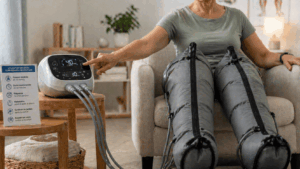
Entry-level devices, $150 to $350. Brands like Fit King, Sharper Image, and various Amazon-stocked options. They use the same fundamental sequential compression mechanism as the premium devices, with 4 to 6 chambers, multiple modes, and pressure ranges that hit 200 mmHg or more. Build quality is basic, hoses tether you to a bulky pump, and the apps are usually nonexistent.
Mid-range devices, $400 to $700. The Therabody RecoveryAir Prime and the Hyperice Normatec Go sit here. Better build quality, smoother compression cycles, often app-controlled, and the Normatec Go in particular is a calf-only travel option that fits in a backpack.
Premium devices, $700 to $1,500. Normatec 3 Legs ($799), Normatec Elite ($999), and Therabody JetBoots Prime ($699 to $1,299). Wireless or hose-based with refined controls, app integration, multi-zone customization, and the build quality you would expect at the price.
The critical thing to understand is that the core compression mechanism is similar across all three tiers. The premium devices add features, build quality, and convenience, but they do not deliver fundamentally better recovery effects. A $300 device used five times a week will outperform a $1,000 device used once a month, every time.
The Honest Cost-Per-Use Math
This is where the compression boots worth the money question stops being abstract and becomes arithmetic.
A quality device lasts five to ten years with normal use. Spread a $600 purchase over five years of weekly use, that is roughly $2.30 per session. Use it three times a week for the same five years and the per-session cost drops to about $0.77.
Compare that to the alternatives most active people are already paying for. Sports massage runs $80 to $120 per hour in most US metros. Manual lymphatic drainage at a clinic is similar. Even cheap recovery options like a foam roller, a TheraGun, and a quality pair of compression socks together hit $400 by the time you have decent versions of each.
The break-even point depends on what you would otherwise spend. If you are paying for one massage a month at $100, a $600 device pays for itself in six months. If you would not be paying for any recovery service otherwise, the math gets harder, because you are comparing the device cost to zero.
That comparison is the trap. The right question is not “boots vs nothing”, it is “boots vs whatever you would spend the same money on” or “boots vs the recovery debt you accumulate without them”.
What the Science Actually Justifies
Before deciding what the boots are worth, you need to be honest about what they deliver. The marketing claims have outpaced the research by a wide margin.
What the research consistently supports: reduced perceived muscle soreness, improved venous return, lymphatic drainage assistance, and a measurable subjective freshness in the legs after a session. A 2022 systematic review and meta-analysis in the Journal of Clinical Medicine found a moderate effect size for pressotherapy reducing the severity of delayed onset muscle soreness across multiple studies.
What the research does not support: faster objective recovery of sprint times, peak power, or force output. A 2024 meta-analysis in Biology of Sport, covering 17 studies and 319 athletes, found only “trivial to small benefit” for muscle function recovery. The 2021 Journal of Sport Rehabilitation review on endurance athletes concluded that IPC delivered immediate pain relief no greater than what massage achieved, and no functional recovery benefit over a one to two week window.
So the boots reliably make you feel better. They do not reliably make you measurably faster the next day. That distinction matters less than it sounds, because perceived recovery is one of the strongest predictors of whether you actually show up for the next session.
If your training consistency improves because your legs feel less wrecked, the cumulative training adaptation is real, even if no single session shows up better in the data. That is the honest case for the boots, and it is enough to justify the cost for the right user.
Who Should Buy Compression Boots
The buyer profiles where the device clearly earns its keep are narrower than the marketing suggests, but they cover real situations.
You train four or more times a week with significant lower-body volume. Marathoners in heavy blocks, triathletes, ultrarunners, cyclists doing 200+ mile weeks, CrossFit athletes hitting daily metcons, and anyone whose training load actually creates a recovery deficit. This is the textbook use case and the population where the published positive effects are most consistent.
You stand or sit immobile for 8 or more hours a day at work. Nurses, hospitality staff, retail workers, teachers, and frequent business travelers. The venous return benefit is the closest thing the boots have to a clinical effect, and it shows up reliably for this group regardless of athletic context.
You are already paying for weekly sports massage or recovery services. The math is straightforward. A $600 device replaces 6 to 8 massages, and you have access to it every night with no booking required.
You manage a chronic lower-body issue with clinician approval. Mild lymphedema, post-surgical swelling management (cleared by a doctor), and certain venous insufficiency conditions all benefit from the same mechanism the device uses recreationally for athletes.
You will realistically use them three or more times a week for the next year. This is the variable that makes or breaks the purchase. Honest self-assessment matters, ask yourself how often you actually foam rolled last month, because that is roughly the rate at which you will actually use the boots.
Who Should Skip Compression Boots
The flip side matters just as much. The wrong purchase for the wrong user is a $700 mistake.
You train one to three times a week without serious volume. A foam roller, an extra hour of sleep, a real meal, and a 10 minute mobility routine will produce better recovery for this training load than any device. The boots become an expensive massage chair you sit in occasionally, and the per-use cost stays high forever.
You already struggle to maintain other recovery habits. If you have not foam rolled in three weeks, you will not use the boots in three weeks either. The device that requires zipping yourself in for 25 minutes is not going to fix a compliance problem the foam roller could not.
You sleep poorly, eat erratically, and over-train chronically. No recovery tool fixes a broken foundation. Spend the $600 on better food, a sleep tracker, or a coach before you spend it on a device that adds a layer to a routine that is already failing at the base.
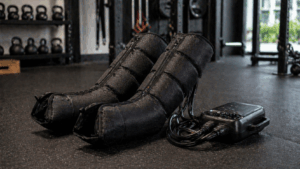
You live in a small space with no storage. The boots are bulky. The hoses, pump, and sleeves take up real square footage, and “I will set it up each time” is the lie that kills compliance fastest. If you do not have a corner of a couch where the device can live ready to use, your usage rate will be a fraction of what you predicted.
You expect dramatic objective performance changes. The science does not support that, and you will be disappointed. Buy the boots for how they make you feel, not for how they will change your splits.
Renting, Trying, and Cheaper Alternatives
Before dropping $700 on a premium system, there are smarter ways to test the value question for yourself.
Most physical therapy clinics, recovery studios, and an increasing number of gyms have compression boots available for member use. A 25 minute session typically costs $15 to $40, or comes free with membership at recovery-focused gyms. Three or four sessions over two weeks is enough to know whether you actually like the sensation and whether your legs respond meaningfully.
This single step kills the worst purchase mistake. If you hate the feeling of being squeezed for 25 minutes, you have just saved yourself $600. If you love it and notice real next-day differences, the purchase decision becomes easy.
Cheaper recovery alternatives that work for lower training volumes:
A quality foam roller for $35, a basic massage gun for $100 to $150, a pair of recovery compression socks for $40, and an elevation routine that costs nothing. Together this stack runs about $200 and covers the recovery needs of a recreational athlete training three times a week. For that user, this stack is genuinely better than a $600 device because the per-use friction is lower and the compliance is higher.
The $130 Costco option, if you can find it. Sharper Image branded boots periodically appear at Costco for around $130 with multiple chambers and modes. Triathlete magazine reviewed them favorably as a budget entry point. The build quality is basic and the warranty is thin, but for $130 the value question becomes much easier than at $700.
Are Premium Boots Worth the Extra Money?
This is the question hidden inside the bigger question, and it has a clear answer for most users.
The Normatec 3 at $799 and the Normatec Elite at $999 are excellent devices. The build quality is genuinely better, the compression cycle is smoother, the app integration works well, and they last a long time. The recovery effect is not meaningfully different from a $300 device, but the daily user experience is.
If you will use the boots five times a week for the next five years, the premium device is probably worth it. The cost per session over that timeframe is similar to a budget device, and you get a better experience every single time you use them.
If you are buying for the first time and unsure how much you will actually use them, start with a mid-range or budget device. The opportunity cost of a $300 device that ends up unused is much smaller than a $1,000 device that ends up unused. You can always upgrade if you find yourself reaching for the boots constantly.
Are Compression Boots Worth It, Frequently Asked Questions
Should I buy compression boots if I am not a serious athlete?
Probably not for athletic recovery, but possibly for venous return. If you stand or sit all day at work, travel frequently on long flights, or notice swollen heavy legs by evening, the boots can earn their keep on the circulation benefit alone. If you train casually without significant accumulating fatigue, your money is better spent on a foam roller and an extra hour of sleep.
How many sessions until they pay for themselves?
Compared to sports massage at $80 to $120 per session, most quality compression boots pay for themselves in 5 to 15 uses, often within the first month of regular training. Compared to doing no recovery at all, the math is harder because you are pricing convenience and a perceived freshness benefit rather than replacing an existing expense.
Are Normatec boots actually worth $800?
For high-volume athletes who will use them 4 or more times a week for years, yes. The build quality, control system, and app integration are noticeably better than budget alternatives, and the per-session cost over a 5-year ownership period is reasonable. For first-time buyers unsure of their usage rate, a $300 to $500 device is the safer purchase.
Do compression boots really work, or is it placebo?
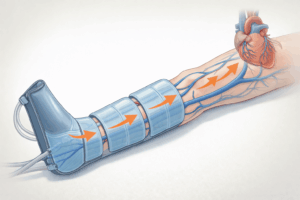
Both, partially. The mechanism is real, pneumatic compression measurably increases venous return and lymphatic drainage. The perceived freshness benefit is well documented in published meta-analyses. The objective performance benefit is much weaker than marketing suggests. Calling it placebo overstates the case, but calling it a recovery miracle overstates it further.
Can I share compression boots with my partner or roommate?
Yes, sleeves come in size ranges that fit most adult legs, and you can wear thin athletic socks for hygiene. Sharing significantly improves the value math, particularly for premium devices. A $999 Normatec Elite split between two regular users effectively becomes a $500 device per person, which is a much easier purchase to justify.
What is the minimum training frequency to justify the cost?
Roughly four sessions per week with meaningful lower-body volume. Below that, recovery is rarely the bottleneck, and the boots become an expensive luxury rather than a practical tool. At five or more sessions a week with race-pace intensity, the case becomes strong, and at seven sessions or two-a-days, the boots are close to essential.
Is it worth buying used compression boots?
It can be, with caveats. The pump is the most failure-prone component, and warranty rarely transfers between owners. A used premium device at half retail can be a great deal if you can verify the pump runs cleanly, the sleeves have no leaks, and the seller can demonstrate it working before purchase. Avoid heavily used clinic devices, which have logged thousands of hours.
The Bottom Line
Compression boots are worth the money for high-volume athletes, people on their feet all day, anyone replacing weekly massage spending, and users who can honestly predict using the device three or more times a week for the next year.
They are not worth the money for casual exercisers, people who already struggle with recovery compliance, anyone expecting dramatic performance gains the science does not support, and households with no storage space for a bulky device.
Try them first at a gym, clinic, or recovery studio before committing $700 of your own money. If after three or four sessions you find yourself thinking about owning a pair, the value question has answered itself. If you can take or leave them, save the money and buy a foam roller.