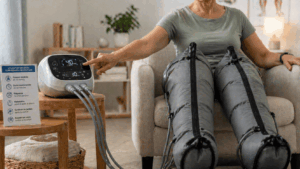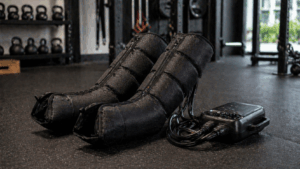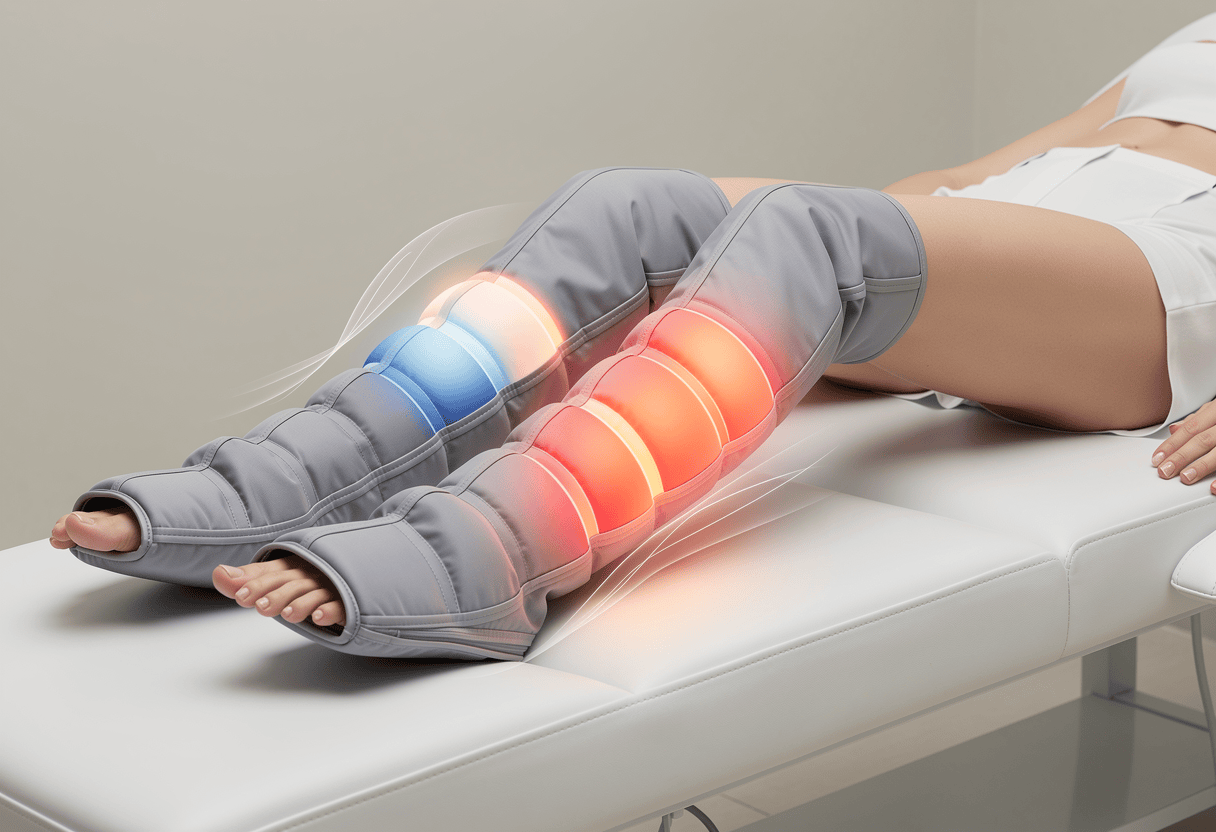
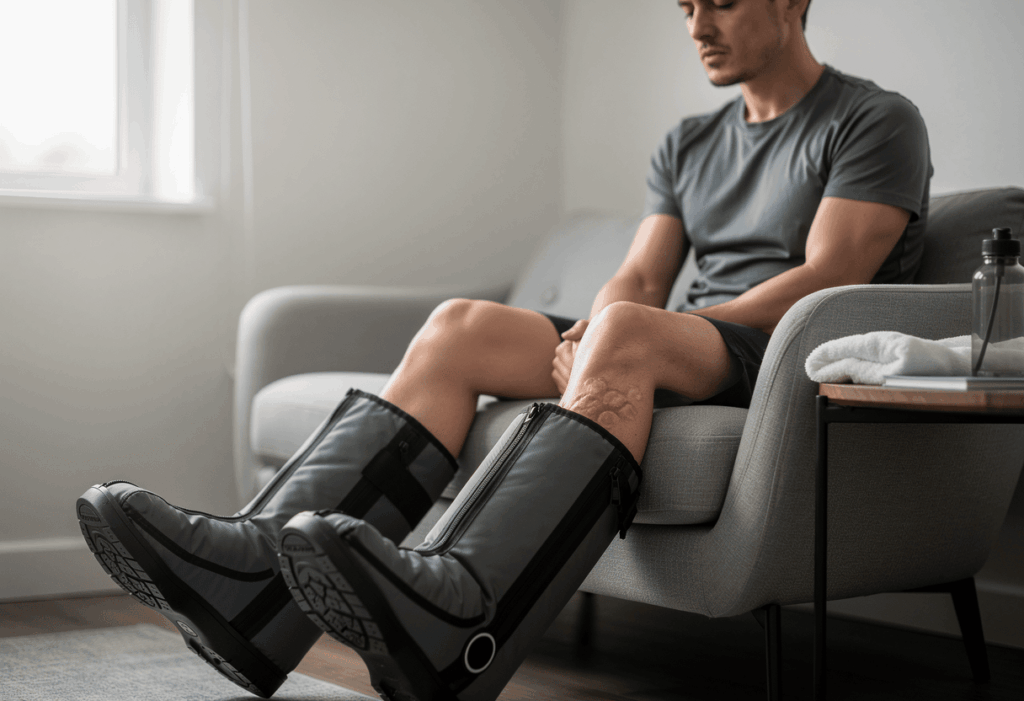
The default answer to “how long should you use compression boots” is 20 to 30 minutes, and for most users most of the time, that is exactly right. But that answer hides the details that actually matter, because session length changes depending on what you just did, what you are trying to fix, and how experienced you are with the device.
A first-time user who cranks the pressure to maximum and sits for 45 minutes will likely feel worse, not better. A marathoner who runs a cautious 15 minute session after a 26.2 mile race is probably cutting the benefit short.
Here is the protocol broken down by context, with concrete numbers for pressure, timing, and frequency, built from published recovery research and eight years of daily use in my recovery studio.
The Standard Session: 20 to 30 Minutes
This is the working range for compression boots session length that shows up across the published literature and manufacturer recommendations. A 2024 meta-analysis in Biology of Sport, covering 17 studies and 319 athletes, drew most of its positive data from protocols running in this window.
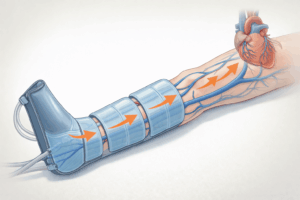
Twenty minutes is sufficient for general post-workout recovery. That gives the sequential pump time to run multiple full cycles from foot to thigh, mobilize interstitial fluid, and produce the measurable reduction in perceived soreness the research consistently supports.
Thirty minutes adds marginal benefit. If your legs were heavily loaded, if the soreness is already setting in, or if you have the time, the extra ten minutes extends the flushing period and typically feels noticeably better than stopping at twenty. But the difference between 20 and 30 is smaller than the difference between 0 and 20.
For most athletes on most training days, the right answer is pick a number in this range, stick with it, and stop optimizing. Consistency at 25 minutes beats an elaborate timing scheme you abandon in two weeks.
Session Length by Recovery Context
The general range is 20 to 30 minutes, but specific situations call for specific adjustments. Here is the breakdown we use in the studio, matched to what the published protocols support.
Standard gym workout or moderate run: 20 minutes. You did a strength session, a 5 to 8 mile run, or a moderate CrossFit WOD. The muscle damage is real but not extreme. Twenty minutes at 60 to 70 mmHg clears the heaviness and sets you up for the next day.
Heavy leg day or long run (10+ miles): 25 to 30 minutes. The training load was significant and the legs are already stiffening. The longer session gives the sequential pump more cycles to work through the deeper tissue fluid. Keep the pressure at 70 to 80 mmHg, not at maximum. The extra time matters more than extra intensity.
Post-marathon, ultra, or multi-day event: 30 to 45 minutes. Some athletes extend to 60 minutes after a major race, but there is limited evidence that sessions longer than 45 minutes produce additional benefit. A better approach for extreme events is two separate sessions of 30 minutes each, spaced a few hours apart, rather than one 60 minute session. This allows the tissue to respond and rebound between compressions.
End-of-day decompression for desk workers or people on their feet: 15 to 20 minutes. The goal is venous return, not deep muscle recovery. Shorter sessions at lower pressure (50 to 60 mmHg) are enough to clear the pooled fluid and reduce leg heaviness.
Pre-workout activation: 10 to 15 minutes maximum. If you want to use the boots before training, keep it short and low-pressure. Longer pre-workout sessions can shift your nervous system toward parasympathetic dominance, which reduces readiness for high-intensity output. Finish at least 20 minutes before training starts.
First-time use, regardless of context: 15 minutes. Your body needs a session or two to adapt to the squeeze-release rhythm. Starting at full duration and pressure on day one is how people get turned off the device permanently.
How Often to Use Compression Boots
The compression boots duration question has a frequency component that is just as important as session length. Using them once after a race is a different protocol than using them daily during a training block.
Three to five sessions per week is the working range for most active people. This covers post-workout recovery on hard days and gives you rest days without the boots when your legs genuinely do not need them.
Daily use is safe for healthy adults and is reasonable during heavy training blocks, race week, or periods of unusually high physical demand. Therabody, Hyperice, and the published literature all indicate no harm from daily sessions at standard duration and moderate pressure. Many professional athletes use compression boots after every training session.
Twice daily is the realistic ceiling. Some athletes in heavy training will run one session post-workout and a second session in the evening before bed. Beyond two sessions a day, the marginal benefit drops to essentially zero and you are spending more time in the boots than your physiology can use.
On rest days, you do not need a session. If your legs are genuinely fresh and your next hard workout is 24+ hours away, your recovery systems are handling the load without assistance. Save the session for the days when your legs actually need the help.
When Longer Sessions Make Sense
There are a few specific situations where extending beyond the standard 30 minute window is justified, but they are narrower than people expect.
Clinical lymphedema management: patients using IPC for lymphedema under medical guidance often run sessions of 30 to 60 minutes, sometimes longer, with specific pressure protocols prescribed by a vascular specialist. This is a clinical use case, not a recovery one, and the parameters should be set by a clinician, not by a general guide.
Post-surgical swelling management: similar to lymphedema, post-op compression sessions are often longer and at different pressures than athletic recovery. These are medically supervised and should follow the prescribing physician’s protocol exactly.
Multi-day stage races or tournament weekends: athletes competing on consecutive days sometimes benefit from a 45 minute session in the evening between stages. The logic is that the accumulated damage from sequential race days warrants a longer flushing period. Even here, two 25 minute sessions with a break between them is likely more effective than one 50 minute session.
For everyone else, going past 30 minutes is spending time for diminishing returns. If your legs still feel heavy after 30 minutes, the problem is probably not session length. It is training load, sleep, nutrition, or something else the boots cannot fix.
When Shorter Sessions Are Enough
Not every session needs to be a full 25 minute protocol. There are times when a shorter session is not just acceptable but optimal.
Light training days: if you did an easy 3 mile jog or a low-volume accessory session, 15 minutes at moderate pressure handles the minor recovery need without over-treating. The legs did not accumulate much damage and do not need a long flush.
Travel recovery: after a long flight or drive, a 15 to 20 minute session at 50 to 60 mmHg targets venous pooling from immobility. The goal is not deep muscle recovery, it is simply getting fluid moving again.
Stacking with other recovery tools: if you are following up 10 minutes of foam rolling with a compression session, 15 to 20 minutes is enough. The foam rolling already started the soft tissue work, and the boots are finishing the venous return component.
Time-crunched days: 15 minutes of compression is always better than zero minutes. If you only have a quarter hour between coming home and making dinner, zip in, run a short cycle, and call it done. Skipping the session because you cannot do a full 30 is the worst option.
What Happens if You Use Them Too Long
Going past the recommended compression boots session length is unlikely to cause serious harm in healthy adults, but it does produce diminishing returns and can cause minor issues.
Skin irritation: prolonged contact with the boot fabric under sustained pressure can cause redness, friction marks, and irritation, particularly in warm environments or with sensitive skin. This resolves when you remove the boots but is unpleasant enough to discourage future use.
Numbness and tingling: extending a session at higher pressure beyond 40 minutes increases the chance of temporary numbness in the toes or foot. The sensation disappears when the pressure releases, but it is your body telling you the session has gone on too long.
Tissue overstimulation: your circulatory and lymphatic systems need time to process the fluid that gets mobilized during compression. Running the boots for an hour straight at high pressure can leave your legs feeling temporarily more fatigued, not less, because the tissue has been continuously compressed without recovery time.
The practical ceiling is 45 minutes for athletic recovery. If you find yourself regularly needing more than 45 minutes to feel recovered, the issue is almost certainly upstream, training load, sleep quality, or nutrition, and the boots are being asked to compensate for something they cannot fix.
The Best Time of Day for a Session
Timing interacts with session length in ways that matter for how much benefit you extract.
Within 30 to 60 minutes of finishing a hard workout is the strongest window. Your legs are warm, blood flow is elevated, and the boots extend that elevated circulation through the cool-down phase. This is where the published positive results are strongest, and it is the timing protocol most researchers use.
In the evening before bed works well for people in heavy training blocks or on their feet all day. The compression session shifts the nervous system toward parasympathetic dominance, and most users sleep better after a 25 minute session than without one. Leave 30 to 45 minutes between removing the boots and lying down.
Morning before training has a smaller evidence base. A 10 to 15 minute session at low pressure can improve warm-up sensation, particularly on cold mornings or after travel. Keep it short, keep the pressure low, and finish at least 20 minutes before you start working out.
If you can only fit one session a day, make it the post-workout one. That is the context where the boots have the most to work with and the most measurable effect on next-day leg feel.
How Long Should You Use Compression Boots, Frequently Asked Questions
Is 15 minutes long enough for a compression boot session?
For light recovery, yes. A 2015 study on Olympic athletes found that 15 minutes of intermittent pneumatic compression produced meaningful reductions in soreness. For deep recovery after intense training, 20 to 30 minutes is better. But 15 minutes is always better than skipping the session entirely.
Can I use compression boots for an hour?
You can, but beyond 45 minutes the benefit plateaus for athletic recovery. Sessions longer than 45 minutes are mainly justified for clinical lymphedema or post-surgical protocols under medical guidance. For standard workout recovery, your time is better spent on two 25 minute sessions than one 60 minute session.
How long should beginners use compression boots?
Start at 15 minutes with the lowest pressure setting your device offers. Run two or three sessions at that level before increasing either duration or pressure. Most people settle into a 20 to 25 minute working protocol within a week. Jumping straight to 30 minutes at high pressure on day one is the most common reason people get uncomfortable and abandon the device.
Should session length change based on pressure?
Yes, inversely. Higher pressure sessions should be shorter, and lower pressure sessions can run longer. If you are working at 90 mmHg or above, cap the session at 20 minutes. At 50 to 60 mmHg, 30 minutes is comfortable and productive. The combination of high pressure and long duration is what causes numbness and skin irritation.
How often should I use compression boots per week?
Three to five sessions a week covers most active athletes. Daily use is safe during heavy blocks. Twice a day is the realistic ceiling. On rest days, you generally do not need a session. The best frequency is the one you can maintain consistently for months, not the maximum number you can tolerate for one week.
Is it bad to use compression boots every day?
No. Daily use at moderate pressure and standard duration (20 to 30 minutes) is considered safe for healthy adults and is common practice among professional athletes. The only risk of daily use is if you are compensating for poor sleep, bad nutrition, or an unsustainable training load by relying on the boots instead of fixing the actual problem.
Can I fall asleep in compression boots?
Not recommended. Most devices have automatic shutoff timers, but staying in compressed sleeves while asleep increases the risk of skin irritation, numbness, and pressure points. Use the boots while you are awake and aware of how your legs feel, then remove them before settling into bed.
The Bottom Line
The protocol that works for the vast majority of users is straightforward. Twenty to thirty minutes at 60 to 80 mmHg, within an hour of a hard workout, three to five times a week. First-time users start at 15 minutes and low pressure. Post-race or heavy training days can extend to 45 minutes or split into two shorter sessions.
Going past 45 minutes adds nothing for athletic recovery. Going under 15 minutes likely does not run enough compression cycles to be useful. Everything between those boundaries works, and the exact number matters far less than doing it consistently. Pick 25 minutes, set the timer, and stop trying to optimize something that is already working.