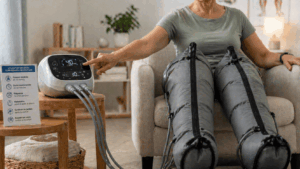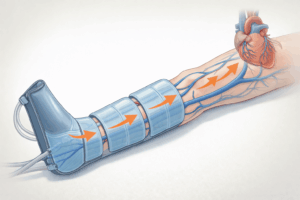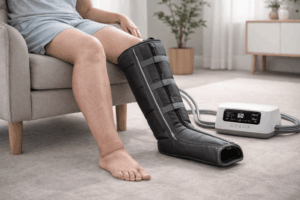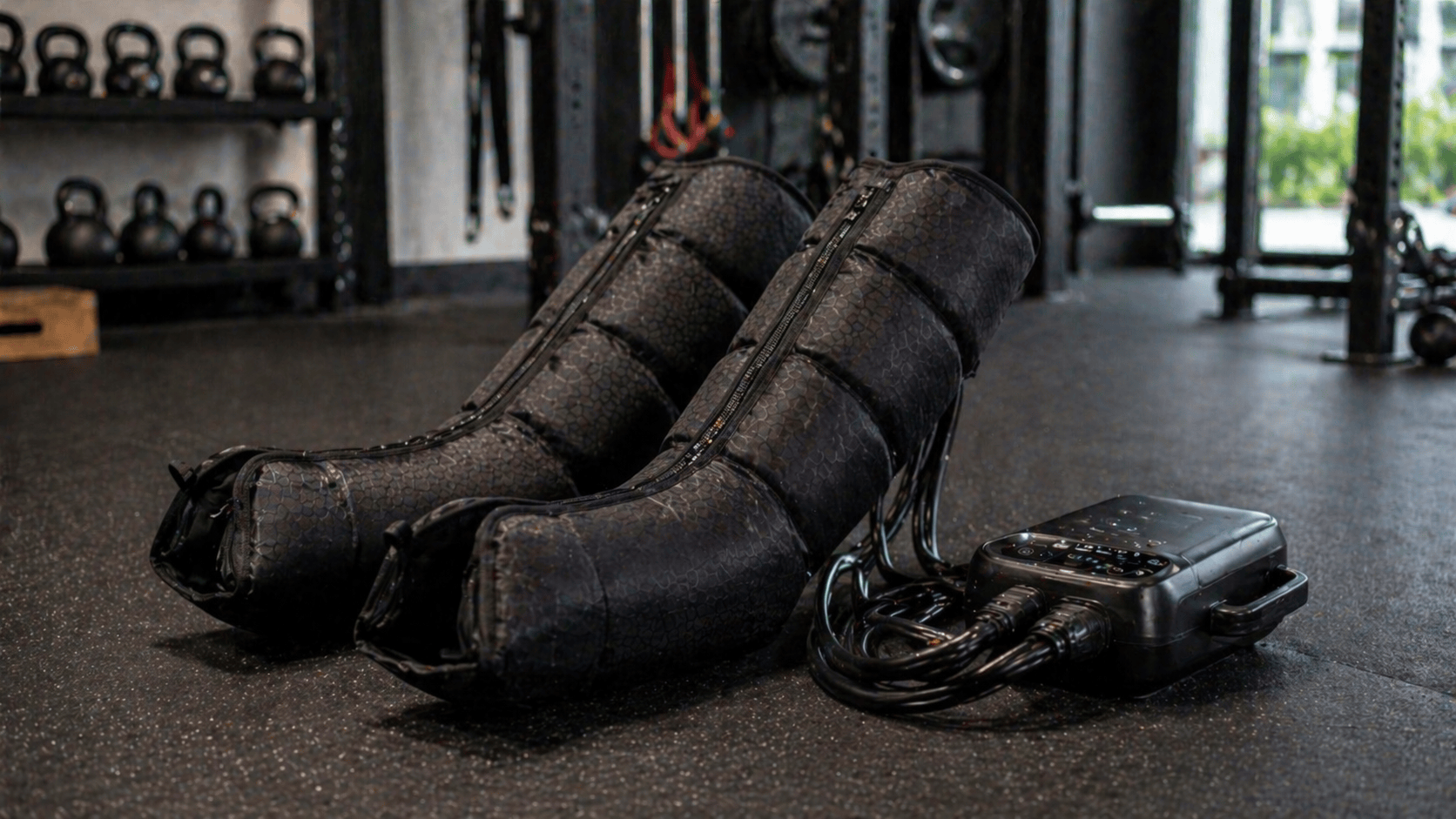
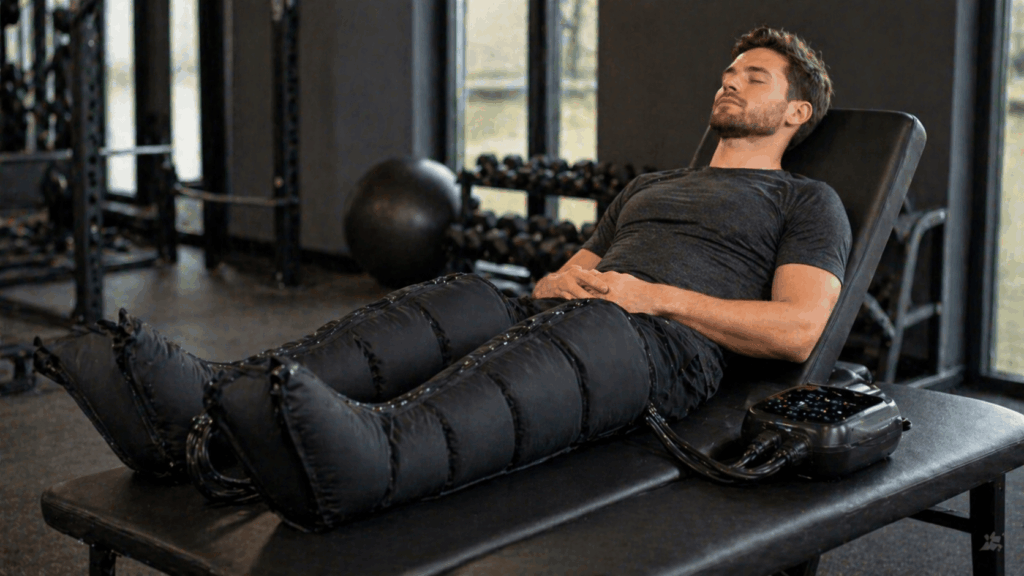
Athletes don’t recover passively. The training loads in CrossFit, competitive lifting, team sports, and multi-sport programs demand recovery tools that actually keep pace with the volume. Compression boots for athletes have moved out of pro sports recovery rooms and into home gyms, and the current generation delivers pneumatic compression that genuinely accelerates the gap between hard sessions.
We tested five athlete recovery boots across a 6-week training block that combined heavy squats, sprint intervals, and two CrossFit-style conditioning workouts per week. Our scoring reflects what athletes actually need: deep, consistent pressure across the full leg, fast setup so you’ll actually use them after a workout instead of skipping recovery, and build quality that survives daily use in a gym bag.
The short answer: the Hyperice Normatec Elite is the best all-around pick for athletes. It’s fully wireless, delivers 5-zone compression with ZoneBoost targeting, weighs only 3.2 lbs per boot, and integrates with the Hyperice app for tracking. If your budget doesn’t stretch to $999, the JetBoots Prime and FIT KING offer strong alternatives at different price points.
How We Evaluate Compression Boots for Athletes
Athletic recovery scoring prioritizes compression quality and adjustability because athletes push tissue harder and need more from a recovery tool than casual users. Portability matters here too: if the boots can’t go to the gym, the competition site, or the travel bag, they’ll sit unused during the weeks you need them most. We weight value at 15% because the question isn’t “is it cheap” but “does this deliver enough recovery benefit to justify one less sports massage per month.”
| Compression quality | 30% | Pressure range, sequencing, chamber overlap, deep tissue penetration |
| Adjustability | 25% | Pressure levels, zone targeting, pre- vs post-workout modes |
| Portability | 15% | Weight, fold size, gym bag fit, wireless capability |
| Ease of use | 15% | Setup speed post-workout, controls when exhausted |
| Value | 15% | Recovery ROI vs sports massage, warranty, build longevity |
1. Hyperice Normatec Elite: 5 zones, wireless, 3.2 lb per boot, the athlete’s top tier
The Normatec Elite is the boot that sits in every elite training facility for a reason. It’s fully wireless with the pump and controls built into each boot, runs 5 overlapping zones with 7 compression levels, and deploys ZoneBoost technology that lets you lock extra compression cycles onto whichever body part got crushed in the last workout. Quads destroyed after heavy front squats? ZoneBoost the thighs. Calves smoked after box jumps? ZoneBoost the lower leg. No other boot in this lineup gives you that granularity.
At 3.2 lbs per boot, the Normatec Elite is the lightest full-leg wireless system we tested, and the 4-hour battery means you can use them at the gym after a session and still have charge left for home. The Hyperice app tracks sessions, lets you build custom presets, and syncs over Bluetooth without fuss. HyperSync technology ensures both boots fire symmetrically, which matters more than you’d think when your left quad is tighter than your right after an asymmetric workout.
The downside is straightforward: at roughly $999, the Normatec Elite costs more than everything else in this comparison. The 1-year warranty is shorter than budget competitors, and there’s no carry case included (an odd omission at this price). But for athletes who train 5-6 days per week and treat recovery as non-negotiable, this is the tool that matches their commitment level.
2. Therabody JetBoots Prime: 4 chambers, wireless, folds into a backpack for competitions
The JetBoots Prime is the boot you pack for competition weekends. Therabody built a fully wireless full-leg system that folds flat and ships with a drawstring backpack, and at 6 lbs total it’s light enough to carry alongside your lifting belt and shoes. For CrossFit competitors, powerlifters, or team sport athletes who travel for games, the ability to run a full recovery session in a locker room or hotel room between events is the selling point.
The compression uses 4 overlapping chambers with Therabody’s TruGrade Technology, delivering 4 pressure levels from 25 to 100 mmHg in 25 mmHg increments. The sequencing feels smooth and the calf flush is solid after high-rep squat sessions. Battery runs 3 hours, you can use the boots while charging, and the one-touch control panel on the right boot keeps setup to about 60 seconds.
Where it falls short versus the Normatec Elite: fewer pressure levels (4 vs 7), fewer zones (4 vs 5), and the asymmetric pump placement creates a slightly different feel on each leg. For athletes whose primary goal is having recovery available wherever they train or compete, the JetBoots Prime delivers more usable portability than anything else at its price.
3. Hyperice Normatec 3: 5 zones, ZoneBoost, Pulse technology, the established benchmark
The Normatec 3 is still the recovery benchmark against which every other boot is measured. It uses the same 5-zone Pulse technology and ZoneBoost as the Elite but in a tethered design with a separate control unit and hoses. The trade-off is clear: you lose portability and gain a slightly lower price point ($799 vs $999) and the exact same compression quality.
For athletes who do most of their recovery at home or in a dedicated gym space, the Normatec 3 is arguably the smarter buy. The control unit gives you tactile buttons and a clear display, the hose system is easy to connect, and the boot feels identical to the Elite during a session. You still get 7 compression levels, Bluetooth app integration, and ZoneBoost targeting. The 100 mmHg peak pressure may sound low compared to budget models that claim 150 mmHg, but Hyperice’s patented sequencing and chamber overlap deliver deeper fluid displacement per cycle than higher-pressure competitors.
The limitation is that it stays home. The control unit, hoses, and lack of an included carry case make travel impractical. For the athlete with a settled gym routine, that’s fine. For anyone competing on the road, the Elite or JetBoots Prime is the better investment.
4. FIT KING FT-091A: 4 chambers, 12 levels, 150 mmHg peak, the budget athlete’s pick
The FIT KING FT-091A is the entry point for athletes who want legitimate pneumatic compression without the premium price tag. It runs 4 overlapping chambers from foot to thigh, 12 pressure intensities from 40 to 150 mmHg, 4-zone targeting (foot, lower calf, upper calf, thigh), and a cordless 2500mAh battery that delivers 3-4 hours per charge. At roughly $200, it gives you more features per dollar than any other boot in this comparison.
For CrossFit athletes and gym-goers training 4-5 days per week, the FIT KING handles the daily recovery workload without complaint. The higher pressure ceiling (150 mmHg vs 100 mmHg on Normatec) means you can run a genuinely firm squeeze on dense quad tissue after heavy leg days. The single-leg mode via silicone plug is useful when one side is significantly more beat up than the other after unilateral work.
5. Hyperice Normatec Go: calf-only, 7 levels, the athlete’s targeted recovery tool
The Normatec Go is the calf-specific wireless wrap for athletes who accumulate most of their fatigue below the knee – box jumps, double-unders, sprints, and long field sessions. At 1 lb 3 oz per wrap with 7 compression levels, 3 overlapping 360-degree zones, and Bluetooth app control, it fits in any gym bag and delivers focused recovery between sessions without a full-boot setup.
| # | Model | Score | Best for | Price |
|---|---|---|---|---|
| 1 | Hyperice Normatec Elite | 9.5 | Best overall wireless | ~$999 |
| 2 | Therabody JetBoots Prime | 9.1 | Competition travel | ~$699 |
| 3 | Hyperice Normatec 3 | 8.8 | Home gym recovery | ~$799 |
| 4 | FIT KING FT-091A | 8.4 | Budget athletes | ~$200 |
| 5 | Hyperice Normatec Go | 8.0 | Calf-focused athletes | ~$399 |
What to Look for in Compression Boots for Athletes
Full-leg coverage is non-negotiable for multi-sport athletes
Athletes who squat, jump, sprint, and train across modalities need compression that covers the entire leg from foot to upper thigh. Calf-only devices work as supplements but can’t address quad, hamstring, or hip flexor fatigue. Every full-leg system in this comparison uses 4-5 chambers for sequential compression, which is the minimum for effective peristaltic fluid displacement.
Pre-workout vs post-workout protocols
Most athletes only use compression boots after training, but a short 15-20 minute session at low pressure before a workout can prime circulation and reduce stiffness. The Normatec app includes pre-workout presets. If your boot doesn’t have presets, run a light flush session at the lowest 2-3 pressure levels before training and a firmer session at medium-high levels afterward.
Build quality for daily gym use
Athlete use means daily sessions, gym bag transport, and exposure to sweat. Check zipper durability (YKK-grade is best), hose connection integrity (the first failure point on budget boots), and whether the sleeves can be wiped clean between uses. Premium boots use non-porous, medical-grade fabrics that resist moisture and odor. Budget boots may develop smell issues after weeks of heavy use.
Recovery stacking with other modalities
Compression boots work best as one tool in a larger recovery stack. After a hard session, athletes typically do best with a 10-15 minute cool-down, 20-30 minutes of compression therapy, then nutrition. Stacking compression with cold exposure (ice bath or cold shower first, then compression boots) can enhance the circulatory response, though the evidence is still mixed on optimal sequencing.
Best Compression Boots for Athletes – Frequently Asked Questions
How soon after a workout should athletes use compression boots?
Ideally within 30-60 minutes of finishing the session, while muscle temperature is still elevated and the circulatory system is primed. The sooner you start a compression session, the more effectively the sequential pressure can flush metabolic byproducts before they trigger delayed-onset muscle soreness. Don’t shower first then spend 20 minutes finding the boots – prioritize compression in the immediate post-workout window.
Are compression boots better than foam rolling for athletes?
They serve different functions. Foam rolling addresses fascial adhesions and muscle tightness through direct tissue manipulation. Compression boots address circulatory recovery by flushing lymphatic fluid and metabolic waste. Serious athletes benefit from both, and they’re best used in sequence: foam roll tight areas first, then run a compression session to flush everything you just mobilized. One doesn’t replace the other.
Can CrossFit athletes use compression boots on their arms?
Yes, some systems offer arm attachments. CrossFit athletes who accumulate upper-body fatigue from pull-ups, muscle-ups, and overhead pressing benefit from arm compression after competition weekends or high-volume pulling sessions. The Normatec 3 offers optional arm attachments, and some third-party systems from LONGEST and Rapid Reboot include arm sleeves. Arm compression uses the same sequential inflation principle at lower pressures.
How many compression levels do athletes actually need?
At minimum, 4 levels is functional. Seven levels (Normatec Elite and Normatec 3) is the practical sweet spot because it gives you enough range to differentiate between a gentle pre-workout flush and a firm post-workout recovery session. Twelve levels (FIT KING) sounds like more but the increments become small enough that most athletes settle on 3-4 preferred settings anyway. Don’t pay extra for levels you won’t use.
Should athletes use compression boots on rest days?
A light session on rest days (15-20 minutes at low pressure) can promote circulation and reduce residual stiffness without creating any fatigue. Think of it as the compression equivalent of a light walk. Skip high-pressure sessions on rest days – they can temporarily increase perceived leg heaviness, which defeats the purpose of resting.
Do compression boots help with injury prevention?
Indirectly, yes. By improving circulation and reducing chronic low-grade inflammation between sessions, compression therapy helps maintain tissue quality and range of motion. Athletes who recover better between sessions are less likely to compensate with altered movement patterns, which is a common pathway to overuse injuries. Compression boots won’t prevent a torn ACL, but they can help you arrive at every session fresher and moving better.
In Summary
Athletic recovery is training. The Normatec Elite is the premium wireless system that matches the commitment of serious athletes, the JetBoots Prime is the competition traveler’s best friend, the Normatec 3 is the home gym staple that delivers the same compression quality at a lower price, the FIT KING FT-091A proves you don’t need $700 to get real recovery, and the Normatec Go fills the gap for calf-focused athletes who need quick targeted sessions between workouts.