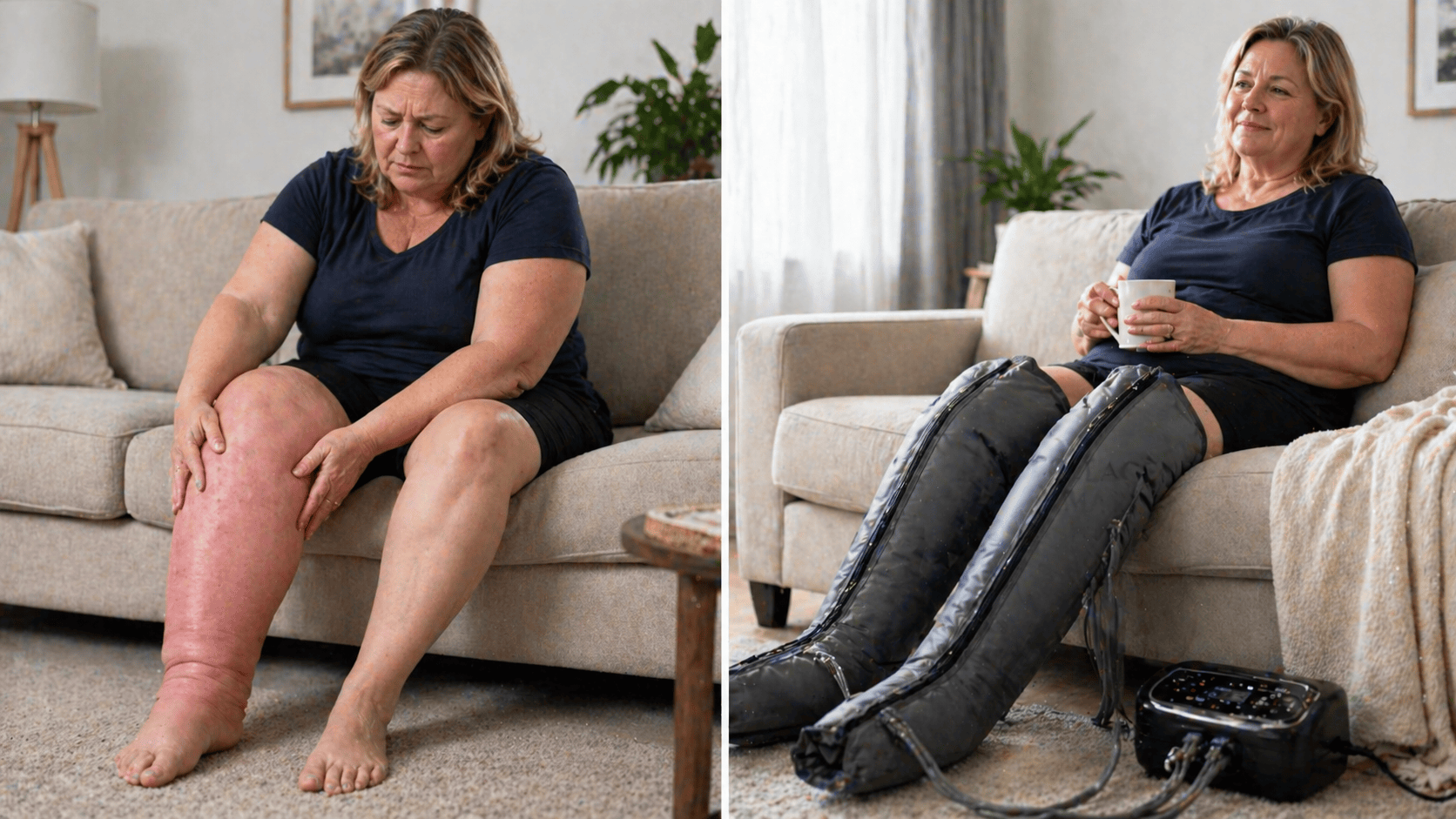
Lymphedema demands more from a compression boot than athletic recovery does. The goal isn’t soreness relief after a workout – it’s moving fluid out of swollen tissue safely, consistently, and with enough control to adapt to limbs that change circumference day to day and even hour to hour. The wrong device at the wrong pressure on a lymphedematous limb can push fluid into places it shouldn’t go.
We tested four pneumatic compression lymphedema systems over six weeks, working alongside feedback from lymphedema patients, therapists, and published clinical guidelines on intermittent pneumatic compression (IPC). Every product in this lineup is explicitly designed for or documented as appropriate for lymphatic drainage boots use – verified through FDA or Health Canada certification, official manufacturer lymphedema positioning, or both.
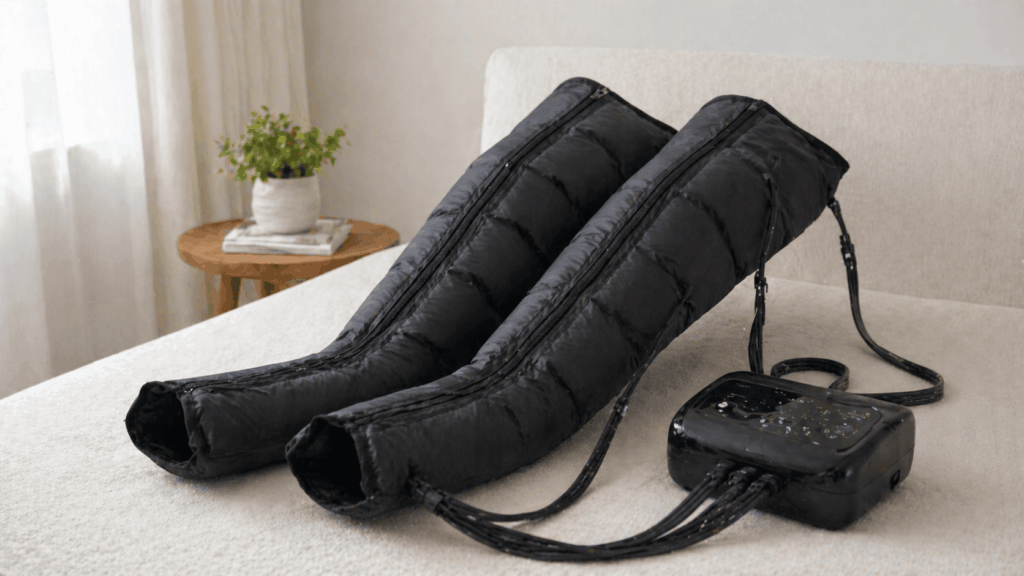
The Hyperice Normatec 3 delivers the most refined sequential compression for lymphedema management thanks to its 5-zone Pulse technology, ZoneBoost targeting, and Bluetooth-connected session tracking. But the LONGEST LGT-2200SP offers a compelling medical-grade alternative at less than half the price, and budget options exist for mild swelling management.
How We Evaluate Compression Boots for Lymphedema
Lymphedema scoring diverges from athletic recovery in critical ways. Compression quality carries the heaviest weight because the sequential pressure pattern determines whether fluid is moved safely and effectively. Adjustability is weighted second because lymphedema limbs fluctuate in size – a boot that can’t adapt to changing circumferences is useless half the time. We also weight ease of use higher than in athletic comparisons because many lymphedema patients have limited mobility, reduced grip strength, or need assistance from caregivers.
| Compression quality | 30% | Sequential pressure, chamber overlap, fluid displacement pattern |
| Adjustability | 25% | Pressure levels, per-chamber control, fit on swollen limbs |
| Ease of use | 20% | Setup with limited mobility, caregiver-friendliness, controls |
| Value | 15% | Cost, HSA/FSA eligibility, insurance compatibility |
| Portability | 10% | Battery life, cordless operation, session length support |
1. Hyperice Normatec 3: 5 zones, ZoneBoost, Pulse technology, the lymphatic gold standard
The Normatec 3 is the system recommended by Hyperice specifically for lymphedema management, and its design reflects why. The patented Pulse technology runs sequential compression across 5 overlapping zones from foot to upper thigh, and the wave pattern mimics the peristaltic action of healthy lymphatic vessels – the exact mechanism that fails in lymphedema. Five chambers mean a smoother, more gradual fluid displacement than the 4-chamber systems below, which reduces the risk of fluid pooling at chamber boundaries.
For lymphedema patients, the critical feature is ZoneBoost. When swelling concentrates around the ankles and feet – the most common pattern in lower-limb lymphedema – you lock extra compression cycles onto the lower zones while maintaining lighter holding pressure on the thighs. This creates a targeted drainage effect that’s closer to what a certified lymphedema therapist does with manual lymphatic drainage (MLD) than any other consumer device offers.
Seven compression levels give the granularity you need for fluctuating limbs. Morning sessions when swelling is minimal can run at level 3-4. Evening sessions when fluid has pooled over the day benefit from level 5-6. The Bluetooth app tracks session history, duration, and pressure levels – data your therapist or physician can use to optimize your protocol. HSA/FSA eligibility with a Letter of Medical Necessity can offset the $799 price point significantly.
2. LONGEST LGT-2200SP: FDA-certified, 4 chambers, 30-150 mmHg, real-time pressure display
The LONGEST LGT-2200SP is the device that was built from the start as a pneumatic compression lymphedema pump rather than adapted from an athletic recovery tool. It carries both FDA and Health Canada certification, and the manufacturer explicitly positions it for lymphedema, venous insufficiency, varicose veins, and DVT prevention. That certification status matters: it means the device has been reviewed against medical safety standards that consumer-only products don’t face.
The specs are compelling for the price. Four chambers per leg with high-tenacity overlapping sleeves, YKK zippers, and a pressure range of 30-150 mmHg across 6 massage modes. The standout feature for lymphedema is the digital real-time mmHg display on the controller, which shows exactly how much pressure is being applied at any moment. This matters because lymphedema treatment protocols specify precise pressure ranges, and “level 4 out of 7” doesn’t translate to a clinical number without a readout.
Battery capacity is 6500mAh – more than double most competitors – which delivers 2-4 hours of continuous compression. For lymphedema patients whose treatment protocols call for 45-60 minute sessions twice daily, that battery capacity supports a full day of therapy on a single charge. The system also offers optional attachments for arms, hips, and full-body coverage, which is essential for patients with upper-limb or truncal lymphedema. At roughly $300, it costs less than half of the Normatec 3 while delivering medical-grade compression with verifiable pressure data.
3. Rapid Reboot Regen: 4 chambers, 0-200 mmHg, 20 levels, per-chamber pressure control
The Rapid Reboot Regen brings the most granular pressure control in this comparison. With 20 compression levels spanning 0-200 mmHg and per-chamber pressure adjustment, you can set a different pressure in each of the 4 chambers independently. For lymphedema management, this means you can run higher pressure at the foot and lower calf while keeping lighter pressure on the thigh – precisely calibrating the gradient that drives fluid upward.
The system uses 4 pre-programmed modes including a dedicated Recovery mode that starts compression at the foot and holds sequentially until the entire boot is pressurized before releasing simultaneously – the pattern most closely aligned with lymphatic drainage principles. Sessions can be set from 1 to 179 minutes, which gives therapists and patients far more flexibility than the fixed 10/20/30-minute timers on budget devices. The Rapid Reboot app tracks sessions and allows Bluetooth control from your phone.
Build quality is professional-grade: rip-stop fabric boots with 4 chambers, integrated hoses, and seamless interiors that reduce friction on sensitive skin. At roughly $695 for the boots package, it sits between the LONGEST and the Normatec 3 on price. The optional hip attachment ($300 additional) is particularly relevant for lymphedema patients who experience fluid pooling at the proximal thigh, as it can extend compression above the standard boot line. HSA/FSA eligible.
4. FIT KING FT-091A: 4 zones, 40-150 mmHg, cordless, the budget lymphedema entry point
The FIT KING FT-091A is the accessible starting point for patients managing mild to moderate lymphedema at home. It runs 4 overlapping chambers from foot to thigh, 12 pressure levels from 40-150 mmHg, zone targeting, and a single-leg mode via silicone plug – all cordless with a 3-4 hour battery. At roughly $200 and FSA/HSA eligible, it removes the cost barrier that keeps many patients from starting compression therapy.
| # | Model | Score | Pressure | Price |
|---|---|---|---|---|
| 1 | Hyperice Normatec 3 | 9.4 | Up to 100 mmHg | ~$799 |
| 2 | LONGEST LGT-2200SP | 9.0 | 30-150 mmHg | ~$300 |
| 3 | Rapid Reboot Regen | 8.6 | 0-200 mmHg | ~$695 |
| 4 | FIT KING FT-091A | 8.0 | 40-150 mmHg | ~$200 |
How to Choose Compression Boots for Lymphedema
Sequential compression is mandatory – avoid uniform devices
Sequential pneumatic compression inflates chambers one at a time from foot to thigh, creating a wave that moves lymphatic fluid upward toward functioning lymph nodes. This is the mechanism validated in lymphedema research. Uniform compression devices that inflate all chambers simultaneously do not create directional fluid flow and are significantly less effective for lymphedema management. All four systems in this comparison use true sequential compression.
Pressure precision matters more than pressure ceiling
Published lymphedema treatment protocols typically use pressures in the 30-60 mmHg range. Higher isn’t better – it’s potentially harmful. What matters is the ability to set and maintain a precise therapeutic pressure, which is why real-time mmHg readouts (LONGEST) and per-chamber control (Rapid Reboot Regen) are more clinically relevant than a device that simply claims “150 mmHg max.” Ask your therapist for a specific target pressure and choose a device that can deliver it accurately.
Chamber count and overlap affect drainage quality
More chambers with overlap create a smoother pressure gradient. The Normatec 3’s 5 overlapping zones produce the most gradual wave pattern, reducing the risk of fluid being trapped at chamber boundaries. Four-chamber systems (LONGEST, Rapid Reboot, FIT KING) work well but produce slightly more abrupt transitions between segments. For mild to moderate lymphedema, 4 chambers is sufficient. For severe or complex cases, 5 zones is preferable.
Consider arm and trunk attachments
Lower-limb lymphedema is the most common presentation, but upper-limb and truncal lymphedema (especially post-mastectomy) requires devices with arm and/or body attachments. The LONGEST and Rapid Reboot both offer separate arm sleeves and hip/body attachments. The Normatec system also offers arm attachments. If your lymphedema isn’t limited to the legs, factor attachment availability into your decision.
HSA/FSA and insurance pathways
Most consumer compression boots qualify for HSA or FSA reimbursement with a Letter of Medical Necessity from your physician. The letter should cite your specific lymphedema diagnosis (ICD-10 code), the prescribed treatment protocol, and why a pneumatic compression device is medically necessary. Some retailers like TrueMed streamline this at checkout. Prescription-grade devices (Lympha Press, Flexitouch) may be covered directly by insurance but require prior authorization and typically cost $3,000-$10,000+.
Best Compression Boots for Lymphedema – Frequently Asked Questions
Are consumer compression boots effective for lymphedema?
Research supports intermittent pneumatic compression as an effective adjunct therapy for lymphedema. A 2014 study by Zaleska et al. in Lymphatic Research and Biology demonstrated that long-term intermittent pneumatic compression reduced limb volume in patients with lower-limb lymphedema. A 2017 study by Kitayama et al. provided real-time evidence of superficial lymphatic drainage during pneumatic compression sessions. Consumer devices use the same sequential compression principle as hospital-grade equipment, though with fewer chambers and less precise calibration. For mild to moderate lymphedema, they deliver measurable improvements in limb volume and subjective comfort.
How long should lymphedema patients use compression boots per session?
Clinical protocols typically recommend 30-60 minute sessions for lymphedema, with some guidelines supporting up to 90 minutes for severe cases. Unlike athletic recovery where 20 minutes is sufficient, lymphedema treatment benefits from longer sessions at gentle, consistent pressure. Start with 30 minutes at low pressure and increase duration gradually based on your therapist’s guidance. Twice-daily sessions (morning and evening) are common during acute management phases.
Can compression boots replace manual lymphatic drainage?
No. Manual lymphatic drainage (MLD) performed by a certified therapist involves specialized hand techniques that redirect fluid through alternative lymphatic pathways and target lymph node clusters that mechanical compression cannot reach. Compression boots work best as a complement to MLD – they maintain the fluid reduction achieved during manual sessions and extend the time between required therapist visits. The International Lymphoedema Framework recommends combining both approaches for optimal outcomes.
What pressure level is safe for lymphedema?
The therapeutic range for lymphedema compression is typically 30-60 mmHg, significantly lower than the 80-100+ mmHg pressures used in athletic recovery. Start at the lowest available setting (30-40 mmHg on most devices) and increase only as directed by your healthcare provider. Pressures above 60 mmHg may be appropriate for some patients under clinical supervision, but self-administering high-pressure compression on lymphedematous tissue without guidance risks pushing fluid into areas without adequate drainage capacity.
Consumer boots vs medical-grade lymphedema pumps – what’s the difference?
Medical-grade lymphedema pumps like the Lympha Press Optimal Plus and Tactile Medical Flexitouch Plus use 8-12+ calibrated chambers with graduated pressure profiles, are prescribed by physicians, often covered by insurance, and cost $3,000-$10,000+. Consumer boots typically use 4-5 chambers, are purchased out-of-pocket (with HSA/FSA offset), and cost $200-$800. The clinical difference is most meaningful for severe, fibrotic, or treatment-resistant lymphedema. For mild to moderate cases being managed alongside compression garments and MLD, consumer devices deliver effective daily maintenance therapy at a fraction of the cost.
Should I use compression boots before or after wearing compression garments?
The standard protocol is to use boots first to reduce volume, then immediately apply your compression garment while the limb is at its smallest. This maximizes the effectiveness of both therapies: the boots move the fluid out, and the garment prevents it from returning. Running a compression boot session over an already-applied garment reduces the boot’s effectiveness because the garment restricts the air chambers from making full contact with the skin.
In Summary
Lymphedema management is a daily commitment, and the right pneumatic compression system makes that commitment sustainable. The Normatec 3 offers the most refined 5-zone sequential compression with ZoneBoost targeting for localized swelling. The LONGEST LGT-2200SP delivers FDA-certified medical-grade therapy with real-time pressure tracking at the best value in this comparison. The Rapid Reboot Regen gives therapists and patients the most granular per-chamber control for prescribed pressure gradients. And the FIT KING FT-091A removes the cost barrier for patients beginning at-home compression therapy. Whichever you choose, consult your lymphedema specialist first and start at the lowest pressure setting.