If you have been considering a pair of compression boots, your FSA or HSA account may cover part or all of the cost, effectively giving you a 22% to 37% discount depending on your marginal tax rate. That turns a $799 Normatec 3 into roughly $500 to $625 out of your actual take-home pay.
The catch is that compression boots are not automatically eligible. They sit in a gray zone under IRS rules, which means you need the right documentation to make the purchase tax-free. Here is exactly what qualifies, how to get the documentation, and what to watch out for so you do not end up with a denied reimbursement.
Are Compression Boots FSA/HSA Eligible?
Yes, but with conditions. Compression boots can qualify as a tax-free FSA or HSA purchase when they are recommended by a licensed healthcare provider for a specific medical condition. They are not automatically eligible the way prescription medications or bandages are.
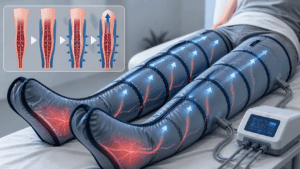
Under IRS Publication 502, qualified medical expenses include amounts paid for the “diagnosis, cure, mitigation, treatment, or prevention of disease, or for the purpose of affecting any structure or function of the body.” Intermittent pneumatic compression has a well-documented clinical track record for conditions like chronic venous insufficiency, lymphedema, post-surgical swelling, DVT prevention, peripheral edema, and circulatory disorders.
Because compression boots can also be used for general wellness and athletic recovery (which are not qualifying medical purposes under IRS rules), the key that unlocks eligibility is a Letter of Medical Necessity (LMN). This is a short document from a licensed healthcare provider confirming that the device is medically necessary for your specific condition.
Without an LMN, most FSA/HSA administrators will deny the purchase or reimbursement claim. With one, the purchase processes like any other qualified medical expense.
What You Need: The Letter of Medical Necessity
The LMN is the single document that determines whether your purchase is approved or denied. Understanding what it is and how to get one saves you from a rejected claim.
What an LMN contains: a statement from a licensed healthcare provider (MD, DO, NP, PA, DC, or PT depending on your plan) confirming that they are recommending a pneumatic compression device for a specific diagnosed condition. The letter should include your name, the provider’s credentials, the condition being treated, why compression therapy is medically appropriate, and how long the treatment is recommended.
Common qualifying conditions: chronic venous insufficiency, varicose veins, lymphedema, post-surgical limb swelling, peripheral edema, deep vein thrombosis prevention (in at-risk individuals), plantar fasciitis with documented circulatory component, and chronic exercise-related muscle injury tied to a diagnosed condition. General athletic recovery or “sore legs after running” does not qualify on its own.
How to get one: two routes. You can ask your own doctor, physical therapist, or specialist directly. Explain that you are looking to purchase a pneumatic compression device and ask if they can provide an LMN for your specific condition. Most clinicians familiar with compression therapy will provide this without difficulty if you have a qualifying diagnosis.
Alternatively, services like TrueMed have streamlined the process. TrueMed partners with licensed providers who review your health information and issue an LMN digitally, often within minutes. Several compression boot retailers (including Hyperice and some third-party sellers) integrate TrueMed at checkout, so you can get your LMN and pay with your HSA/FSA card in a single transaction.
Keep the LMN for at least three years. The IRS recommends retaining HSA/FSA documentation for a minimum of three years in case of audit. Save it digitally and in print.
Which Compression Boots Are FSA/HSA Eligible?
The eligibility is not brand-specific. Any compression boot can qualify as an FSA/HSA purchase if you have an LMN, because the eligibility is based on the medical necessity of the device, not on the brand or model.
That said, some brands and retailers have made the process significantly easier by integrating HSA/FSA payment processing directly into their checkout.
Hyperice (Normatec) products are available on HSAstore.com and buyFSA.com, where you can pay with your HSA/FSA debit card directly. The Normatec 3 Legs ($799), Normatec Elite ($999), and Normatec Go ($399) are all listed as eligible. Hyperice’s own website also works with TrueMed for direct HSA/FSA payment at checkout.
Therabody (RecoveryAir JetBoots) lists HSA/FSA eligibility on their website and also works with TrueMed. The JetBoots Prime ($699) and the full RecoveryAir line are listed as eligible products through these channels.
Budget devices from Fit King, Jolt, and other brands can also qualify, but you will typically need to pay out of pocket and submit a reimbursement claim to your HSA/FSA administrator afterward, since these brands do not usually integrate HSA/FSA payment processing at checkout.
The process for any brand: get your LMN, purchase the device, and either pay directly with your HSA/FSA card (if the retailer supports it) or pay out of pocket and submit a reimbursement claim with your receipt and LMN to your plan administrator.
How to Buy Compression Boots With Your HSA or FSA
The process is straightforward once you have the documentation. Two paths, same result.
Path 1: Pay directly with your HSA/FSA card at checkout. This is the simplest route. Shop at a retailer that accepts HSA/FSA payment (HSAstore.com, buyFSA.com, Hyperice.com with TrueMed, Therabody.com with TrueMed). Select your product, enter your HSA/FSA debit card at checkout, and complete the purchase. The transaction processes as a qualified medical expense. You may be prompted to obtain an LMN through TrueMed during checkout if one is required.
Path 2: Pay out of pocket, then submit for reimbursement. If the retailer does not accept HSA/FSA cards or you prefer to shop elsewhere (Amazon, brand direct, etc.), pay with your personal credit or debit card. Then log into your HSA/FSA administrator’s portal, upload your purchase receipt and your LMN, and submit a reimbursement claim. Most administrators process these within 3 to 10 business days.
Important for FSA holders: FSA funds typically expire on December 31 of your plan year, though some employers offer a grace period of up to 2.5 months or a carryover of up to $660. If you have unspent FSA dollars approaching the deadline, compression boots are one of the more practical large purchases you can make before the money disappears. HSA funds, by contrast, never expire and roll over indefinitely.
How Much You Actually Save
Buying with pre-tax HSA/FSA dollars effectively reduces your cost by your marginal tax rate, because you are paying with money that was never taxed.
For someone in the 22% federal tax bracket (single filers earning $47,151 to $100,525 in 2026), a $799 Normatec 3 effectively costs about $623 after tax savings. Add state income tax savings (varies by state) and the effective cost drops further.
For someone in the 32% bracket (single filers earning $197,301 to $250,525), the same $799 device effectively costs about $543.
HSA contributions also avoid FICA taxes (Social Security and Medicare, 7.65% combined) when made through payroll deduction, adding another layer of savings that FSA shares but that direct HSA contributions do not.
The math at different price points:
A $299 Jolt Boots purchase saves roughly $66 to $111 depending on your tax bracket. A $799 Normatec 3 saves roughly $176 to $296. A $999 Normatec Elite saves roughly $220 to $370. The higher the device cost and the higher your tax bracket, the more significant the HSA/FSA advantage becomes.
What Happens if Your Claim Is Denied
Denial is not the end of the process. Understanding why claims get denied helps you fix the problem and resubmit.
Most common reason: no LMN submitted. This is the overwhelming majority of denied claims. The fix is simple: obtain an LMN from your provider or through TrueMed and resubmit the claim with the letter attached.
Second most common: the LMN does not name a specific condition. An LMN that says “recommended for general wellness” or “for athletic recovery” will be denied because those are not qualifying medical expenses under IRS rules. The letter must reference a specific diagnosed condition. Ask your provider to rewrite the letter with the specific diagnosis included.
Third: the LMN is from a provider type your plan does not recognize. Some FSA/HSA administrators require the LMN from an MD or DO specifically, while others accept NPs, PAs, DCs, or PTs. Check your plan’s requirements before obtaining the letter.
Fourth: you purchased from a retailer flagged as non-medical. Some administrators automatically flag purchases from Amazon or general retailers. If this happens, submit your receipt and LMN manually through the reimbursement portal rather than relying on the card transaction to auto-approve.
If your claim is denied after submitting proper documentation, contact your plan administrator directly. Most denials for properly documented compression therapy purchases are resolved on appeal.
FSA/HSA Eligible Compression Boots, Frequently Asked Questions
Can I buy Normatec with my FSA?
Yes. Normatec products are available through HSAstore.com, buyFSA.com, and directly from Hyperice.com with TrueMed integration for FSA/HSA payment at checkout. You will need a Letter of Medical Necessity from a licensed provider confirming the device is recommended for a specific medical condition. Without the LMN, the purchase will likely be denied.
Do I need a prescription to buy compression boots with HSA?
Not a prescription in the traditional sense, but you need a Letter of Medical Necessity (LMN), which serves a similar function. The LMN is a document from a licensed provider stating that the device is medically necessary for your diagnosed condition. Some providers issue this during a regular appointment, and services like TrueMed can provide one digitally.
What conditions qualify for an LMN for compression boots?
The most commonly qualifying conditions include chronic venous insufficiency, varicose veins, lymphedema, post-surgical swelling, peripheral edema, DVT prevention in at-risk individuals, and chronic circulatory disorders. General athletic soreness or wellness use does not qualify on its own. Your provider determines whether your specific condition meets the IRS definition of medical necessity.
Can I buy budget compression boots with HSA/FSA?
Yes. FSA/HSA eligibility is based on medical necessity, not on brand or price. A $159 Fit King or a $299 Jolt Boots can qualify with the same LMN that would qualify a $999 Normatec Elite. The difference is that budget brands rarely integrate HSA/FSA payment at checkout, so you will likely need to pay out of pocket and submit a reimbursement claim with your receipt and LMN afterward.
How much do I actually save by using HSA/FSA funds?
You save your marginal tax rate on the purchase amount. For most working adults, this is 22% to 32% in federal taxes alone, plus state income tax savings. On an $800 device, that translates to roughly $175 to $300 in real savings. HSA contributions made through payroll deduction save an additional 7.65% in FICA taxes.
What if I already bought compression boots with my own money?
If you have an HSA (not an FSA), you can reimburse yourself for qualified medical expenses retroactively with no time limit, as long as the expense occurred after the HSA was established and you have documentation (receipt + LMN). FSAs are more restrictive and typically require expenses to occur within the plan year. Check your plan rules for specific deadlines.
Can I use my HSA to buy compression boots for my spouse?
Yes. HSA funds can be used for qualified medical expenses for the account holder, their spouse, and their tax dependents. Your spouse would need their own LMN documenting their medical condition and the medical necessity of the device.
Are compression boot accessories FSA/HSA eligible?
Replacement sleeves and boot attachments may qualify if they are part of the same medically necessary device. General accessories like carrying cases or app subscriptions are unlikely to qualify because they do not serve a medical function. When in doubt, check with your plan administrator before purchasing.
The Bottom Line
Compression boots are FSA/HSA eligible when purchased with a Letter of Medical Necessity from a licensed provider documenting a specific medical condition. The process is straightforward: get the LMN, buy from a retailer that accepts HSA/FSA payment (or pay out of pocket and submit for reimbursement), and save your documentation for at least three years.
The effective savings of 22% to 37% make a meaningful difference on a $400 to $1,000 purchase, and for FSA holders approaching a year-end deadline, compression boots are one of the smarter ways to use funds that would otherwise disappear. The single most important step is getting the LMN before you buy, not after. Every denied claim I have seen came from someone who purchased first and tried to get documentation second.