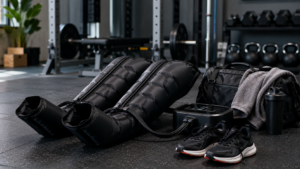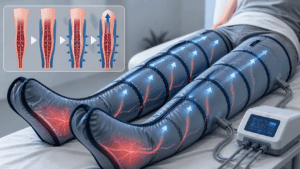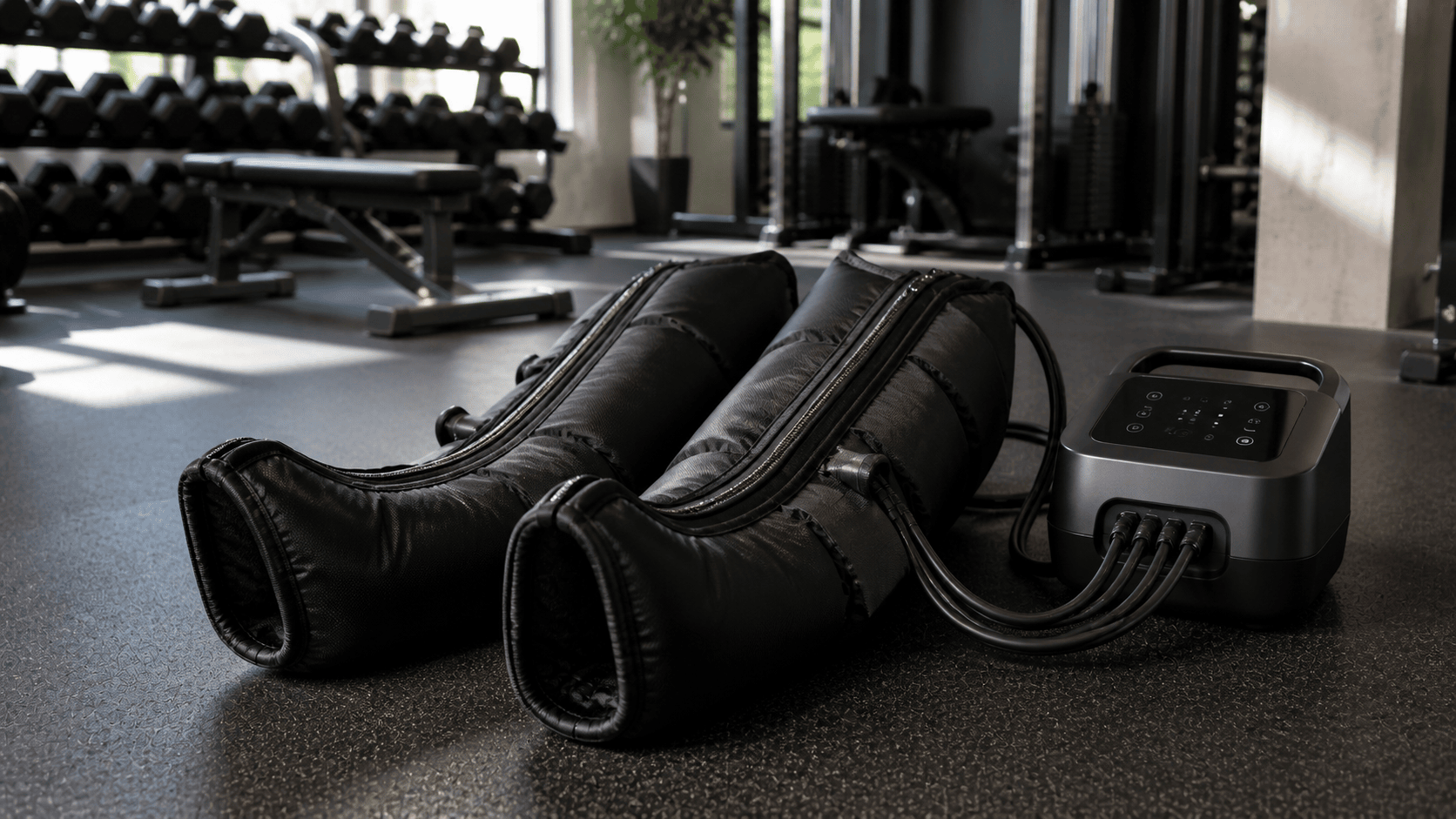
The quick answer is yes. Daily use of compression boots is safe for healthy adults, and many professional athletes, college programs, and recovery studios operate on exactly that schedule during heavy training blocks. No published study has reported adverse effects from daily use at standard pressure and duration.
But “can you” and “should you” are different questions. Daily use makes sense for some people and is overkill for others. The line between a worthwhile daily habit and an unnecessary ritual depends entirely on how much recovery debt your body actually carries, and most recreational athletes carry far less than they think.
Here is the honest framework for deciding whether daily compression boots belong in your routine or whether three times a week covers the job.
What the Research Says About Daily Use
No study has specifically tested the safety of daily compression boot use over extended periods, but the indirect evidence is strong enough to draw confident conclusions.
Clinical IPC devices are used continuously in hospitals. In post-surgical and stroke care, intermittent pneumatic compression is applied day and night, sometimes for 30 consecutive days, as demonstrated in the CLOTS 3 trial that randomized 2,876 immobile stroke patients. If continuous 24-hour use is safe in medically fragile populations under clinical supervision, a 25 minute daily session in a healthy athlete is well within safe parameters.
The recovery research that shows positive effects on perceived soreness, including the 2022 Journal of Clinical Medicine meta-analysis and the 2024 Biology of Sport meta-analysis, used protocols where athletes received IPC sessions regularly as part of their training cycle. None of these studies reported cumulative adverse effects from repeated use.
A 2020 international consensus statement on compression therapy risks, published in Phlebology and covering 62 publications, concluded that most reported problems were due to incorrect indication, application, or use, not to inherent dangers of the technology. Frequency of use was not identified as a risk factor in healthy individuals.
The practical ceiling from both the research and my studio experience is two sessions per day at moderate pressure (60 to 80 mmHg) for 20 to 30 minutes each. Beyond that, the marginal benefit drops to essentially zero and you are spending more time in the boots than your physiology can use.
When Daily Use Makes Sense
Daily sessions earn their place in specific situations where the recovery demand genuinely exceeds what passive rest can handle.
You train five or more times per week with significant lower-body volume. Marathoners doing 50+ mile weeks, cyclists logging 200+ miles, triathletes in race build, CrossFit athletes hitting daily metcons with squats and running. When hard sessions stack this closely, the legs never fully clear the accumulated fatigue from the previous day. A daily 25 minute session at 70 mmHg gives the circulatory and lymphatic systems a boost that passive rest alone takes longer to provide.
You are in a race week or multi-day competition. Stage races, tournament weekends, and back-to-back race days create acute recovery deficits that compound daily. Professional teams use the boots after every session during these periods, often twice a day, because the recovery window between efforts is too short for the body to manage unassisted.
You stand or sit immobile for 8+ hours a day at work. Nurses, teachers, retail workers, hospitality staff, desk workers, and long-haul drivers accumulate venous stasis daily as a function of their job. The legs swell, pool fluid, and ache by evening. A daily 20 minute session addresses this accumulation the same way daily tooth-brushing addresses daily plaque buildup. The problem recurs daily, so the solution makes sense daily.
You are managing a chronic condition with clinician approval. Lymphedema patients, people with venous insufficiency, and individuals recovering from certain surgeries often receive clinician recommendations for daily compression. The clinical evidence supports this, though the protocol (pressure, duration, device type) should come from your therapist or physician, not from a general guide.
When Daily Use Is Overkill
This is the section most compression boot articles skip, because brands benefit from you using their device as much as possible. But honest advice requires drawing the line.
You train two to three times per week without significant volume. If you jog twice a week and do a gym session on Saturday, your recovery systems handle the load without assistance. Adding daily boot sessions to this schedule is like running your dishwasher daily when you only dirty two plates. The tool works, but you do not need it that often.
Your legs do not feel heavy, sore, or swollen between sessions. If you wake up feeling fresh and your next workout is 48 hours away, there is no recovery deficit to manage. Using the boots on a day when your legs feel fine produces a pleasant sensation but negligible physiological benefit. Save the session for when you actually need it.
You are using daily boot sessions to compensate for poor sleep, bad nutrition, or excessive training load. This is the most common misuse pattern I see. An athlete who sleeps six hours, skips post-workout meals, and trains heavy every day will not fix the problem by adding 25 minutes in the boots. The boots manage a narrow recovery variable (venous return, fluid clearance, perceived soreness). They cannot substitute for the foundations that drive 90% of your recovery.
You have been training for less than a year. New athletes do not need advanced recovery tools. Their bodies are adapting rapidly, their training volumes are relatively low, and the adaptation stimulus matters far more than the recovery modality. Spend the 25 minutes on mobility work, sleep hygiene, or meal prep instead.
The Right Daily Protocol
If daily use fits your situation, the protocol should be simple and consistent. The athletes who get the most out of daily compression boots are the ones who stop optimizing and start repeating.
One session per day, 20 to 25 minutes, at 60 to 80 mmHg, within an hour of your hardest effort. That is the working protocol. It covers the post-exercise flushing window, sits within the range used in published recovery studies, and fits into most people’s schedules without friction.
On double-session training days, a second session is justified. Run the first session after the morning workout and the second session in the evening before bed. Keep each session at 20 to 25 minutes. Two shorter sessions produce better results than one long 50 minute session because the tissue gets a chance to respond and rebound between compressions.
On rest days, dial it back. A 15 minute session at 50 to 60 mmHg is enough if your legs feel heavy from the previous day’s training. If your legs feel fresh, skip the session entirely. Rest days are for rest, and the boots are a tool for managing real recovery debt, not a mandatory daily ritual.
Pressure should stay constant day to day. Do not crank it up on hard days and lower it on easy days. Find your working pressure (usually 65 to 75 mmHg for most users) and keep it there. The variable you adjust for harder efforts is session duration, not intensity. Five extra minutes of moderate compression is more useful than the same session at maximum pressure.
Signs You Are Using Them Too Much
Overuse is rare with compression boots, but it does happen, usually when someone treats “more is better” as a recovery strategy. Watch for these signals.
Persistent skin redness or irritation. Mild redness immediately after a session is normal and fades within minutes. Redness that persists for hours or returns at the same spot every session means you need a barrier layer (thin athletic socks), lower pressure, or a break.
Legs feel more fatigued after the session than before. This indicates the pressure is too high, the session is too long, or both. If daily use is leaving you feeling drained, drop to every other day and reduce the pressure by one level.
Numbness that lingers after removing the boots. Brief tingling during peak inflation is normal. Numbness that persists for several minutes after the boots come off means the sleeve is positioned incorrectly (usually compressing the peroneal nerve near the fibular head) or the pressure is excessive.
You are spending more than 60 minutes per day in the boots. At that point you have crossed from recovery into compulsive behavior. Two 25 minute sessions is the maximum that serves a physiological purpose. Beyond that, you are not recovering faster, you are avoiding the discomfort of sitting with sore legs.
How Daily Use Compares to 3 to 5 Times Per Week
For most users, the practical difference between daily use and four times per week is smaller than expected. The marginal benefit of the fifth, sixth, and seventh session in a week is real but diminishing.
A 2024 meta-analysis in Biology of Sport found that IPC produced small but consistent improvements in subjective recovery markers. The effect per session is moderate, meaning each individual session helps, but stacking seven sessions versus four does not double the benefit. You get the majority of the weekly benefit from four sessions. The fifth through seventh sessions add a smaller increment.
Where daily use clearly wins is during compressed recovery timelines: race week, tournament weekends, back-to-back hard training days, and periods where you have less than 24 hours between intense efforts. In these situations, every session matters because the recovery window is short and the deficit is acute.
Where three to four times per week is sufficient is during normal training blocks where you have 24 to 48 hours between hard sessions. Your body can handle the gap between boot sessions when the gap between hard efforts is also adequate.
The honest rule: match boot frequency to training frequency. If you train hard five days a week, boot five days a week. If you train hard three days a week, boot three days a week. Booting on days when you did not train adds minimal value for most athletes.
Can You Use Compression Boots Every Day, Frequently Asked Questions
Is it safe to use compression boots every single day?
Yes, for healthy adults at moderate pressure (60 to 80 mmHg) and standard duration (20 to 30 minutes). No published study has identified daily home use as a safety concern, and clinical IPC devices are used continuously for weeks in hospital settings. The only risks from daily use are minor and preventable: skin irritation from poor fit, numbness from excessive pressure, and the psychological trap of relying on a device instead of fixing upstream problems like sleep and nutrition.
How many times a day can I use compression boots?
Twice a day is the practical ceiling. One post-workout session and one evening session covers every scenario where IPC adds measurable value. Beyond two sessions, the marginal benefit drops to essentially zero. If you feel you need more than two sessions a day to manage your legs, the problem is almost certainly training load, sleep, or nutrition, not insufficient compression.
Do I need to take rest days from compression boots?
No, compression boots do not require mandatory rest days the way intense exercise does. They are a passive recovery tool, not a training stimulus. However, if your legs feel fresh and your next hard workout is 24+ hours away, skipping the session is fine. The boots manage recovery debt. When there is no debt, there is nothing to manage.
Will daily use cause my body to become dependent on the boots?
No. There is no physiological dependency mechanism associated with intermittent pneumatic compression. Your body does not “forget” how to recover without the boots. What can happen is a psychological dependency where you feel anxious about training without a boot session, but that is a mindset issue, not a physiological one. If you skip a session, your recovery will be marginally slower, not fundamentally impaired.
Should I use compression boots on rest days?
Only if your legs still feel heavy from the previous day’s training. If your legs feel fresh on a rest day, skip the session. The boots are most useful when there is actual fluid accumulation or perceived heaviness to address. Using them on a day when your legs feel fine produces a pleasant sensation but negligible physiological benefit.
Can daily use blunt my training adaptations?
This is a theoretical concern raised in sports science literature. Acute inflammation after training is part of the adaptation signal, and aggressively suppressing it with daily high-pressure compression could theoretically slow long-term adaptation. The evidence is not strong enough to change practice, but it is a reasonable argument for using moderate pressure rather than maximum, and for reserving the boots for genuinely hard training days rather than easy recovery sessions.
I only train three times a week. Should I still use boots daily?
Probably not. Three training sessions per week typically leaves 24 to 48 hours between hard efforts, which is enough for most bodies to recover without assistance. Use the boots after your three hard sessions and skip the remaining days. Your money and time are better spent on sleep, nutrition, and mobility work than on four extra boot sessions that address no real recovery deficit.
The Bottom Line
Daily compression boot use is safe, well-tolerated, and justified for athletes training at high volume, people on their feet all day, and anyone managing a genuine daily recovery deficit. It is overkill for recreational athletes training three times a week, anyone whose legs consistently feel fresh, and anyone using the boots to avoid addressing upstream recovery failures.
The honest rule is simple: match boot frequency to the frequency of your actual recovery needs. If you train hard daily, boot daily. If you train hard three times a week, boot three times a week. If your legs feel fine, skip the session. The boots are a tool for managing real demand, not a compulsory daily ritual, and treating them that way is how you extract the most value from the device without wasting time or money on sessions that add nothing.