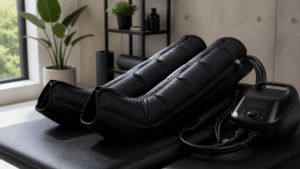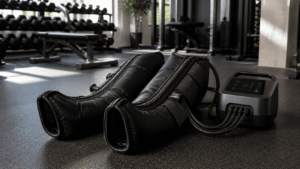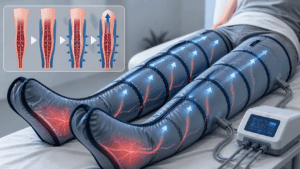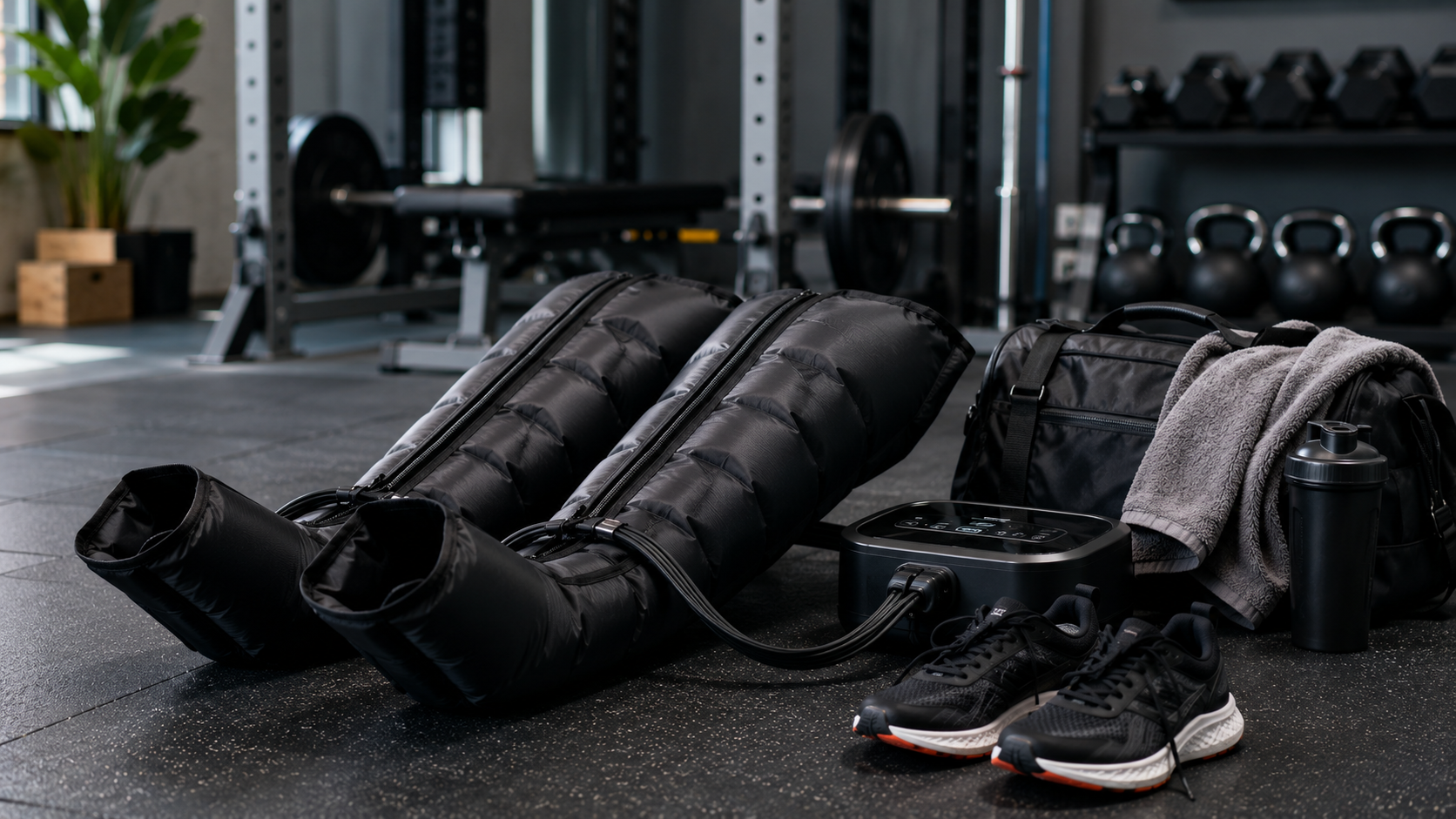
Running is the sport that benefits most consistently from compression boots. The combination of high-volume lower-body loading, repetitive impact stress, and training blocks that stack hard efforts on consecutive days creates exactly the recovery deficit that pneumatic compression is designed to address.
That does not mean every runner needs a pair. A jogger doing 15 miles a week and a marathoner doing 70 miles a week have fundamentally different recovery demands, and the boots earn their place at a very specific point on that spectrum.
Here is the complete guide, covering when the boots help, when they do not, the running-specific protocol that works, and what the research says when you strip away the marketing language.
Why Running Creates the Ideal Use Case for Compression Boots
Running punishes the lower body in ways that other sports do not. Understanding the specific damage pattern explains why runner recovery boots have become standard equipment in college programs and elite training groups.
Eccentric loading on every stride. Your quadriceps absorb 2 to 3 times your body weight on each foot strike during the braking phase of the gait cycle. Over a 10 mile run, that is roughly 15,000 eccentric contractions per leg. This eccentric component is the primary driver of delayed onset muscle soreness, and it creates microscopic muscle fiber damage that triggers fluid leakage into the surrounding tissue.
Cumulative venous pooling. A long run generates significant metabolic demand in the legs, but the moment you stop running and sit down to stretch or eat, your calf muscle pump slows dramatically. The elevated blood flow that was servicing working muscles now pools in the lower extremities. The legs swell, stiffen, and feel progressively heavier over the next 12 to 24 hours.
Repetitive inflammation cycles. Marathon training blocks, weekly long runs, track sessions, and tempo runs create overlapping inflammatory responses. Monday’s long run is still inflaming tissue when Wednesday’s tempo hits the same muscles. The recovery window compresses as mileage increases, and this is where the boots address a real physiological bottleneck.
The boots target all three problems simultaneously. The sequential compression clears pooled blood and interstitial fluid, reduces the edema that contributes to soreness, and accelerates the transition from the post-run inflammatory state to the recovery phase.
What the Research Shows for Runners Specifically
The running-specific evidence is smaller than the general IPC recovery literature, but the studies that do exist are informative and honest about both benefits and limitations.
The Western States ultramarathon trial is the most runner-relevant study in the literature. Hoffman et al. (2016) randomized 72 finishers of the 161 km Western States Endurance Run to 20 minutes of massage, IPC, or supine rest immediately after the race. The result: no significant difference in 400 m run times on days 3 and 5 between any of the groups. Both massage and IPC produced immediate subjective improvements in pain and fatigue scores compared to rest, but those improvements did not translate into measurable functional recovery.
An extended version of the same trial, published in 2018, added four daily post-race IPC treatments rather than a single session. The conclusion was similar: immediate subjective benefit, but no lasting functional advantage over rest.
A 2020 study on long-distance runners (Draper et al., International Journal of Exercise Science) treated runners with IPC for an hour after a 20 mile run and daily for five days afterward. It found no significant difference in C-reactive protein or subjective pain ratings between IPC and no treatment.
The broader meta-analyses are more encouraging for moderate-volume recovery. The 2022 Journal of Clinical Medicine meta-analysis found moderate effect sizes for pressotherapy reducing DOMS severity, and the 2024 Biology of Sport meta-analysis (17 studies, 319 athletes) found small but consistent improvements in subjective recovery. These studies include mixed athletic populations, not exclusively runners, but the mechanism is the same.
The honest summary for runners: compression boots reliably reduce how sore and heavy your legs feel after hard training. They do not measurably speed up structural muscle repair or restore functional performance faster than rest alone after extreme events. The benefit is real, but it is perceptual, and perceptual recovery drives training consistency.
The Runner-Specific Recovery Protocol
The general compression boot protocol (20 to 30 minutes, 60 to 80 mmHg) applies to runners, but the timing and frequency adjust to the unique demands of running training.
After easy runs (30 to 60 minutes, conversational pace): skip the boots. Your body does not need pneumatic compression to recover from an easy effort. Save the session for days that create actual recovery debt.
After tempo runs, intervals, or track sessions: 20 to 25 minutes at 65 to 75 mmHg. These workouts create significant muscular demand and accumulate metabolic stress without the extreme tissue damage of long runs. A standard session within an hour of finishing clears the heaviness and prepares the legs for the next day.
After long runs (16+ miles or 90+ minutes): 25 to 30 minutes at 70 to 80 mmHg. The extended duration and higher pressure address the deeper edema that long runs produce. If your long run was exceptionally hard (marathon-pace finish, hilly terrain, or race simulation), consider a second session in the evening.
After a marathon or ultramarathon: 30 minutes, twice daily for 2 to 3 days. The race creates enough tissue damage to warrant extended recovery protocols. Keep the pressure at 60 to 70 mmHg, not maximum. The tissue is inflamed and sensitive, and aggressive compression on acutely damaged muscle can be counterproductive. The Western States trial used only 20 minutes, which may explain the limited results. A multi-day, repeated-session approach makes more physiological sense for extreme events.
During taper week: 20 minutes daily at moderate pressure. The taper paradox is real: you are running less but your legs often feel worse during the first few days of reduced volume. Daily compression sessions during taper help manage the phantom heaviness and keep your legs feeling responsive heading into race day.
When Runners Actually Need Compression Boots
The volume threshold where boots start earning their keep for runners is more specific than the general advice suggests.
40+ miles per week with three or more quality sessions. This is roughly the point where recovery becomes a daily management problem rather than something that happens automatically between workouts. Below 40 miles a week with only one or two hard efforts, your body has enough downtime between sessions to recover without assistance.
Marathon training blocks with progressive overload. The 12 to 18 week buildup to a marathon is the period where the boots make the most practical difference. Mileage is climbing, long runs are getting longer, and the gap between “comfortably recovered” and “still carrying fatigue” gets narrower every week.
Back-to-back hard days. Tuesday track, Wednesday tempo. Friday long, Saturday easy but still on tired legs. Any time the training plan puts demanding efforts on consecutive days, the boots bridge the overnight recovery gap.
Runners over 40. Recovery slows with age, and the gap between training stimulus and recovery capacity widens. Masters runners consistently report larger perceived benefits from the boots than younger runners in my studio, likely because their baseline recovery rate is slower.
Runners returning from injury. During the gradual mileage rebuild after a lower-body injury (with clinician clearance for compression), the boots can help manage the heightened soreness and swelling that comes with tissue that has not been loaded for weeks or months.
What to Look for in Compression Boots as a Runner
Not every compression boot is equally suited for running recovery. A few runner-specific criteria matter more than others.
Full-leg coverage over calf-only. Running loads the entire kinetic chain from the plantar fascia through the calves, quads, hamstrings, and into the glutes. Calf-only devices address the most common site of tightness but miss the quads and hamstrings, which absorb the most eccentric damage during long runs. Full-leg systems provide the comprehensive flushing effect runners need after high-mileage efforts.
At least 5 chambers with overlapping zones. More chambers mean smoother pressure transitions and more even fluid distribution. Devices with 4 chambers leave larger gaps between compression zones, which can push fluid into uncompressed areas rather than driving it upward uniformly.
Pressure range of at least 30 to 100 mmHg. You need the flexibility to run lower pressure after races (60 to 70 mmHg on damaged tissue) and moderate pressure after standard workouts (70 to 80 mmHg). A device that only offers high pressure is uncomfortable for post-race use.
Portability if you travel for races. Marathon and trail runners who travel to events benefit from a device that fits in a checked bag or carry-on. The Normatec Go ($399, calf-only) is the most portable option for travel. Full-leg systems are heavier but some, like the wireless Normatec Elite or Therabody JetBoots Prime, fold compactly enough for a large suitcase.
The Complete Runner’s Recovery Stack
Compression boots are most effective when they fit into a broader recovery routine, not when they replace everything else.
Immediately post-run (0 to 15 minutes): cool-down walk or easy jog (5 minutes), then light foam rolling on calves, quads, IT band, and hamstrings (5 to 10 minutes). The foam rolling addresses fascial stiffness and trigger points that compression cannot target.
Within 30 to 60 minutes post-run: 20 to 25 minutes in the compression boots while eating a recovery meal or shake. This is the highest-value window for the boots, when post-exercise edema is building and the circulatory boost has the most to work with.
Throughout the day: compression socks (15 to 20 mmHg) for sustained low-level venous support, especially if you sit at a desk after your morning run. The socks maintain the circulatory effect the boots initiated.
Evening: if it was a particularly hard day (long run, race, double session), a second 20 minute boot session before bed can reduce next-morning heaviness. Leave 30 to 45 minutes between the boots and sleep.
Every day: sleep (7 to 9 hours), hydration, and a real meal within 60 minutes of finishing. These fundamentals drive 90% of your recovery. The boots, foam roller, and socks are the remaining 10%.
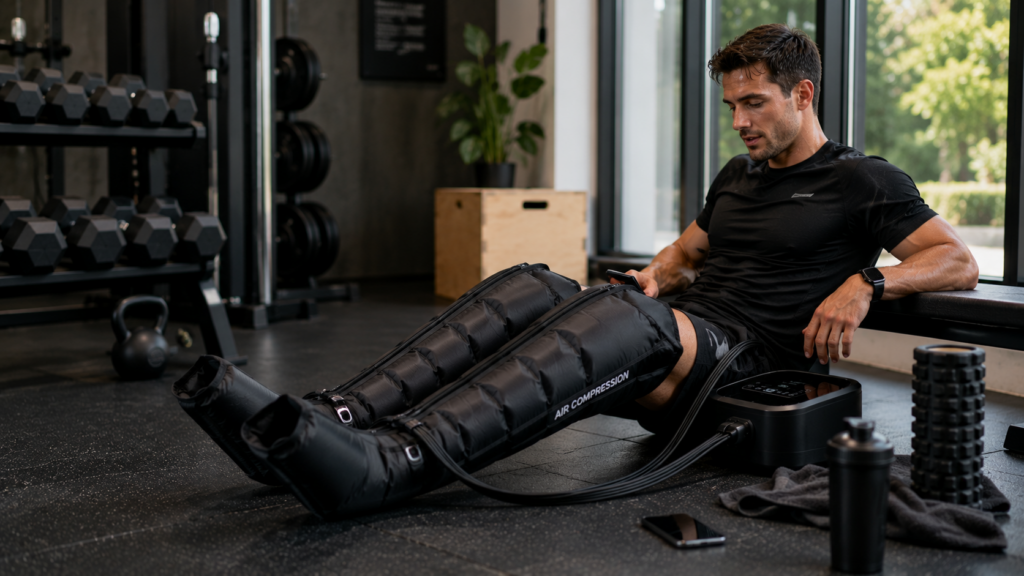
Pre-Race and Race-Day Use
The boots have a role in the 48 hours around a race, but the protocol is different from everyday training recovery.
Two days before the race: a standard 20 minute session at moderate pressure after your last shakeout run. The goal is to ensure your legs feel fresh and light heading into race day.
The evening before the race: a shorter 15 minute session at low pressure (50 to 60 mmHg). You do not want to overdo it. The session should leave your legs feeling relaxed, not flushed or fatigued.
Race morning: skip the boots. Some runners experiment with a short 10 minute pre-race session, but the evidence for pre-exercise IPC is weak, and the parasympathetic shift the boots produce can reduce nervous system readiness. Put your energy into your warm-up instead.
Post-race: many major marathons and ultramarathons now offer compression boots in the recovery zone. If available, a 20 to 30 minute session within 60 minutes of finishing is the ideal window. If you have your own boots at the hotel, use them that evening and for two to three days following the race.
Common Mistakes Runners Make With Compression Boots
1. Using them after every run regardless of intensity. Easy runs do not create enough damage to justify a 25 minute boot session. Reserve the boots for your two to three hardest efforts each week. Using them daily when your training does not demand it wastes time without adding recovery value.
2. Cranking the pressure to maximum after a race. Your muscles are acutely inflamed and sensitive after a marathon or hard race. High pressure on damaged tissue is uncomfortable and potentially counterproductive. Drop the pressure to 60 to 70 mmHg for the first 48 hours, then gradually return to your normal working range.
3. Substituting boots for sleep and nutrition. A runner who sleeps six hours, skips the post-run meal, and then sits in the boots for 30 minutes is recovering backwards. The boots are an addition to a working recovery foundation, not a shortcut around one.
4. Ignoring the warm-up and foam rolling. The boots address the circulatory and lymphatic side of recovery. They do not release fascial adhesions, improve range of motion, or activate muscles. A 5 minute foam roll on your calves and IT band before the boot session addresses recovery dimensions the boots cannot reach.
Compression Boots for Runners, Frequently Asked Questions
Do compression boots actually help marathon recovery?
They reliably reduce how sore and heavy your legs feel after a marathon. The Western States ultramarathon trial found no measurable functional recovery advantage over rest on days 3 and 5, but both IPC and massage produced immediate subjective improvement. For marathon recovery compression, the boots are a comfort tool that helps manage the worst of the post-race soreness, not a shortcut to faster structural repair.
Should I use compression boots before a race?
A short, low-pressure session (15 minutes at 50 to 60 mmHg) the evening before a race is fine and can help your legs feel fresh. Skip the boots on race morning. The parasympathetic shift they produce can reduce nervous system readiness, and your time is better spent on a proper warm-up.
How often should runners use compression boots?
Two to four times per week, matched to your hardest training days. After long runs, tempo runs, track sessions, and race-pace efforts. Skip them after easy runs and rest days. During marathon training blocks and race week, daily use is reasonable.
Are calf-only boots good enough for runners?
They address the most common site of running-related tightness and soreness, but they miss the quads, hamstrings, and hip area, which absorb the most eccentric damage during long runs. Full-leg systems provide more comprehensive recovery for marathon-distance runners. Calf-only devices (like the Normatec Go) are a practical travel option but should not be the only device for a serious runner in heavy training.
Can compression boots prevent running injuries?
There is no direct evidence that compression boots prevent running injuries. They may indirectly reduce injury risk by improving recovery between sessions, which prevents the accumulated fatigue that often precedes overuse injuries. But the boots do not strengthen tendons, correct biomechanics, or replace the injury prevention benefits of strength training and adequate rest.
What is the best time to use compression boots after a run?
Within 30 to 60 minutes of finishing your run. This is when post-exercise edema is building and the circulatory boost from the boots has the most to work with. An evening session before bed is the second-best window. Using the boots 24 hours after a run still helps subjectively, but the effect is smaller.
Should I use compression boots or ice baths after long runs?
They address different aspects of recovery. Ice baths have stronger evidence for reducing inflammation markers, while compression boots have stronger evidence for reducing perceived soreness and improving venous return. Most elite running programs use both: cold exposure immediately post-run (if tolerated), then compression boots in the evening. If you can only choose one, the boots win on compliance, because almost no one fills an ice bath every night for a year.
The Bottom Line
Compression boots are the recovery tool that fits running’s specific damage pattern more naturally than almost any other sport. The combination of high-volume eccentric loading, repetitive impact stress, and stacked training sessions creates exactly the circulatory and lymphatic challenge that sequential pneumatic compression was designed to address.
The realistic benefit is consistent, measurable perceived freshness, not magical muscle repair. For runners doing 40+ miles a week with three or more quality sessions, that perceived freshness translates into better training consistency, which translates into better race results over months and years. For runners doing 20 miles a week with two easy efforts and a weekend long run, a foam roller and an extra hour of sleep cover the job.
Use the boots after your hardest efforts, not after every run. Keep the pressure moderate. Pair them with foam rolling, compression socks, real food, and real sleep. The boots are the top 10% of a recovery routine, and they only matter if the other 90% is already in place.