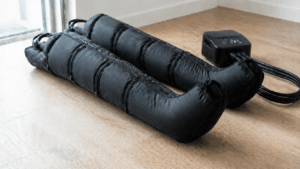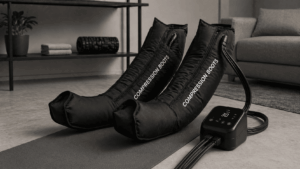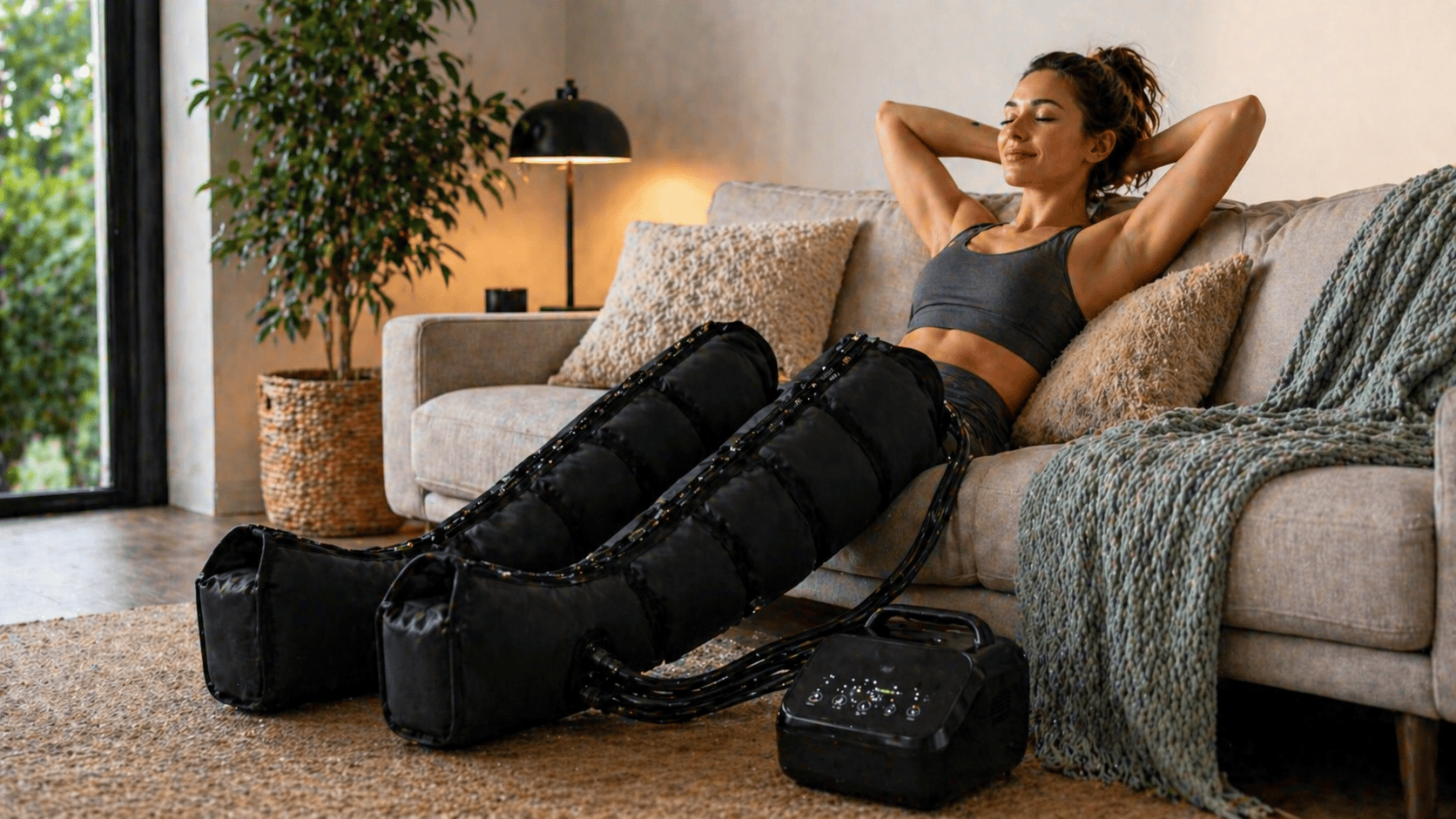
Poor circulation doesn’t announce itself with a dramatic injury. It creeps in as heavy legs at the end of a shift, tingling feet after a long flight, visible spider veins that weren’t there two years ago, or that persistent ankle puffiness that shows up every evening. Leg compression circulation therapy works by mechanically pushing blood and lymphatic fluid upward through the legs when your body’s natural vascular pump isn’t doing the job efficiently.
We tested four blood flow boots over six weeks, evaluating each on how effectively it drives venous return from the feet to the core, how well the sequential pressure pattern prevents fluid pooling between chambers, and whether the system is practical enough for daily use by people who aren’t athletes. The target user here is someone managing desk-bound stiffness, mild venous insufficiency, post-flight swelling, or general circulatory fatigue – not someone recovering from a marathon.
The Hyperice Normatec 3 delivers the best sequential circulation therapy thanks to its 5-zone Pulse technology and ZoneBoost targeting. But the LONGEST LGT-2200SP offers FDA-certified medical-grade compression boots blood circulation at a fraction of the price, and both budget options perform well for daily maintenance.
How We Evaluate Compression Boots for Circulation
Circulation-focused scoring centers on how effectively the boot drives venous return – the upward movement of blood from the feet back to the heart. Chamber overlap and sequential timing matter more here than raw pressure ceiling, because circulation improvement depends on a smooth, directional wave rather than maximum squeeze. We also weight ease of use higher than in athletic comparisons because many circulation users are older adults, desk workers, or people with limited mobility who need a system they’ll actually use daily.
| Compression quality | 30% | Sequential pattern, chamber overlap, venous return effectiveness |
| Adjustability | 25% | Pressure levels, gentle starting points, daily session adaptability |
| Ease of use | 20% | Setup simplicity, controller intuitiveness, noise level |
| Value | 15% | Cost per session over time, HSA/FSA eligibility, warranty |
| Portability | 10% | Battery life for untethered use, travel friendliness |
1. Hyperice Normatec 3: 5 zones, ZoneBoost, Pulse technology, the circulation benchmark
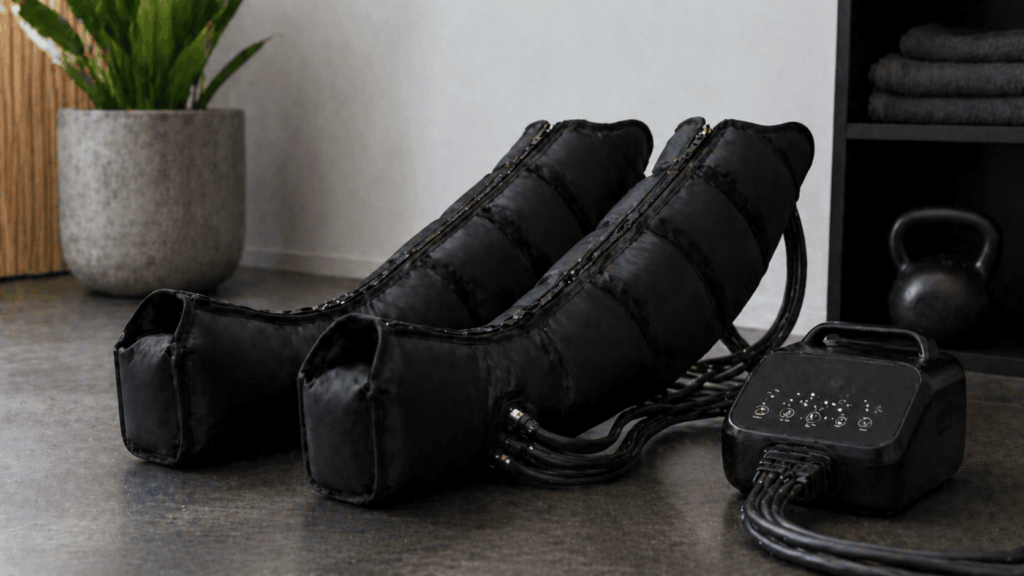
The Normatec 3 is the most effective leg compression circulation system we tested because of its patented Pulse technology. Five overlapping zones inflate sequentially from foot to thigh, and the overlap between chambers ensures there’s no gap in pressure coverage where blood could pool. This smooth, continuous wave is the mechanical equivalent of what healthy leg muscles do when you walk – and it’s the mechanism that fails when circulation deteriorates from inactivity, age, or venous insufficiency.
ZoneBoost is particularly useful for circulation users. If your ankles and feet are the primary trouble spots – as they are for most people with sluggish circulation – you can lock extra compression cycles onto the lower zones without overwhelming the thighs. Seven pressure levels let you run gentle 20-minute sessions at level 2-3 for daily maintenance or firmer sessions at level 5-6 when evening swelling is especially stubborn.
The Bluetooth app tracks session data, which is useful if your physician wants visibility into your therapy compliance. HSA/FSA eligibility with a Letter of Medical Necessity can offset the $799 price, and the system is built to last years of daily use. The only barrier for circulation-focused users is the tethered design: you need to be near the control unit and outlet, which limits where you can use it.
2. LONGEST LGT-2200SP: FDA-certified, 30-150 mmHg, real-time pressure display, medical-grade value
The LONGEST LGT-2200SP was designed as a medical compression device, and its feature set reflects that origin. It carries FDA and Health Canada certification, uses 4 sequential chambers per leg, and delivers a pressure range of 30-150 mmHg across 6 massage modes including a dedicated circulation mode that inflates from foot upward in a steady wave. The real-time mmHg display on the digital controller shows exactly how much pressure is being applied at every moment – a feature that matters when you’re managing a specific circulatory condition under physician guidance.
The 6500mAh battery is the largest in this comparison, supporting 2-4 hours of continuous use. For circulation users who run 30-60 minute sessions daily while watching TV or reading, that means charging every two to three days rather than daily. The YKK zippers and high-tenacity overlapping sleeves hold up to daily wear, and optional arm, hip, and body attachments extend the therapy to upper-limb circulation if needed.
At roughly $300, the LONGEST delivers FDA-certified sequential compression with verifiable pressure data for less than half the Normatec 3’s price. The compromise is fewer zones (4 vs 5), no app integration, and a controller interface that’s functional rather than elegant. For daily circulation maintenance, those trade-offs are easy to accept.
3. Rapid Reboot Regen: 4 chambers, 0-200 mmHg, per-chamber control, dedicated circulation mode
The Rapid Reboot Regen brings the most precise chamber-level control to circulation therapy. With 20 compression levels from 0-200 mmHg and independent pressure adjustment per chamber, you can create a true pressure gradient – higher at the foot, lower at the thigh – that mimics the natural venous pressure gradient your legs would produce during walking. The Regen includes a dedicated circulation mode that alternates between circulation and sequence cycles for combined vascular stimulation.
Session timers run from 1 to 179 minutes, giving you the flexibility for short daily maintenance sessions or longer therapeutic windows. The Rapid Reboot app tracks usage over time and allows Bluetooth control from your phone. Build quality is professional-grade with rip-stop fabric boots, 4 integrated-hose chambers, and seamless interiors. The 3-hour battery supports untethered use around the house.
At ~$695 for the boots package, the Regen sits between the LONGEST and Normatec 3. It’s the right choice for users whose physician has prescribed a specific pressure gradient across different leg segments, or for anyone who wants the most customizable circulation session available in a consumer device. HSA/FSA eligible.
4. FIT KING FT-091A: 4 chambers, 12 levels, cordless, the daily circulation entry point
The FIT KING FT-091A is the most accessible way to start daily compression boots blood circulation therapy. It runs 4 overlapping chambers from foot to thigh, 12 pressure levels from 40-150 mmHg, a smart pressure sensor that adapts to leg circumference, and a cordless 3-4 hour battery. At roughly $200 and FSA/HSA eligible, it removes the cost barrier for people who need daily circulation support but aren’t ready for a $700+ investment.
| # | Model | Score | Chambers | Price |
|---|---|---|---|---|
| 1 | Hyperice Normatec 3 | 9.4 | 5 zones | ~$799 |
| 2 | LONGEST LGT-2200SP | 9.0 | 4 chambers | ~$300 |
| 3 | Rapid Reboot Regen | 8.6 | 4 chambers | ~$695 |
| 4 | FIT KING FT-091A | 8.0 | 4 chambers | ~$200 |
What to Look for in Compression Boots for Circulation
Sequential compression is the mechanism that matters
Sequential pneumatic compression inflates chambers one at a time from foot to thigh, creating a directional wave that pushes blood upward toward the heart. This mimics the calf muscle pump that activates during walking and is the validated mechanism for improving venous return. Devices that inflate all chambers simultaneously create uniform pressure but don’t generate directional flow – they squeeze without moving. All four systems in this comparison use true sequential compression.
Gentle pressure ranges for daily use
Circulation improvement doesn’t require high pressure. Published research on intermittent pneumatic compression for venous insufficiency typically uses 40-80 mmHg, and many users see benefit at even lower levels. The key is consistency: a daily 20-30 minute session at moderate pressure delivers better long-term circulation benefits than occasional high-pressure sessions. Look for systems that start at 30-40 mmHg so you have room to find a comfortable daily level.
Chamber overlap prevents blood pooling
When chambers don’t overlap, there’s a brief moment during the inflation sequence where blood can pool at the boundary between two deflated segments. Overlapping chambers eliminate this gap by maintaining pressure continuity across the entire leg. The Normatec 3’s 5-zone overlap is the smoothest; 4-chamber systems with overlap (LONGEST, Rapid Reboot, FIT KING) perform well but produce slightly more abrupt transitions.
Session length and timer flexibility
Circulation users typically benefit from longer sessions than athletic recovery demands. Look for systems that support 30-60 minute sessions without auto-shutoff, and ideally offer adjustable timers. The Rapid Reboot Regen goes up to 179 minutes, the LONGEST supports extended sessions via its large battery, and the Normatec 3 offers customizable durations through the app.
Best Compression Boots for Circulation – Frequently Asked Questions
Do compression boots actually improve blood circulation?
Yes. Sequential pneumatic compression has been studied extensively as a method for improving venous return and reducing blood stasis in the lower limbs. The mechanism is straightforward: the boots inflate from foot to thigh in sequence, physically pushing blood upward toward the core. This is the same principle used in hospital-grade devices to prevent deep vein thrombosis in post-surgical patients. Consumer compression boots apply this mechanism at lower pressures for daily circulation maintenance, and the effect is measurable: legs feel lighter, evening swelling diminishes, and subjective heaviness improves with consistent use.
How often should I use compression boots for circulation?
Most manufacturers and clinical guidelines suggest daily sessions of 20-30 minutes at moderate pressure for general circulation improvement. Consistency matters more than intensity – a 20-minute session at comfortable pressure every day will produce better long-term results than a 60-minute high-pressure session once a week. If you sit at a desk for 8+ hours daily, an evening session can counteract the circulatory stagnation that accumulates throughout the day.
Are compression boots better than compression socks for circulation?
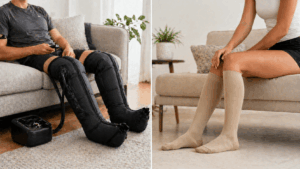
They work differently. Compression socks provide static, continuous pressure throughout the day and are designed to prevent fluid from pooling while you’re active or standing. Compression boots provide dynamic, intermittent pressure during a dedicated session and are designed to actively push accumulated fluid upward. For best results, many physicians recommend using compression socks during the day and compression boots in the evening – the socks prevent buildup, the boots clear what accumulated.
Can compression boots help with varicose veins?
Compression boots can help manage the symptoms associated with varicose veins – heaviness, aching, and mild swelling – by improving venous return and reducing blood pooling. However, they do not treat the underlying structural cause of varicose veins, which is valvular incompetence in the superficial venous system. If your varicose veins are symptomatic, compression therapy is one component of management, but you should discuss treatment options with a vascular specialist.
What pressure level is best for circulation improvement?
Research on intermittent pneumatic compression for venous health typically uses pressures in the 40-80 mmHg range. Most circulation users find their comfort zone between 50-70 mmHg. Higher pressures are used in medical settings for specific conditions like DVT prevention, but they’re unnecessary for general circulation improvement. Start at the lowest comfortable setting and increase gradually. If you feel numbness, tingling, or pain during a session, the pressure is too high.
Who benefits most from compression boots for circulation?
The people who see the most noticeable improvement are those with the most circulatory stagnation to begin with: desk workers who sit 8+ hours daily, frequent flyers dealing with post-flight leg swelling, older adults with age-related circulatory decline, people who stand for long shifts (nurses, retail workers, chefs), and anyone with mild chronic venous insufficiency. If your legs feel fresh and light at the end of the day without intervention, you probably don’t need compression boots for circulation.
In Summary
Poor circulation is a daily problem, and the most effective intervention is a daily habit. The Normatec 3 delivers the smoothest 5-zone sequential compression for optimal venous return. The LONGEST LGT-2200SP provides FDA-certified medical-grade therapy with real-time pressure tracking at the best price in this comparison. The Rapid Reboot Regen offers the most granular per-chamber control for prescribed circulation protocols. And the FIT KING FT-091A makes daily compression accessible at $200. Pick the one you’ll actually use every day – consistency is the variable that matters most.