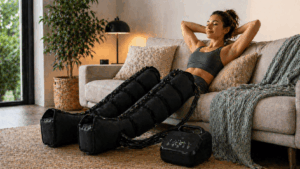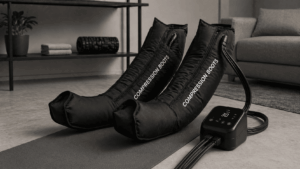
Compression boots are inflatable sleeves worn on the legs that use air pressure to squeeze your muscles in a rhythmic, wave-like pattern from foot to thigh. They were developed in hospital medicine to prevent blood clots and treat lymphedema, and they have become one of the most widely adopted recovery tools in professional and amateur athletics over the past decade.
The technology is simple and the mechanism is well understood. What gets complicated is separating what the boots actually do from what the marketing says they do. Here is the complete picture: how the technology works, what happens inside your legs during a session, what the science supports, and who benefits most.
The Technology Behind Compression Boots
Every compression boot system, regardless of brand or price, consists of the same core components working together.
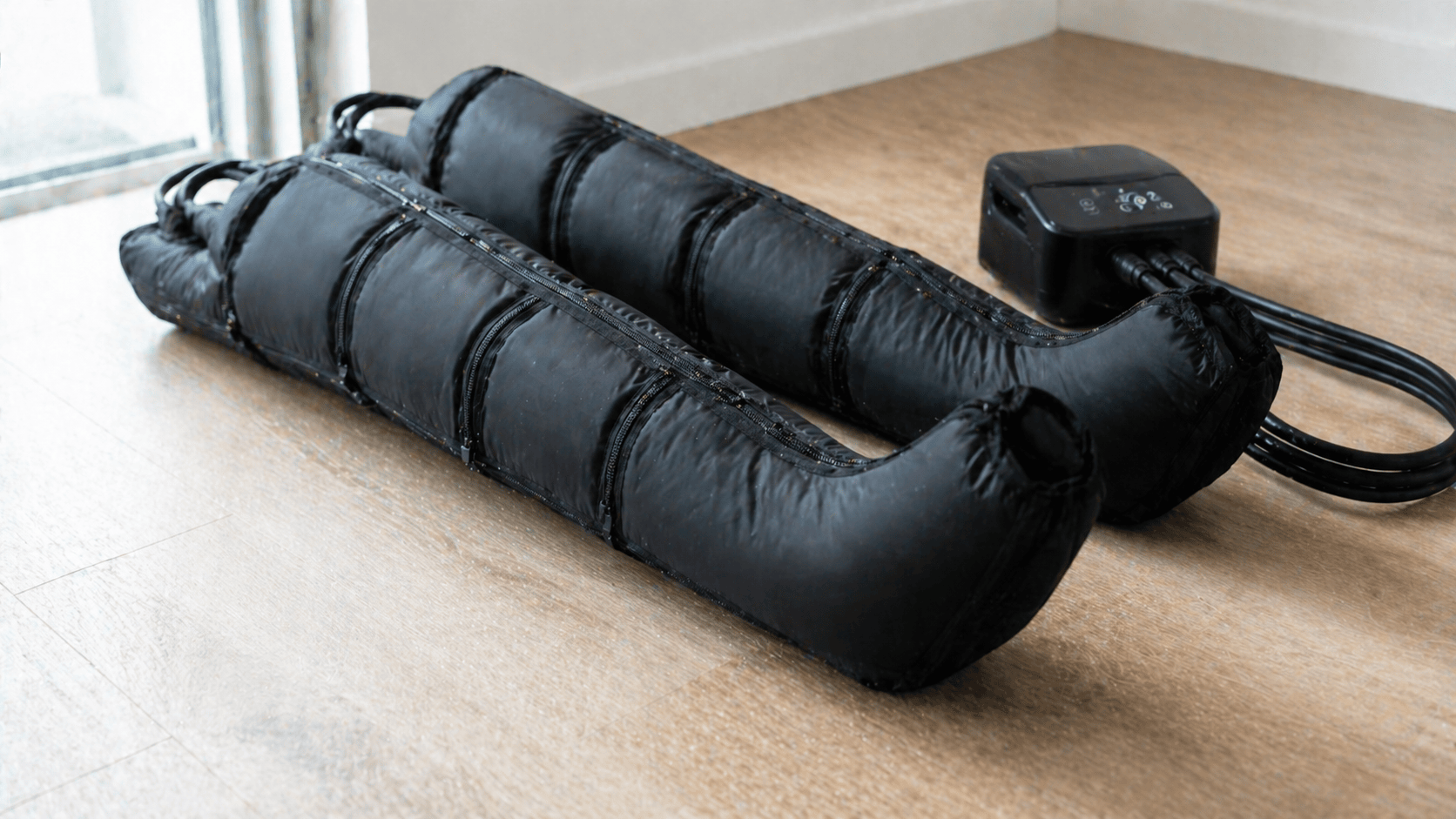
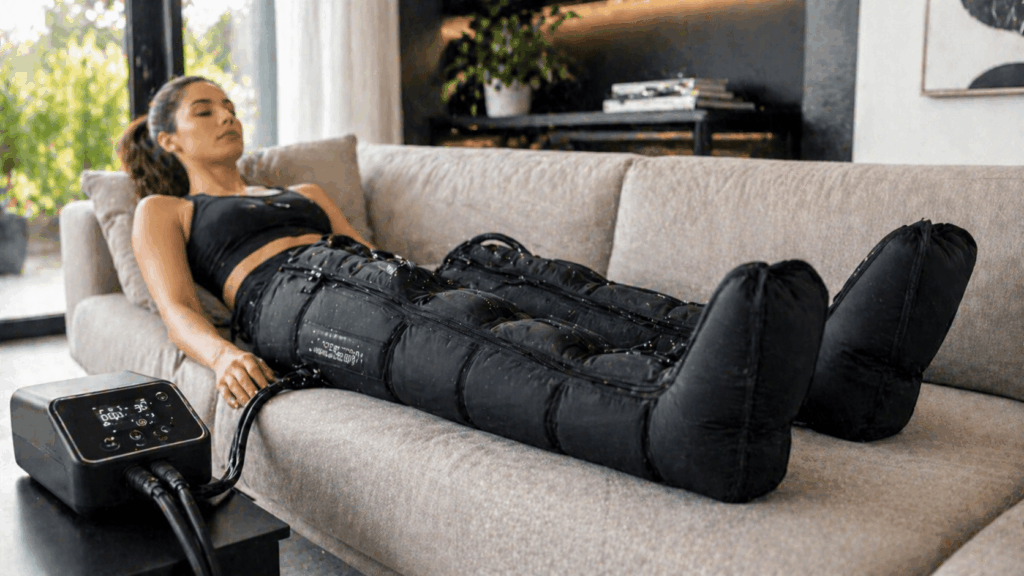
The sleeves are fabric garments that wrap around your legs, covering the foot, calf, knee, and thigh. Inside the fabric are multiple air chambers, typically 4 to 7 in consumer devices, arranged sequentially from the foot upward. Higher-end models use more chambers with overlapping zones for smoother pressure transitions.
The pump or control unit pushes compressed air into the chambers according to a programmed pattern. In older and budget models, this is an external box connected by hoses. In newer premium models like the Normatec Elite, the control unit sits directly on the boot, eliminating hoses entirely.
The compression cycle is where the recovery effect happens. The pump inflates the foot chamber first, holds it for roughly 30 seconds, then inflates the calf chamber while maintaining foot pressure, then the knee, then the thigh. Once all chambers are inflated, the entire sleeve deflates and the cycle restarts. This sequential pattern is what distinguishes the boots from static compression garments like socks or sleeves.
Consumer devices operate at pressures between 30 and 110 mmHg, with most sessions running in the 60 to 80 mmHg range. For reference, a medical blood pressure cuff inflates to about 150 to 200 mmHg, so the boots are firm but well below clinical compression levels.
How the Sequential Compression Mechanism Works
The specific way the chambers inflate is the reason pneumatic compression boots produce measurably different effects than static compression garments.
The sequential pattern mimics your calf muscle pump. When you walk, your calf muscles contract and compress the deep veins in your lower leg, squeezing blood upward through one-way valves toward the heart. When you stop moving, sit down, or lie still, that pump slows dramatically. The boots replicate the pump mechanically, pushing venous blood and lymphatic fluid upward even while you are completely still.
The analogy that captures it best: the boots squeeze your leg the way you would squeeze a tube of toothpaste from the bottom up. The foot chamber compresses first, then the calf, then the knee, then the thigh. Fluid has nowhere to go but upward, toward the veins that return it to the heart.
This is not theoretical. Doppler ultrasound studies have directly measured the blood flow changes during intermittent pneumatic compression. Research evaluating IPC devices has found that the best-performing devices increased femoral venous blood flow velocity by over 200% compared to resting baseline. A 2026 pilot study published in Scientific Reports confirmed that even moderate compression at 30 mmHg produced a 90% increase in peak systolic velocity in the common femoral vein.
What Happens Inside Your Legs During a Session
Three physiological effects happen simultaneously during a compression boots session, and understanding all three explains both the benefits and the limitations.
Venous return accelerates. Deoxygenated blood in the leg veins gets pushed upward toward the heart at a faster rate than passive rest allows. This clears the “pooled” feeling in your legs after prolonged standing, sitting, or intense exercise. The effect is immediate, measurable on ultrasound, and consistent across healthy individuals.
Lymphatic drainage is mechanically assisted. The lymphatic system runs parallel to the venous system but has no central pump. Lymph relies entirely on muscle contractions, breathing, and external pressure to keep moving. The sequential compression from the boots pushes lymphatic fluid upward, reducing tissue edema and the puffiness that comes with it. This is the same mechanism used in clinical lymphedema treatment, where IPC has been a standard therapy for decades.
Interstitial fluid shifts out of the tissue. After hard exercise, microscopic muscle damage causes fluid to leak from capillaries into the surrounding tissue, creating the swollen, heavy feeling associated with delayed onset muscle soreness. The external pressure from the boots forces some of this excess interstitial fluid back into the lymphatic and venous systems, which is why legs feel “lighter” immediately after a session.
What the boots do not do: they do not “flush lactic acid.” Blood lactate clears within an hour of exercise stopping, with or without compression. They do not repair muscle fibers. They do not change body composition. They do not “detoxify” anything. The circulatory and lymphatic effects are real and useful, but the marketing claims built on top of them have stretched well past the evidence.
The Clinical Origins of Compression Boots
Understanding where this technology came from helps explain why it works and what it was designed to do.
Intermittent pneumatic compression was developed in vascular medicine to address a specific clinical problem: immobilized patients in hospitals, particularly after surgery, are at high risk of deep vein thrombosis (DVT) because their calf muscle pump is not working. Blood pools in the deep veins of the legs, and clots can form. IPC devices were designed to replicate the muscle pump mechanically, keeping blood moving even in patients who could not walk.
The DVT prevention application has been studied extensively and is supported by systematic reviews and clinical guidelines worldwide. IPC is standard care in most hospitals after major surgery.
From there, the technology expanded into lymphedema management, where more advanced devices with 12 or more chambers are used to treat chronic swelling. Then, starting in the early 2010s, consumer versions with fewer chambers and simpler controls entered the athletic recovery market.
The transition from medical device to consumer recovery tool is important context. The core mechanism is the same, but the clinical applications (DVT prevention, lymphedema treatment) have decades more evidence behind them than the athletic recovery applications. The recovery research is newer, smaller in scale, and more mixed in its conclusions.
What the Recovery Research Actually Shows
The published evidence on compression boots for athletic recovery has grown significantly since 2018, but it splits into two conclusions that matter.
The boots reliably reduce perceived soreness. A 2022 meta-analysis in the Journal of Clinical Medicine found moderate effect sizes for pressotherapy reducing DOMS severity across multiple studies. A 2024 meta-analysis in Biology of Sport, covering 17 studies and 319 athletes, found small but consistent improvements in subjective recovery markers. Users consistently report that their legs feel lighter, less heavy, and less sore the day after a session.
The boots do not reliably improve objective performance markers. The same 2024 meta-analysis found only trivial to small effects on objective measures like sprint speed, peak power, and force output. A 2025 comprehensive review in Physical Therapy in Sport analyzed six studies comparing IPC boots to other recovery methods and found no clear evidence of superiority or inferiority compared to alternatives like rest, massage, or compression garments.
The honest framing: compression boots consistently make you feel better but do not consistently make you measurably faster the next day. That distinction matters less than it sounds, because perceived recovery is one of the strongest predictors of training consistency, and consistency over months is what produces adaptation.
Types of Compression Boots
The consumer market has expanded from one or two options to a full spectrum of devices. Understanding the categories helps narrow down what fits your needs.
Full-leg systems with external pump. The classic setup. Sleeves cover the full leg from foot to upper thigh, connected by hoses to a handheld or tabletop control unit. The Normatec 3 Legs ($799) and the Rapid Reboot Regen ($695) are representative. These offer the most chamber coverage and strongest compression, but they are bulky and tethered to the pump.
Full-leg wireless systems. The newest category. The Normatec Elite ($999) and Therabody JetBoots Prime ($699) have the control unit built into the boot, eliminating hoses. The trade-off is higher cost and slightly more weight on the leg.
Calf-only systems. The Normatec Go ($399) covers the calf only, weighs about half a pound, and fits in a carry-on. Designed for travel and runners who want portability over full-leg coverage.
Budget full-leg systems. Brands like Fit King ($159), Jolt Boots (~$299), and various Amazon-stocked options. They use the same core sequential compression mechanism with 4 to 6 chambers, but build quality, app integration, and control precision are lower.
The core mechanism, sequential pneumatic compression, is the same across all categories. The difference between a $159 device and a $999 device is build quality, chamber count, wireless convenience, and app integration, not a fundamentally different recovery effect.
How to Use Compression Boots
The protocol is straightforward, and the details matter more than most users realize.
Session length: 20 to 30 minutes. This is the window supported by the published research. Less than 15 minutes does not give the sequential cycle enough rounds to produce a meaningful effect. More than 45 minutes adds nothing and increases the risk of skin irritation or numbness.
Pressure: 60 to 80 mmHg for most users. Start at the lowest setting your device offers and increase gradually over the first few sessions. There is no evidence that higher pressure produces better recovery outcomes. The studies showing positive results use moderate pressure, not maximum settings.
Timing: within an hour of finishing a hard workout is the strongest window. The boots extend the elevated circulation from your cool-down phase and address the post-exercise edema before soreness fully sets in. Evening sessions before bed are the second-best option.
Frequency: three to five sessions per week for most active people. Daily use is safe during heavy training blocks. Rest days generally do not need a session.
Position: legs horizontal or slightly elevated on a couch, recliner, or bed. Sitting upright in a chair with feet on the floor partially defeats the venous return effect.
Who Benefits Most From Compression Boots
The boots deliver the most noticeable benefit to four specific groups.
High-volume endurance athletes stacking multiple hard sessions per week. Marathoners, triathletes, ultrarunners, and cyclists doing 200+ mile weeks. The daily recovery deficit is real, and the boots address the subjective heaviness that accumulates across a training block.
People who stand or sit immobile for 8+ hours a day. Nurses, teachers, retail workers, hospitality staff, desk workers, and frequent travelers. The venous return benefit is the boots’ strongest non-athletic use case, and it produces immediate, noticeable leg relief.
Athletes replacing weekly sports massage spending. The boots produce comparable subjective recovery effects to massage at a fraction of the ongoing cost. A $600 device pays for itself in 5 to 8 massage appointments.
Patients with lymphedema or venous insufficiency (with medical guidance). IPC has decades of clinical evidence supporting its use for these conditions, though medical-grade devices differ from consumer boots in chamber count, pressure calibration, and trunk coverage.
Who Should Not Use Compression Boots
The boots are contraindicated for a small but important set of populations.
People with active deep vein thrombosis or unstable blood clots. The sequential compression can dislodge a clot, creating a life-threatening pulmonary embolism. This is the most serious contraindication.
People with severe peripheral arterial disease, decompensated heart failure, active leg infections, open wounds, or burns on the legs. Each of these conditions can be worsened by external compression.
People with undiagnosed leg swelling. New or worsening swelling should be evaluated by a clinician before self-treating with compression of any kind. The swelling could have vascular, cardiac, renal, or other systemic causes that compression therapy cannot address.
Pregnancy, mild peripheral arterial disease, diabetic neuropathy, recent injuries, and lymphedema without an established protocol all require medical clearance before using the boots.
What Are Compression Boots, Frequently Asked Questions
What is the difference between compression boots and compression socks?
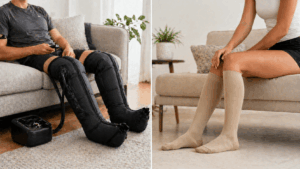
Compression socks apply constant, static pressure (typically 15 to 30 mmHg) and are worn during activity or throughout the day. Compression boots apply dynamic, sequential pressure (30 to 110 mmHg) in pulsing cycles and are used for short recovery sessions of 20 to 30 minutes. The socks prevent fluid pooling in real time. The boots clear fluid that has already pooled. Most serious athletes benefit from owning both, used at different times.
Do compression boots actually work?
Yes, with an important nuance. They reliably reduce how sore your legs feel, which is supported by multiple meta-analyses. They do not reliably improve objective performance markers like sprint times or peak power. The subjective benefit is real and valuable because perceived freshness drives training consistency, which drives long-term adaptation.
How much do compression boots cost?
Consumer devices range from about $150 for budget options to $1,000+ for premium wireless systems. Budget models (Fit King, $159) use the same core mechanism as premium models (Normatec Elite, $999) but with fewer chambers, simpler controls, and lower build quality. The recovery effect is comparable. The daily user experience is not.
Can you use compression boots every day?
Yes. Daily use at moderate pressure and standard duration is safe for healthy adults and is common practice among professional athletes during heavy training blocks. The main risk of daily use is relying on the boots to compensate for poor sleep, bad nutrition, or an unsustainable training load rather than fixing those upstream issues.
How long should a compression boot session last?
Twenty to thirty minutes is the standard range supported by the published research. First-time users should start at 15 minutes. Sessions longer than 45 minutes add no additional benefit for athletic recovery and increase the risk of skin irritation and numbness.
Are compression boots the same as a leg massage?
No. The boots apply external pneumatic pressure to improve venous return and lymphatic drainage. Manual massage applies direct mechanical force to muscle and fascial tissue, addressing trigger points, adhesions, and soft tissue stiffness. The boots handle the circulatory side of recovery. Massage handles the myofascial side. They are complementary tools, not substitutes.
Do you need a prescription for compression boots?
No. Consumer compression boots are sold directly to the public without a prescription. Medical-grade pneumatic compression devices used for lymphedema or DVT prevention are different products that may require a prescription and are often covered by insurance. Consumer boots are designed for athletic recovery and wellness, not medical treatment.
The Bottom Line
Compression boots are inflatable leg sleeves that use sequential air pressure to push venous blood and lymphatic fluid upward from your feet toward your heart. The technology originated in hospital medicine for DVT prevention and lymphedema treatment, and it has been adapted into consumer devices for athletic recovery and general wellness.
The mechanism is real and well documented. The venous return effect is measurable on ultrasound, the perceived soreness reduction is supported by multiple meta-analyses, and the safety profile is excellent for healthy users. What the boots will not do is magically erase muscle damage, flush toxins, or transform your performance overnight.
For high-volume athletes, people on their feet all day, and anyone managing a real recovery deficit, the boots deliver a consistent, meaningful benefit that compounds with regular use. For everyone else, a foam roller, compression socks, and an extra hour of sleep remain the more cost-effective foundation. The boots are a genuine tool with a genuine mechanism and genuine limits, and knowing all three is how you decide if they belong in your routine.