The honest starting point is reassuring: compression boots are safe for the vast majority of healthy adults. The side effect profile is mild, the serious risks are almost entirely limited to people with pre-existing conditions, and millions of sessions happen every year in gyms, clinics, and living rooms without incident.
But “safe for most people” is not the same as “safe for everyone in every situation.” There are specific conditions where the boots can make things worse, specific usage mistakes that cause avoidable discomfort, and specific populations who need medical clearance before using any pneumatic compression device.
Here is the complete picture, organized by severity, so you know what to watch for and when to stop.
Common Side Effects in Healthy Users
These are the side effects that show up most often and resolve on their own. They are inconveniences, not dangers, and they almost always result from incorrect settings or poor fit rather than from anything inherent to the device.
Temporary numbness or tingling. This is the most commonly reported sensation, and it happens when the pressure is set too high or the boot is positioned so that one chamber compresses a nerve point (usually near the fibular head, just below the knee). It feels like pins and needles and disappears within seconds to minutes after the chamber deflates or the boot is removed. If it persists longer than a few minutes after removing the boot, lower the pressure next session or reposition the sleeve.
Skin redness and mild irritation. The boot fabric pressed against bare skin under sustained pressure can cause temporary redness, especially in warm environments or with sensitive skin. This is not an allergic reaction in most cases, it is simple contact irritation. Wearing thin, moisture-wicking socks or placing a barrier layer between your skin and the boot prevents it. An international consensus on compression therapy risks published in Phlebology confirmed that low-severity skin problems, including itching, warmth, and dryness, are the most frequently reported adverse events across all compression modalities.
Discomfort at higher pressure levels. The squeeze-release cycle at 90 to 110 mmHg is genuinely uncomfortable for many users, particularly beginners. This is not a side effect so much as a signal to lower the pressure. The published recovery research uses moderate pressures (60 to 80 mmHg), and there is no evidence that higher settings produce better outcomes.
Warmth and sweating inside the boot. The enclosed sleeve traps body heat, particularly in non-breathable materials. This is uncomfortable but harmless. Removing the boot between sessions, wiping down the interior, and wearing thin athletic socks helps manage it.
Less Common Side Effects From Overuse
These side effects are less frequent and are almost always the result of sessions that are too long, too intense, or too frequent.
Post-session leg fatigue. This sounds counterintuitive for a recovery device, but extended sessions at high pressure can leave your legs feeling heavier, not lighter. The continuous compression fatigues the tissue and restricts normal circulatory patterns. If your legs feel drained after a session, the pressure was too high, the session was too long, or both. Capping sessions at 30 minutes and keeping pressure at 60 to 80 mmHg prevents this in nearly all users.
Temporary swelling above the compression zone. The boots push fluid upward from the legs. In most people, the body absorbs and processes this fluid without issue. In users with compromised lymphatic or venous drainage at the hip or abdomen, that displaced fluid can accumulate above the top of the boot, causing temporary puffiness or swelling in the upper thigh or groin area. If this happens, shorten the session and reduce pressure. If it persists, consult a clinician.
Skin abrasion or pressure marks. Prolonged use on bare skin, especially with folds or creases in the boot material, can cause friction marks or small abrasions. These are more common with poorly fitted devices or when the boot has wrinkled fabric pressing against the skin during inflation. Proper fit and a thin barrier layer eliminate this.
Potential blunting of the inflammatory response. This is a subtler concern raised in sports science literature. Your body needs acute inflammation after training to signal muscle repair and adaptation. There is a theoretical risk that aggressively suppressing post-exercise inflammation with daily high-pressure compression could slow long-term adaptation. The evidence is not strong enough to change practice, but it is a reason not to treat the boots as a fix for every session. Save them for genuinely hard training days, not easy recovery runs.
Absolute Contraindications: When Not to Use Compression Boots
These are conditions where compression boots should not be used under any circumstances without explicit clearance from a specialist. The mechanism that makes the boots useful for healthy legs makes them dangerous for these populations.
Active deep vein thrombosis (DVT) or unstable blood clots. The sequential compression pushes venous blood upward. If there is an unstable clot in the deep veins of the leg, that pressure can dislodge it, sending it toward the lungs as a potentially life-threatening pulmonary embolism. This is the most serious contraindication and is listed by Johns Hopkins Medicine, Cleveland Clinic, and every major compression therapy guideline. If you have been diagnosed with DVT or suspect you have a blood clot, do not use pneumatic compression devices.
Severe peripheral arterial disease (PAD). When arterial blood supply to the legs is severely compromised, compression can reduce what little flow remains. The international consensus statement published in Phlebology recommends that severe PAD (systolic ankle pressure below 60 mmHg) is an absolute contraindication for sustained compression. If you have been diagnosed with PAD or have weak or absent foot pulses, get vascular clearance before using any compression device.
Decompensated congestive heart failure. Compressing the legs pushes blood volume toward the thorax and heart. In a heart that is already failing to manage its workload, the sudden increase in venous return can worsen pulmonary congestion. Both national and international cardiac guidelines list decompensated heart failure as a contraindication for compression therapy.
Active leg infection (cellulitis or lymphangitis). Compression during active infection can spread bacteria through the tissue and worsen the infection. Wait until the infection is fully resolved and your clinician has cleared you before resuming compression of any kind.
Open wounds, burns, or skin breakdown on the legs. Compression over broken skin causes pain, delays healing, and risks introducing infection. Do not use the boots over any area with open wounds, blisters, burns, or active dermatitis.
Conditions That Require Medical Clearance
These are not absolute contraindications, but they require a conversation with a clinician before you start using compression boots at home.
Pregnancy. Compression therapy is not automatically contraindicated in pregnancy, and compression stockings are commonly prescribed for pregnancy-related venous insufficiency. But pneumatic compression at higher pressures, particularly in the third trimester, should be discussed with an OB. The pressure dynamics and fluid redistribution may need to be managed differently.
Mild to moderate peripheral arterial disease. Unlike severe PAD (which is an absolute contraindication), milder forms may still allow compression at lower pressures under medical supervision. Your vascular specialist can advise on safe parameters.
Diabetic neuropathy. If you have reduced sensation in your feet or lower legs, you may not feel the warning signs of excessive pressure (numbness, tingling, pain). The international consensus statement specifically flagged patients with neuropathy as requiring special caution, because they are at higher risk of pressure-related nerve damage that they cannot feel happening.
Recent fractures or acute soft tissue injuries. Using compression boots over a fresh fracture or acute muscle tear can worsen bleeding, increase swelling, and delay healing. Wait until your clinician clears you for compression. As a general rule, if you would not want someone squeezing your leg firmly with both hands, the boots should not be on it.
Lymphedema (without established protocol). Compression boots can help with lymphedema, but the protocol is different from athletic recovery: lower pressure, longer sessions, and always under the guidance of a certified lymphedema therapist. Using consumer boots at athletic recovery settings for lymphedema can push fluid into areas that cannot drain it, worsening symptoms.
History of blood clots. If you have had DVT in the past but are not currently experiencing active clotting, discuss compression therapy with your vascular specialist. In many cases, once the acute phase is resolved and anticoagulation is managed, compression therapy can resume safely, but the decision belongs to your doctor.
How to Minimize Side Effects
Nearly every common side effect from compression boots is preventable with correct usage. The protocol that avoids problems is the same protocol that produces the best recovery results.
Start at the lowest pressure setting. Run your first two or three sessions at the minimum your device offers. Increase by one level per session until you find your working range, which for most people sits at 60 to 80 mmHg. There is no evidence that maxing out the pressure improves recovery.
Cap sessions at 30 minutes for athletic recovery. Going past 45 minutes adds nothing for most users and increases the likelihood of numbness, skin irritation, and post-session fatigue. If your legs still feel heavy after 30 minutes, the issue is not session length, it is training load, sleep, or nutrition.
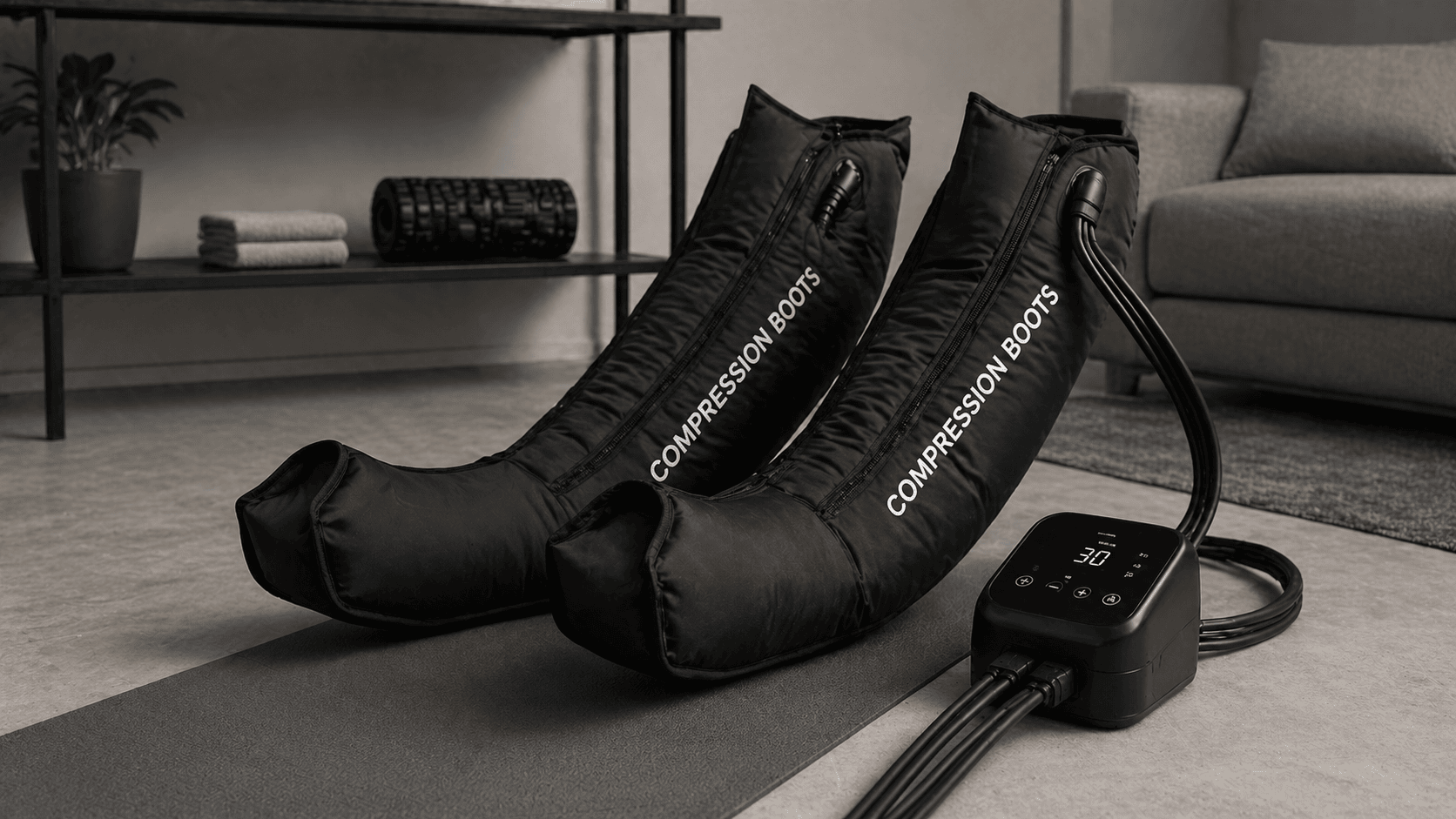
Fit the boots properly every time. Your toes should reach the bottom of the boot. The zipper should close smoothly without fabric bunching. There should be no folds or creases in the sleeve that could create pressure points during inflation. An improperly fitted boot is the single most common cause of avoidable side effects.
Remove shoes, heavy socks, and tight clothing before stepping in. Compression on top of compression creates uneven pressure distribution and increases the risk of numbness and skin irritation.
Stay hydrated. The boots move fluid through your circulatory and lymphatic systems. Being dehydrated makes the process less comfortable and potentially less effective. A glass of water before and after the session is sufficient.
Stop immediately if something feels wrong. Persistent numbness that does not resolve when the chamber deflates, sharp pain, unusual swelling above the boot line, or skin color changes are all signals to stop the session, remove the boots, and reassess your settings or consult a clinician.
Compression Boots Side Effects, Frequently Asked Questions
Are compression boots safe to use every day?
Yes, daily use at moderate pressure (60 to 80 mmHg) and standard duration (20 to 30 minutes) is considered safe for healthy adults. Professional athletes in heavy training blocks routinely use them daily without adverse effects. The risk comes from excessive pressure, excessive duration, or use in the presence of contraindications, not from daily frequency.
Can compression boots cause blood clots?
In healthy people, no. IPC was developed in clinical medicine specifically to prevent blood clots in immobilized patients. The sequential compression promotes venous return, which reduces clot risk. The danger exists only for people who already have an unstable clot, because the pressure could dislodge it. If you have no history of DVT and no vascular conditions, compression boots reduce clot risk rather than increase it.
What should I do if my legs feel worse after using compression boots?
Lower the pressure by one or two levels and shorten the session to 15 minutes. If your legs feel heavier or more fatigued after the boots than before, the pressure was too high, the session was too long, or both. If the problem persists at low settings and short durations, stop using the boots and consult a clinician to rule out an underlying vascular issue.
Can compression boots cause nerve damage?
Nerve damage from consumer compression boots is extremely rare and typically associated with improper fit or excessive pressure at vulnerable anatomical points, particularly near the fibular head below the knee. The international consensus statement flagged pressure-induced nerve damage as a possibility mainly in patients with pre-existing neuropathy or when compression devices are poorly sized. Proper fit and moderate pressure make this risk negligible for healthy users.
Are compression boots safe during pregnancy?
Compression therapy is not automatically contraindicated during pregnancy, and compression stockings are commonly prescribed for pregnancy-related leg swelling. However, pneumatic compression boots at higher pressures should be discussed with your OB first, particularly in the third trimester, because the fluid redistribution dynamics differ during pregnancy.
Can I use compression boots if I have varicose veins?
In many cases, yes, and the research suggests a benefit. A 2016 randomized trial found that sequential pneumatic compression improved venous blood flow velocity and reduced pain in women with varicose veins. However, varicose veins are a clinical condition, and your vascular specialist should set the parameters. Self-treating with a consumer device at high pressure without medical guidance is where problems can occur.
Is it dangerous to fall asleep in compression boots?
Not dangerous in the acute sense, because most devices have automatic shutoff timers. But staying in compressed sleeves while asleep increases the risk of skin irritation, pressure marks, and numbness that you cannot feel because you are unconscious. Always use the boots while awake and aware of how your legs feel.
Can compression boots worsen lymphedema?
Yes, if used incorrectly. Too much pressure can damage fragile lymphatic structures, and compressing the legs without addressing trunk drainage can push fluid into the abdomen or genitals. Compression boots for lymphedema should only be used under the guidance of a certified lymphedema therapist with specific pressure and duration parameters for your condition.
The Bottom Line
Compression boots are safe for the vast majority of healthy users, and the side effects most people encounter (temporary tingling, mild skin redness, warmth) are minor, self-resolving, and preventable with proper fit and moderate settings.
The real risks exist for specific populations: people with active blood clots, severe arterial disease, decompensated heart failure, active leg infections, open wounds, or unmanaged neuropathy. These are absolute or conditional contraindications that require medical clearance before any pneumatic compression use.
For everyone else, the protocol that prevents problems is the same one that produces the best results: moderate pressure, 20 to 30 minutes, proper fit, and the awareness to stop if something feels wrong. The boots are a remarkably safe tool when used within their intended parameters. The problems start when people treat “more” as “better” or use the boots to work around a medical condition they have not had evaluated.